

John Glenn Orbits Earth, Transforming U.S. Space History

When astronaut John Glenn lifted off from Cape Canaveral on February 20, 1962, the United States crossed a threshold that reshaped both national confidence and global perceptions of American scientific capability. Glenn’s three‑orbit mission aboard Friendship 7 marked the first time an American had circled the planet, a milestone that helped define the early space race and continues to resonate in civic and scientific history. His achievement remains a powerful example of public service, courage, and national ambition—values central to the mission of Civics for Life and our commitment to lifelong learning.¹
A Nation in the Space Race
By early 1962, the United States and the Soviet Union were locked in a high‑stakes competition for technological and ideological leadership. The Soviets had already launched Yuri Gagarin into orbit in April 1961, a stunning demonstration of their early lead in human spaceflight. The U.S. responded with two suborbital Mercury missions, but an orbital flight remained elusive. NASA’s Mercury program was designed to close that gap, and Glenn—already a decorated Marine Corps pilot—was selected as one of the original Mercury 7 astronauts in 1959.²
The Flight of Friendship 7
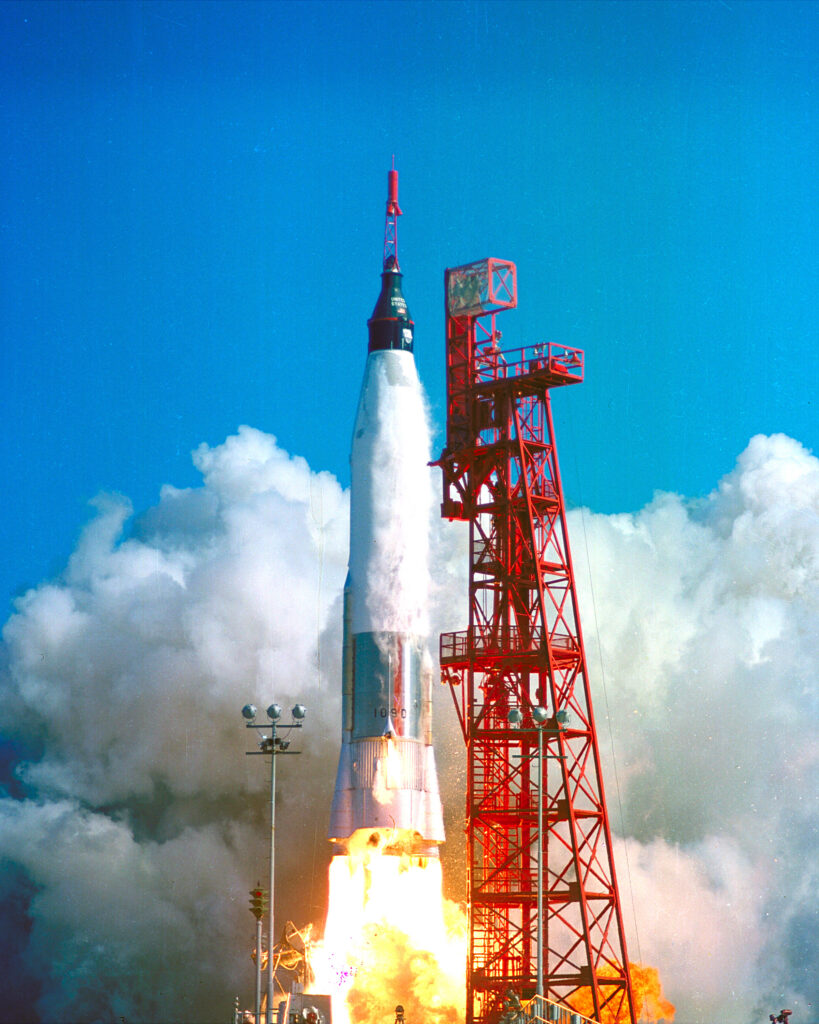
At 9:47 a.m. EST on February 20, 1962, Glenn launched atop an Atlas rocket from Cape Canaveral, Florida. Over the next 4 hours and 55 minutes, he orbited Earth three times, reaching speeds of more than 17,000 miles per hour. His spacecraft, which he personally named Friendship 7, became an emblem of American resolve.¹
During the mission, Glenn conducted scientific observations, tested spacecraft controls, and communicated with NASA’s global tracking network. The flight was not without tension: a sensor warning suggested that his heat shield might be loose, raising the possibility of catastrophic failure during reentry. Glenn remained calm, followed NASA’s instructions, and ultimately splashed down safely in the Atlantic Ocean, where he was recovered by the USS Noa.¹
A Hero’s Welcome
Glenn’s return triggered nationwide celebrations. Parades in Washington, D.C., New York City, and his home state of Ohio drew enormous crowds. His achievement restored a sense of momentum to the U.S. space program and strengthened public support for President John F. Kennedy’s goal of landing a human on the Moon before the decade’s end.²
Glenn later transitioned into public service, serving as a U.S. Senator from Ohio for 24 years and returning to space in 1998 aboard the Space Shuttle Discovery at age 77.²
Why This Moment Still Matters
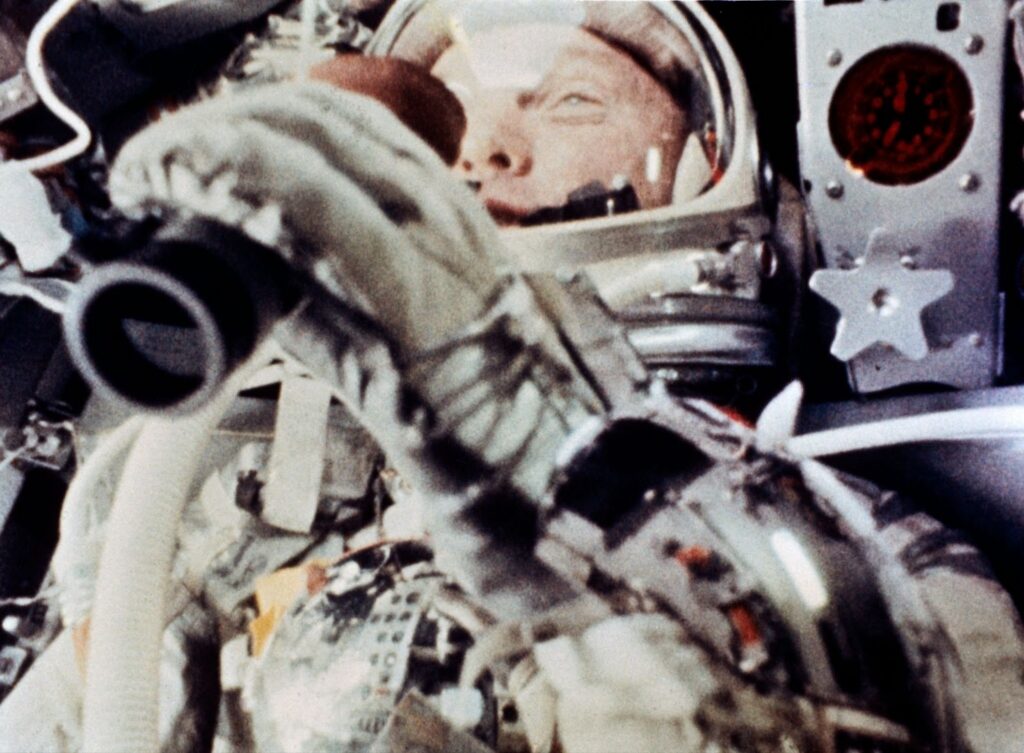
Glenn’s orbital flight was more than a technological milestone—it was a civic moment. It demonstrated the power of public institutions, scientific investment, and collective ambition. For students, educators, and lifelong learners exploring our History Lessons section, Glenn’s mission offers a compelling example of how national challenges can inspire innovation and unity.
The Mercury program also laid the groundwork for future achievements, from the Apollo Moon landings to today’s international partnerships aboard the International Space Station. As the Smithsonian notes, Glenn’s flight became a foundational chapter in the American space narrative.³
Explore more important dates and stories in History Lessons.