

The Executive Branch
Article II of the US Constitution establishes the executive branch led by the President of the United States. The executive branch comprises the Vice President, cabinet, and other executive departments. Its job is to oversee and maintain government functions while carrying out laws passed by Congress.
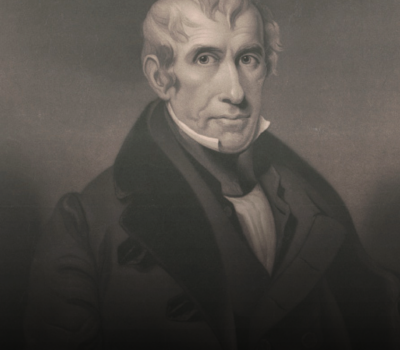
William Henry Harrison and the Shortest Presidency
William Henry Harrison, ninth president of the United States. William Henry Harrison is best remembered for his brief ...
More 
Born in the Hill Country: The August Day That Brought Us Lyndon B. Johnson
On August 27, 1908, in a small farmhouse nestled in the dry scrubland of central Texas, a boy ...
More 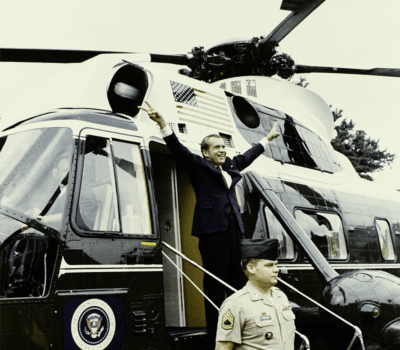
The Day a President Stepped Down: The Resignation of Richard Nixon
On the night of August 8, 1974, Americans across the country gathered around their television sets for a ...
More 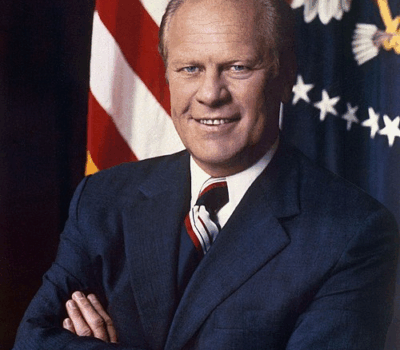
Gerald R. Ford: A Steady Hand in a Time of Crisis
Gerald R. Ford became president under extraordinary circumstances. He was never elected to the presidency or vice presidency, ...
More 
John Quincy Adams: Statesman, President, and Defender of Principle
John Quincy Adams was more than just America’s sixth president. He was a lifelong public servant, a master ...
More 
George H. W. Bush: A Statesman in Service of Country
George Herbert Walker Bush, the 41st President of the United States, occupies a unique and often underappreciated place ...
More 
John F. Kennedy: The Man, The Myth, The Legacy
Few figures in American history have captured the public's imagination quite like John F. Kennedy. His presidency, though ...
More 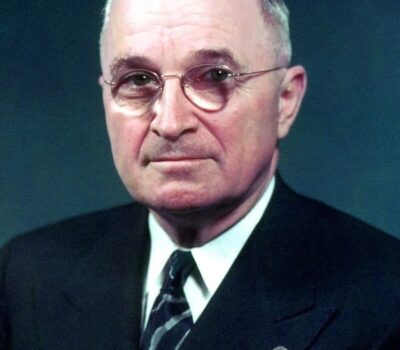
Harry S. Truman: The Unexpected President Who Forged the Modern Era
When Harry S. Truman became president on April 12, 1945, he inherited the most powerful office in the ...
More 
Executive Orders: How Presidents Use Their Power to Get Things Done
"The executive Power shall be vested in a President of the United States of America." Article II, Section ...
More