

The Day America Entered the Great War — and Why One Voice Said No
On the morning of April 6, 1917, the United States was a nation that had spent nearly three years watching the worst war in human history consume Europe. By the early hours of that date, it would be a nation at war, officially joining the First World War.
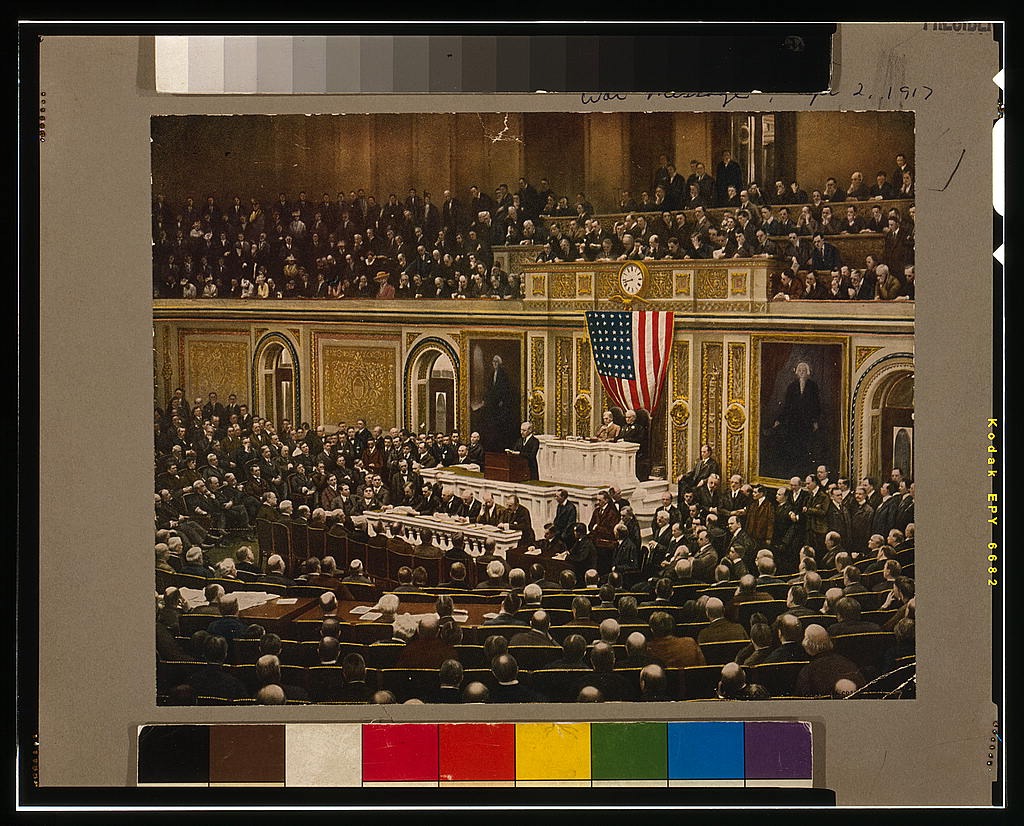
The vote in the House of Representatives came at 3:12 in the morning. The resolution passed 373 to 50, and President Woodrow Wilson signed it the same day.¹ With a stroke of a pen, America formally declared war on the German Empire, ending a period of studied neutrality that Wilson himself had campaigned to preserve just months earlier. The world, he had told Congress four days prior, must be made safe for democracy.
But in that roll call — taken in the middle of the night, in a chamber charged with the weight of what was being decided — one voice stood out.
Three Years of Staying Out
When war erupted in Europe in the summer of 1914, the United States had every reason to stay on the sidelines. The country was deeply diverse — home to millions of immigrants from the very nations now at war with each other. Neutrality was not simply a policy position. For most Americans, it was a moral stance.
Wilson had outlined that stance plainly: the United States must be neutral in fact as well as in name, impartial in thought as well as in action. He won reelection in 1916 on the promise that he had kept the country out of the fight.
But neutrality was becoming harder to sustain. Germany had announced unrestricted submarine warfare against all ships, neutral or otherwise, that entered the war zone around Britain, and American vessels were being sunk.¹ The sinking of the British ocean liner Lusitania in 1915, which killed more than a thousand people, including 128 Americans, had already begun to shift public sentiment. Then came the telegram that changed everything.
A Secret Message and a Nation’s Anger
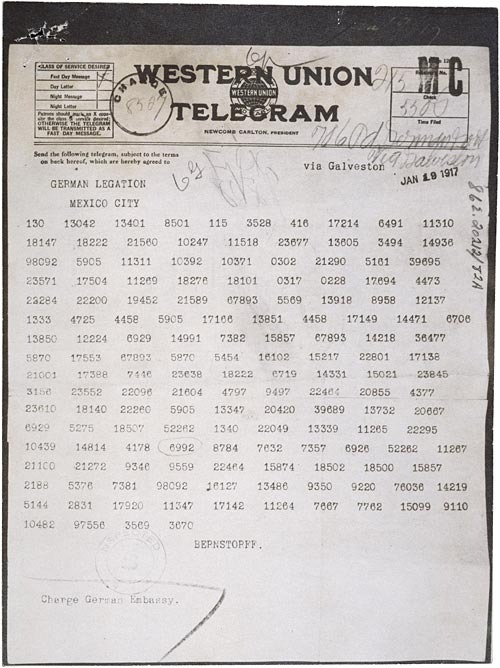
In January 1917, British code breakers deciphered a coded message from German Foreign Secretary Arthur Zimmermann to Germany’s ambassador in Mexico. The telegram proposed a military alliance: if the United States entered the war, Germany would help Mexico recover Texas, New Mexico, and Arizona.² Britain passed the telegram to President Wilson on February 24, and it was published in the American press on March 1.² The public reaction was immediate and furious. Germany had not merely been waging a naval war against American ships. It had, in secret, tried to arm America’s neighbors against her.
The submarine campaign continued to mount American casualties. In late March, four more American merchant ships were sunk. The case for remaining neutral had collapsed.
The Speech, the Vote, and the Hour
On April 2, 1917, President Wilson appeared before a joint session of Congress and asked for a declaration of war. He framed Germany’s submarine campaign as a war against all nations and all mankind, and called on Congress to accept that the world must be made safe for democracy.³
The Senate voted to declare war on April 4. Two days later, at 3:12 in the morning on April 6, the House passed the war resolution 373 to 50.¹ Wilson signed the declaration the same day.
In that vote, there were 50 dissenting voices. Most have been forgotten by history. One has not.
The Woman Who Said No

In November 1916 — four years before the Nineteenth Amendment guaranteed women the right to vote — Jeannette Rankin of Montana became the first woman elected to the United States Congress.⁴ She was sworn in on April 2, 1917, the very day Wilson addressed Congress to ask for war. She had been a member of the House for less than a week when her name was called in the roll.
A lifelong pacifist, she was one of 50 House members who opposed the declaration. Her words at the moment of her vote have endured: “I want to stand by my country, but I cannot vote for war. I vote ‘no.'”⁴
The backlash was swift and severe. Although 49 other House members and six Senators also voted against the declaration, Rankin was singled out for particular criticism — her vote condemned as a disgrace to the suffragist movement and a gift to German propagandists.⁴
She was not done. In December 1941, following the attack on Pearl Harbor, Rankin cast the sole vote in Congress against the declaration of war on Japan, making her the only person in either chamber to vote against American entry into both world wars.⁴
What Followed
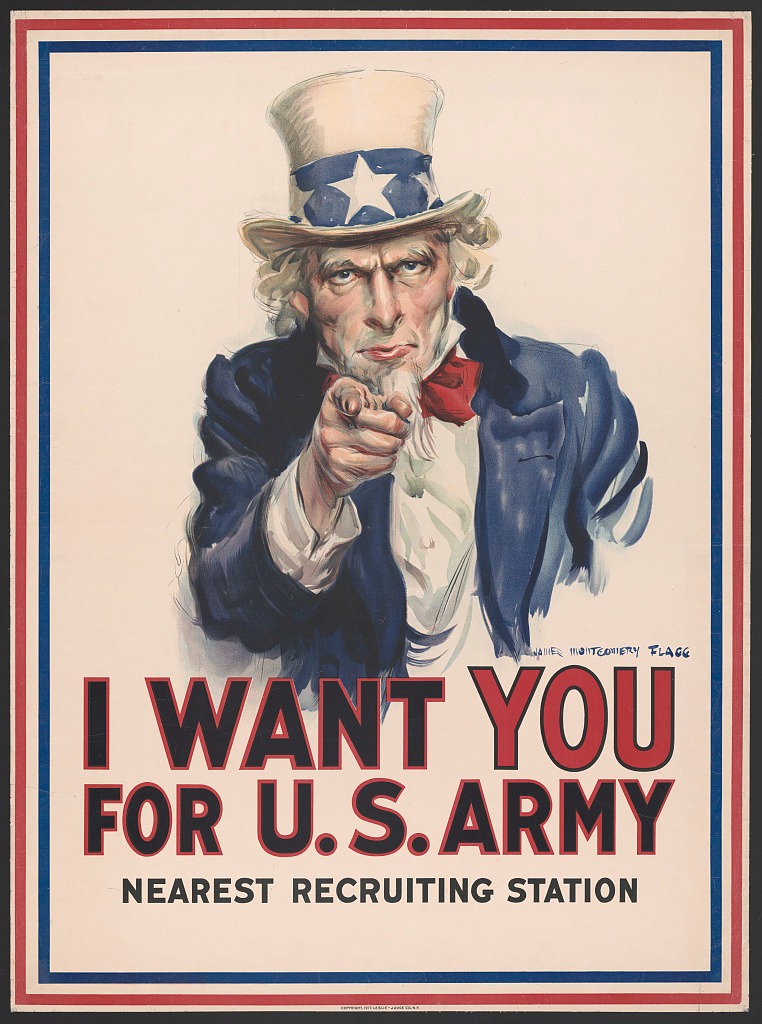
American entry into the war was not instantaneous on the battlefield. The first U.S. infantry troops landed in France in June 1917, and full-scale American combat operations began the following year. Ultimately, over two million U.S. troops served in France under General John J. Pershing. More than 116,000 were killed and 204,000 wounded in just over a year of fighting.⁵
After four years of bloody stalemate along the Western Front, the arrival of fresh American forces helped tip the balance toward Allied victory. Germany signed an armistice on November 11, 1918.
The war’s legacy, however, was far more complicated than the peace that ended it. The settlement at Versailles sowed grievances that would fuel another, far worse conflict within a generation. Wilson’s proposal for a League of Nations to prevent future wars was rejected by the very Senate he had sought to lead. The United States retreated toward isolation again, even as the consequences of that earlier step onto the world stage continued to echo forward.
A Decision That Echoes
April 6, 1917, is not simply a date in a timeline. It is a hinge point — the moment a country that had defined itself by its distance from European entanglements stepped permanently onto the world stage. There would be no returning to the neutrality of 1914.
It is also the date on which one woman, serving her first week in Congress, chose to stake her entire political career on a principle she had held her whole life.
History does not always vindicate the dissenters in the moment. But history does preserve them. Jeannette Rankin’s “no” — cast in the middle of the night, against the overwhelming tide of national feeling — stands today as one of the most singular acts of individual conscience in the history of the American legislature.
The question she posed does not expire: What does it mean to stand by your country? What does it cost to say no when almost everyone else is saying yes?
The record shows she never stopped believing she had answered correctly.
Footnotes / Sources
- “Today in History — April 6,” Library of Congress.https://www.loc.gov/item/today-in-history/april-06
- “Zimmermann Telegram (1917),” National Archives Milestone Documents.https://www.archives.gov/milestone-documents/zimmermann-telegram
- Woodrow Wilson, “Address to Congress Requesting a Declaration of War Against Germany, April 2, 1917,” Miller Center, University of Virginia.https://millercenter.org/the-presidency/presidential-speeches/april-2-1917-address-congress-requesting-declaration-war
- “RANKIN, Jeannette,” History, Art & Archives, U.S. House of Representatives.https://history.house.gov/People/Listing/R/RANKIN,-Jeannette-(R000055)/
- “U.S. Enters the War,” National WWI Museum and Memorial.https://www.theworldwar.org/learn/about-wwi/us-enters-war