

Ellison S. Onizuka: Reaching for Space, Inspiring a Generation

Ellison Shoji Onizuka was born in 1946 in Kealakekua, Hawai‘i, a small community shaped by agriculture, family networks, and service. Growing up as a Japanese American in the post‑World War II era, he inherited both the memory of discrimination and a determination to prove that opportunity should be open to all.
From an early age, Onizuka showed an aptitude for mathematics and engineering — tools that would guide his lifelong commitment to public service through science.
Military Service and Scientific Purpose
Before joining NASA, Onizuka served as a U.S. Air Force officer, working as a flight test engineer. His military service placed him at the intersection of national defense and technological innovation — advancing systems designed not only for military preparedness but also for scientific knowledge.²
This dual role reflected a broader civic ideal: that science, when responsibly guided, serves the public interest.

Breaking the Final Frontier Barrier
In 1985, Ellison Onizuka became the first Asian American and first person of Japanese ancestry to travel to space, serving aboard the Space Shuttle Discovery.¹ His achievement came at a time when representation in science, aviation, and aerospace remained limited.
Onizuka understood the symbolic weight of his mission. He frequently engaged with students, emphasizing that exploration was not reserved for a select few — and that civic contribution could include discovery, research, and teaching.

The Challenger Tragedy and Institutional Accountability
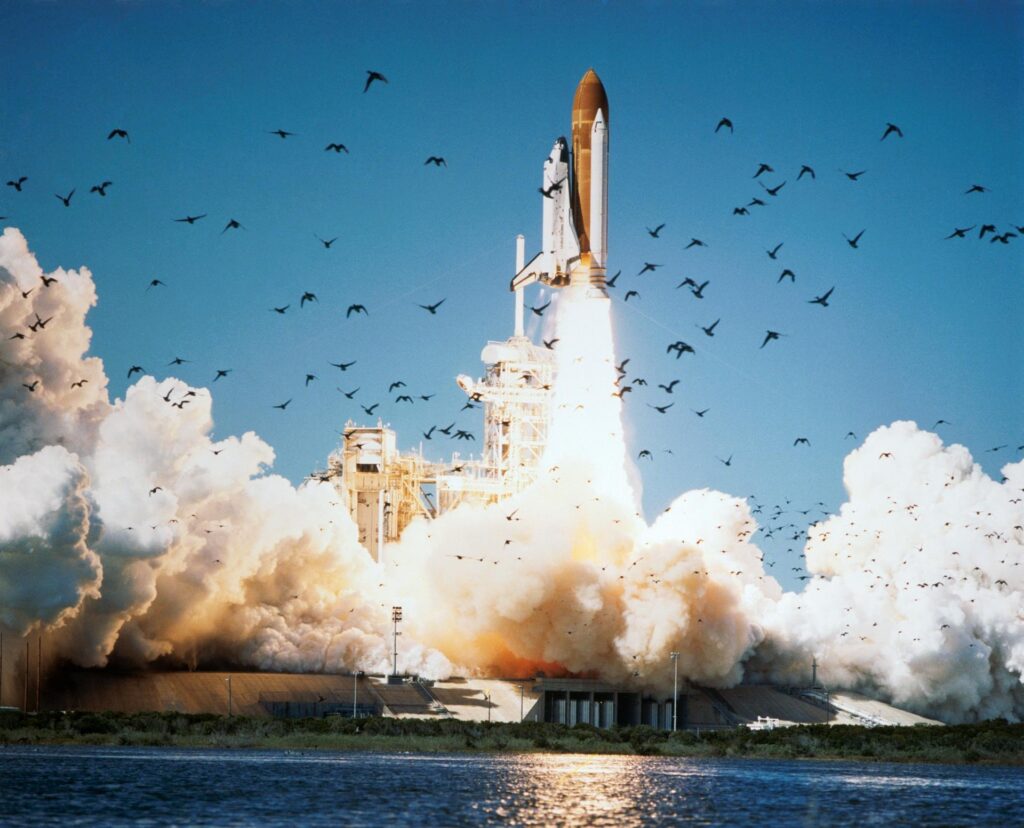
On January 28, 1986, Onizuka was among the seven astronauts killed when the Space Shuttle Challenger disintegrated shortly after launch. The crew also included Christa McAuliffe, the first teacher selected to fly in space, highlighting the mission’s educational goal.²
The tragedy forced the nation to confront difficult questions about government accountability, safety oversight, and institutional responsibility — core components of democratic governance.
A Legacy That Continues to Educate
In the decades since his death, Onizuka’s legacy has inspired schools, scholarships, STEM programs, and civic institutions across Hawai‘i and the mainland United States.³ His name is associated not only with space exploration, but with educational opportunity and public service.
What Ellison Onizuka Teaches Us About Civic Aspiration
Onizuka believed democracy works best when talent is recognized, barriers are lowered, and opportunity is broadly shared. His life teaches us that scientific achievement, public service, and civic pride are deeply connected.
Sources & Further Reading
- Smithsonian National Air and Space Museum, Ellison Onizuka: First Asian American in Space
- University of Colorado Air Force ROTC, Remembering Colonel Ellison Shoji Onizuka
- Ellison Onizuka Memorial Committee, Biography
- NASA History Office, The Challenger Accident