

Patrick Henry’s “Liberty or Death” Speech
Every year on March 23, our On This Day feature at Civics for Life highlights a defining moment in American civic history: Patrick Henry’s “Give me liberty, or give me death!” speech. Delivered in 1775 at the Second Virginia Convention, Henry’s powerful words helped push Virginia — and soon the colonies — closer to revolution.
More than a famous quote, this speech represents a turning point in civic courage, public persuasion, and the power of citizen voices in shaping history.
The Setting: Virginia on the Brink
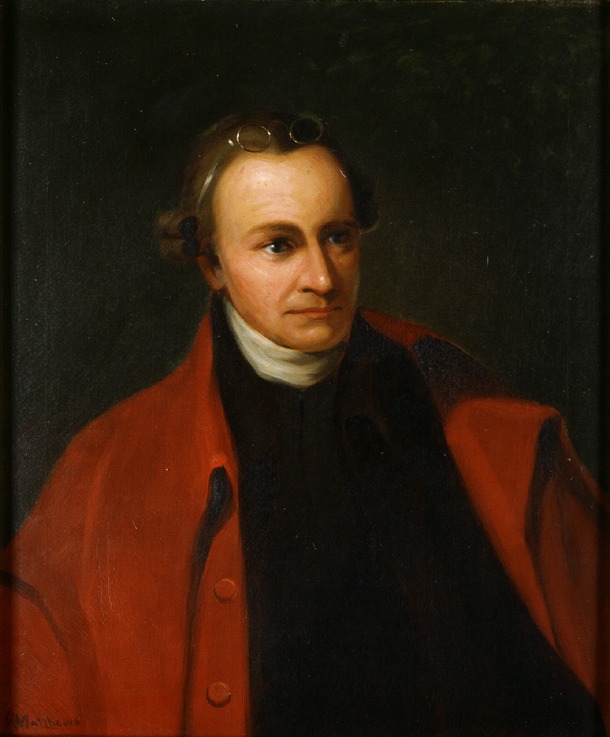
By early 1775, tensions between Great Britain and the American colonies had reached a breaking point. Colonial leaders debated how to respond to British military presence and policies they viewed as unjust. In Virginia, delegates gathered at St. John’s Church in Richmond for the Second Virginia Convention to determine their course of action.¹
Some leaders urged caution and continued negotiation. Others believed the time for debate had passed. Into this charged atmosphere stepped Patrick Henry, a lawyer and legislator known for his passionate defense of colonial rights.
“Give Me Liberty, or Give Me Death!”
On March 23, 1775, Henry rose to address the convention. His speech was built carefully and deliberately, acknowledging the desire for peace while arguing that armed resistance was now unavoidable. He warned that further appeals to the British Crown would be futile.
Then came the line that would echo through American history:
“Give me liberty, or give me death!”
Although no verbatim transcript exists, the speech was reconstructed decades later by William Wirt — contemporaries recalled its electrifying effect.² Henry’s words reportedly swayed undecided delegates and led the convention to adopt measures to organize Virginia’s militia.¹
Within weeks, fighting would break out at Lexington and Concord. Henry’s call for liberty had helped prepare Virginia for what became the American Revolution.

Why the Speech Mattered
Henry’s speech mattered not simply because of its dramatic language, but because of its timing and persuasion. Delegates were divided. Many feared the consequences of open conflict. Henry framed the decision in moral and civic terms: liberty, he argued, was not optional — it was essential.
As the National Constitution Center explains in its On This Day feature, Henry’s famous line became a lasting symbol of the colonial commitment to self-government and resistance to tyranny.³
Similarly, the National Archives’ Prologue blog highlights how Henry’s address demonstrates the power of rhetoric in shaping civic action.⁴ His speech illustrates how persuasive language can influence public deliberation and political outcomes.
The Enduring Legacy of “Liberty or Death”
Over time, Henry’s declaration has become one of the most quoted lines of the Revolutionary era. It appears in textbooks, public speeches, and civic commemorations. In 2025, as Americans reflect on the 250th anniversary of the Revolution, organizations such as C-SPAN have revisited the speech’s significance and its place in the broader America 250 conversation.⁵
Yet the speech’s power lies not only in its historical importance. It also invites reflection today.
What does it mean to defend liberty?
How should citizens engage when they believe their rights are at stake?
What role does public speech play in shaping democratic decisions?
These are enduring civic questions — and Henry’s address offers an early American example of principled public advocacy.
A Lesson in Civic Courage
Henry’s speech reminds us that civic participation requires both conviction and responsibility. While history ultimately moved toward revolution, the convention itself was an example of deliberative government: delegates gathered, debated, and voted.
In other words, Henry’s dramatic proclamation took place within a structured civic setting. His speech did not replace deliberation — it influenced it.
As we reflect on this On This Day moment, we see how individual voices can shape collective outcomes. Whether in town halls, classrooms, or legislative chambers, public speech remains a vital part of democratic life.
Why This Moment Still Matters
Patrick Henry’s words endure because they speak to a universal principle: that freedom and civic responsibility are intertwined. His declaration did not guarantee independence. But it helped galvanize a community to act according to its convictions.
By revisiting moments like March 23, 1775, we better understand how America’s founding ideals were debated, defended, and defined. Explore more On This Day stories at Civics for Life and continue learning how history shapes our shared civic journey.
To explore more about the roots of the Constitution, visit:
Civics for Life | Historical Foundations
Civics for Life | The Constitution
Footnotes:
- Virginia American Revolution 250 Commission, “Patrick Henry’s Speech.” https://va250.org/patrick-henrys-speech/
- National Constitution Center, “On This Day: Patrick Henry’s most famous quote.” https://constitutioncenter.org/blog/on-this-day-patrick-henrys-most-famous-quote
- National Constitution Center, “On This Day: Patrick Henry’s most famous quote.” https://constitutioncenter.org/blog/on-this-day-patrick-henrys-most-famous-quote
- National Archives, Prologue Blog, “Liberty or Death: Patrick Henry’s Bold Proclamation.” https://prologue.blogs.archives.gov/2025/03/21/liberty-or-death-patrick-henrys-bold-proclamation/
- C-SPAN, “Give Me Liberty or Give Me Death Speech 250th Anniversary.”https://www.c-span.org/program/america-250/give-me-liberty-or-give-me-death-speech-250th-anniversary/657698