

The American Red Cross: Compassion, Crisis Response, and a Nation’s Humanitarian Legacy
Born from the devastation of war and inspired by one woman’s determination to bring relief to those suffering in moments of crisis, the American Red Cross became one of the most recognized humanitarian organizations in the world. Founded on May 21, 1881, the organization has spent nearly a century and a half responding to disasters, supporting military families, collecting lifesaving blood donations, and helping communities recover in moments of profound need. On its founding anniversary, Civics for Life reflects on the origins of the Red Cross movement, the extraordinary life of Clara Barton, and the enduring civic values at the heart of humanitarian service.
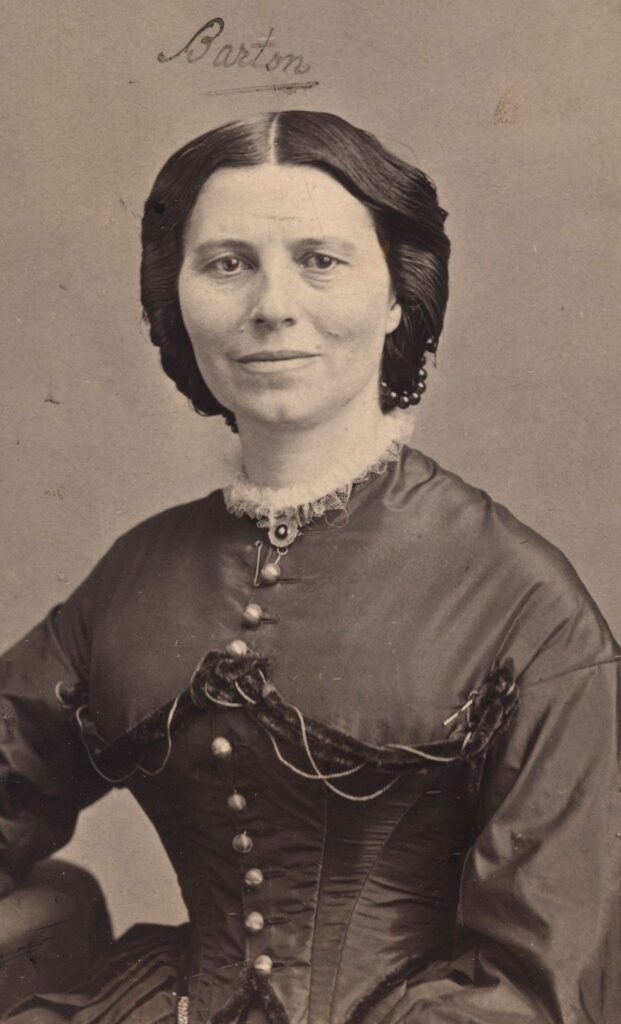
A Teacher, Clerk, and Reluctant Hero
Clarissa Harlowe Barton was born on December 25, 1821, in North Oxford, Massachusetts.[1] Shy as a child but fiercely determined, Barton began teaching school at a young age and later became one of the first women employed as a clerk in the U.S. Patent Office in Washington, D.C.—a rare achievement for women in federal service in the mid-19th century.[2]
Her life changed dramatically with the outbreak of the Civil War in 1861. After witnessing wounded Union soldiers arriving in Washington without adequate medical supplies, Barton organized relief efforts herself. She gathered food, bandages, medicine, and clothing from civilian donors and personally delivered them to battlefields and field hospitals. Unlike many women of her era who remained far from combat zones, Barton insisted on serving near the front lines, often under dangerous conditions.[1]
Soldiers began calling her the “Angel of the Battlefield” because of her tireless efforts at battles, including Antietam, Fredericksburg, and Petersburg. Barton later helped identify missing soldiers after the war, working with grieving families to locate loved ones who had disappeared during combat.[3]
Discovering the International Red Cross
In 1869, exhausted from years of wartime service, Barton traveled to Europe to recover her health. While there, she learned about the International Red Cross movement, which had been founded in Switzerland after businessman Henry Dunant witnessed the horrific suffering of wounded soldiers at the Battle of Solferino in 1859.[1]
Dunant’s efforts led to the creation of the International Committee of the Red Cross and the first Geneva Convention, an international agreement establishing protections for wounded soldiers and medical personnel during wartime. Barton was astonished that the United States had not yet joined the treaty or established a national Red Cross society of its own.[2]
When the Franco-Prussian War erupted in 1870, Barton again entered a conflict zone, working alongside Red Cross volunteers in Europe to distribute supplies and assist civilians displaced by war. The experience convinced her that the United States urgently needed a similar humanitarian organization prepared to respond not only to war but also to natural disasters and public emergencies.[1]
Founding the American Red Cross
After returning to the United States, Barton spent years lobbying political leaders and educating the public about the Red Cross mission. Her persistence paid off on May 21, 1881, when she officially founded the American Red Cross in Washington, D.C.[2]
The organization’s early goals reflected both international humanitarian ideals and uniquely American needs. Barton argued that the Red Cross should respond not only to wartime suffering but also to floods, hurricanes, epidemics, fires, and other disasters affecting civilians. This broader mission became known as the “American Amendment” to the Red Cross model and helped shape disaster relief work in the United States for generations.[3]
The following year, in 1882, the United States formally ratified the Geneva Convention, bringing the nation into the international humanitarian framework Barton had championed.[1]
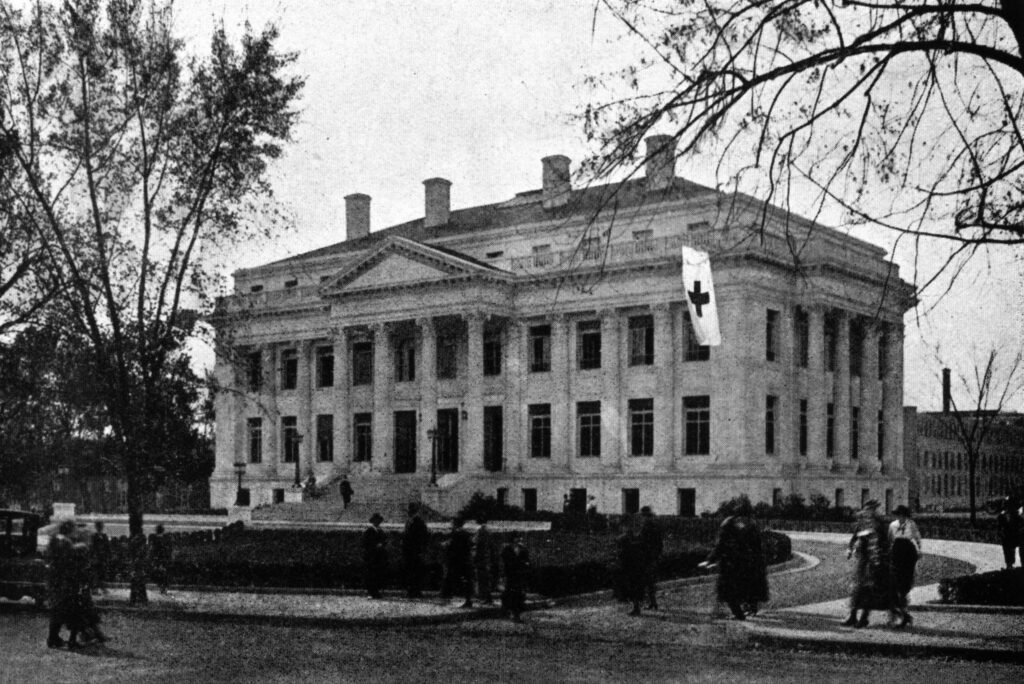
From Battlefield Aid to National Institution
During its early decades, the American Red Cross responded to some of the nation’s deadliest disasters, including the Johnstown Flood of 1889, hurricanes along the Gulf Coast, forest fires, and epidemics.[3] Barton herself frequently traveled directly into disaster areas to coordinate relief operations and distribute aid.
By the early 20th century, the organization had evolved into a major national institution. During World War I and World War II, millions of Americans volunteered through the Red Cross to support troops overseas, roll bandages, prepare care packages, staff hospitals, and donate blood.[1]
The Red Cross also became central to civilian emergency response. Today, the organization provides disaster shelters, emergency assistance after fires and storms, blood drives, CPR and first-aid training, international humanitarian aid, and support services for military members and veterans.[2]
Its emblem — a red cross on a white background — has become one of the most widely recognized humanitarian symbols in the world.
Clara Barton’s Leadership and Legacy
Clara Barton served as the first president of the American Red Cross for more than two decades, from 1881 to 1904.[3] Though widely admired for her courage and compassion, Barton also faced criticism over management disputes and organizational challenges as the Red Cross expanded rapidly. She eventually resigned at age eighty-two.
Yet Barton’s influence on American civic life remained profound. At a time when women had limited political rights and few leadership opportunities, she built a nationwide humanitarian organization that reshaped how Americans responded to crisis and suffering.
Her work reflected a powerful civic principle: that citizenship includes responsibility for the well-being of others. The Red Cross was never simply about charity. It was about organized civic action — ordinary people volunteering time, resources, and labor to help communities endure moments of catastrophe.
Why the Red Cross Still Matters
The founding of the American Red Cross reminds us that civic engagement is not limited to voting booths, legislatures, or courtrooms. It also lives in acts of service, mutual aid, disaster response, and care for vulnerable neighbors.
For nearly 145 years, the Red Cross has relied on volunteers willing to answer emergency calls in moments of fear and uncertainty. Whether assisting families displaced by hurricanes, supporting members of the military, coordinating blood donations, or helping communities rebuild after tragedy, the organization continues to demonstrate how civic responsibility can take practical, lifesaving form.
Its history also reflects a broader truth about democracy itself: strong societies depend not only on institutions of government but also on citizens willing to serve one another in times of need.
The anniversary of its founding offers an opportunity to reflect not only on Clara Barton’s extraordinary leadership, but also on the generations of volunteers whose acts of compassion helped define the American Red Cross — and continue to strengthen civic life today.