

How the First Quorum Shaped Congress: America’s Earliest Legislative Challenge
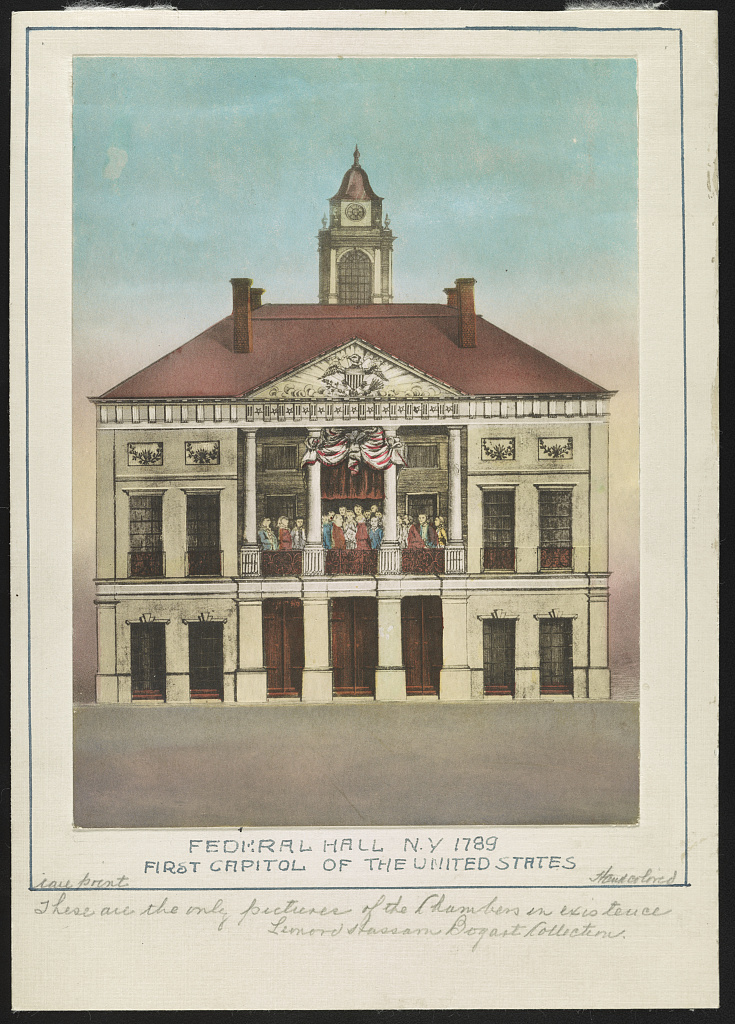
Every year on March 23, our On This Day feature at Civics for Life highlights a defining moment in America. In the spring of 1789, the United States was poised to take its first breath as a functioning constitutional government. The long fight for ratification was over. Elections had been held. The nation looked to New York City, where Congress was set to gather and begin the extraordinary work of turning a written framework into a living government. But as the appointed day came and went, something unexpected happened: Congress simply could not begin. Not because of political deadlock. Not because of constitutional confusion, but because not enough members had shown up.
That simple, human fact — that the gears of the most carefully designed government in the world could not turn without people physically walking through the door — turned out to be one of the most instructive moments in American civic history.
March 4, 1789 — and the Long Wait That Followed
March 4, 1789, was designated the official start of the First Federal Congress. The date carried the weight of history. But the reality of 18th-century America quickly complicated the plan. Roads were muddy from late-winter thaw. Rivers ran high and fast. Storms lingered across the mid-Atlantic states. Newly elected representatives, many traveling hundreds of miles on horseback or by coach from states as far as Georgia and New Hampshire, were simply not going to make it in time.
The House of Representatives waited nearly a month before enough members arrived to form a quorum — finally reaching that threshold on April 1, 1789.¹ The Senate took five more days, achieving its quorum on April 6.² In the meantime, Congress could conduct no official business whatsoever. The electoral votes certifying George Washington’s election could not be counted. His inauguration could not be scheduled. The new government existed on paper — and only on paper.
For a nation still fragile with revolutionary hope, it was a frustrating delay. But it was also, in retrospect, a profound lesson.
What Is a Quorum, and Why Does It Matter?
A quorum is the minimum number of members required for a legislative body to conduct official business. Under the Constitution, a majority of each chamber’s membership meets that threshold. It is a seemingly simple rule, but it carries enormous democratic weight.
Quorum requirements exist to prevent a small faction — or even a well-organized minority — from making binding decisions on behalf of the whole. They are a structural guarantee that decisions reflect the participation of a meaningful share of the people’s elected representatives, not just whoever happens to be present on a slow afternoon. The framers understood that legitimacy in a representative democracy is not automatic. It must be earned through presence and participation.
This principle was not hypothetical in 1789. It was the reason the government could not move forward, and why the nation had to wait.
Once the Work Began, It Moved Quickly

When the quorum was finally established, the pace of the new Congress was remarkable. Within months, members had created the executive departments — State, Treasury, and War — establishing the administrative infrastructure of the federal government. They passed the Judiciary Act of 1789, which created the federal court system, including the Supreme Court, from the ground up. And they began the work of amending the Constitution itself.
James Madison was central to all of it. Already the primary architect of the Constitution, Madison arrived at the First Congress determined to make good on the promises made during ratification — promises that a Bill of Rights would follow. He studied more than 200 amendments proposed at the state ratifying conventions, distilled them, and introduced what became the first ten amendments to the Constitution on June 8, 1789.³ His careful, methodical presence helped transform constitutional theory into a government that Americans could actually see and feel.
The Human Dimension
It’s tempting to look back at the First Congress as a gathering of marble figures — Founders with capital letters, men outside ordinary time. But the reality was far more human. These were farmers, lawyers, merchants, and planters who had left their livelihoods, their families, and their farms to travel difficult roads to an unfamiliar city. Their delayed arrivals were not signs of disinterest. They were signs of a new nation still working out what it meant to govern itself across vast distances, with no railroads, no telegraphs, and no reliable postal system.
That human dimension makes the story more meaningful, not less, because it means that everything that followed — the Bill of Rights, the federal judiciary, the cabinet system — was built by people who showed up against real obstacles, under real uncertainty, with no guarantee that any of it would work.
A Lesson That Belongs to All of Us
The first quorum is not simply a footnote. It is a mirror.
Every generation faces its own version of this moment: the question of whether the people entrusted with democratic participation will show up. Not just elected officials in legislative chambers, but citizens at polling places, community members at school board meetings, neighbors at town halls. Democracy is not self-executing. It requires presence — literal and figurative. It requires people who treat participation not as optional, but as essential.
The First Congress could not act without its members. Neither can democracy.
Show up. That’s where it starts.
Footnotes:
- “The First Quorum of the House of Representatives,” History, Art & Archives, U.S. House of Representatives. https://history.house.gov/Historical-Highlights/1700s/The-first-Quorum-of-the-House-of-Representatives/
- “Treasures from the Senate Archives: Long Journey to Quorum,” U.S. Senate. https://www.senate.gov/artandhistory/senate-stories/treasures-from-the-senate-archives-long-journey-to-quorum.htm
- “James Madison and the First Federal Congress,” History, Art & Archives, U.S. House of Representatives. https://history.house.gov/Blog/2023/November/11-22-First-Federal-Madison/