

The Louisiana Purchase: A Gamble that Redefined America
On October 20, 1803, the United States Senate voted to approve the treaty that made the Louisiana Purchase official. With that ratification, a young republic doubled its size overnight, securing control of the Mississippi River and opening vast new lands for exploration and settlement. What had begun as a negotiation for the port of New Orleans ended as one of the boldest land deals in history, reshaping the future of the nation.
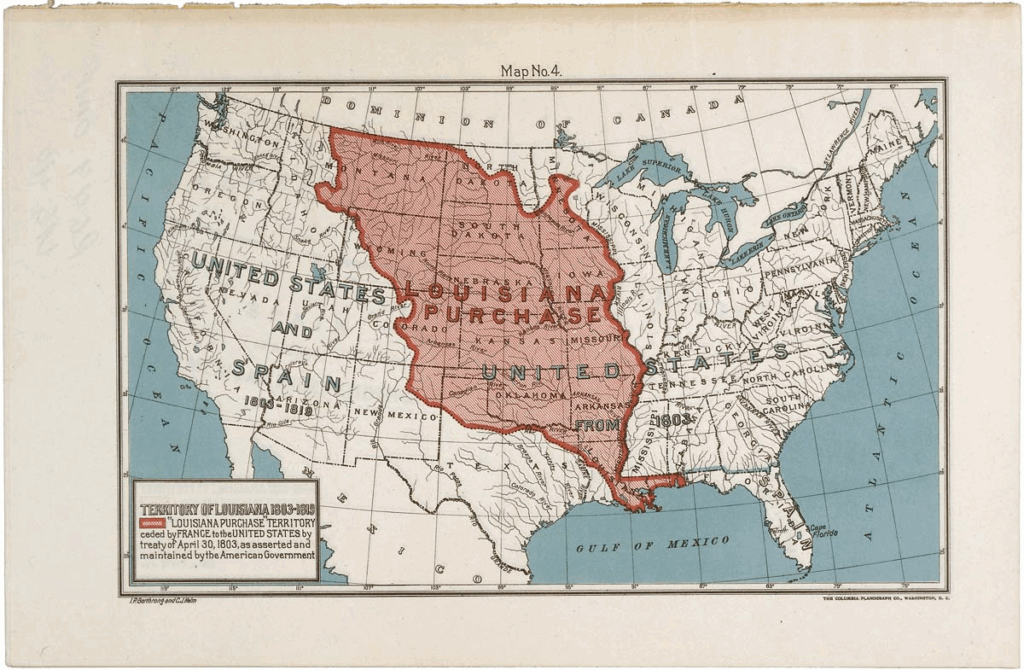
Control of New Orleans and Louisiana had shifted repeatedly among European powers. France had ceded the territory to Spain in 1762 after the Seven Years’ War. Spain administered it for nearly four decades, but its rule was thin, its garrisons weak, and its influence on the frontier limited. In 1800, under the secret Treaty of San Ildefonso, Spain agreed to return Louisiana to France. News of the transfer alarmed American leaders. A weak Spain as a neighbor was tolerable; an ambitious France under Napoleon Bonaparte was another matter.
Jefferson’s Strategic Concern
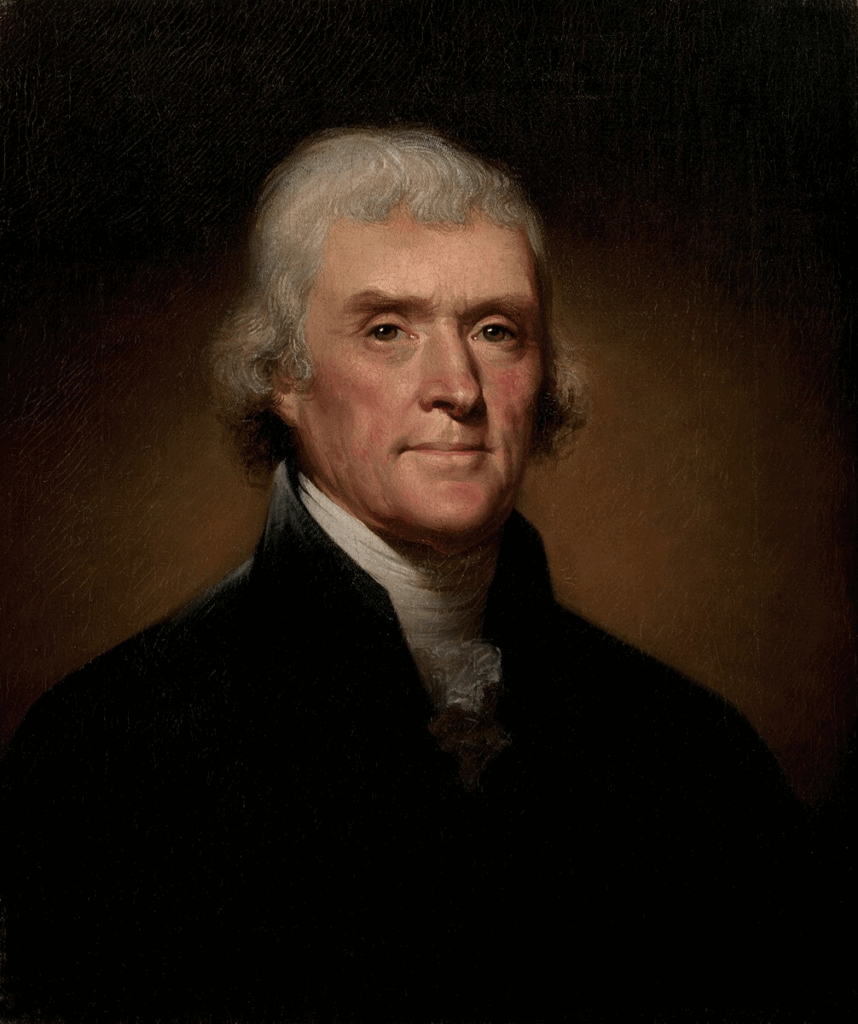
President Thomas Jefferson envisioned the United States as a “nation of farmers,” an agrarian republic sustained by access to abundant land. But his vision depended on secure access to western waterways. If France closed the Mississippi or restricted passage at New Orleans, the entire interior of the continent could become economically stranded.
In 1802, Spanish officials acting on French instructions suspended the Americans’ “right of deposit” at New Orleans, which had allowed farmers to store goods there duty-free before export. Outrage swept the frontier. Some westerners even spoke of marching on New Orleans themselves. Jefferson recognized the danger: without a diplomatic solution, the Union itself could fracture.
Napoleon’s Shifting Priorities
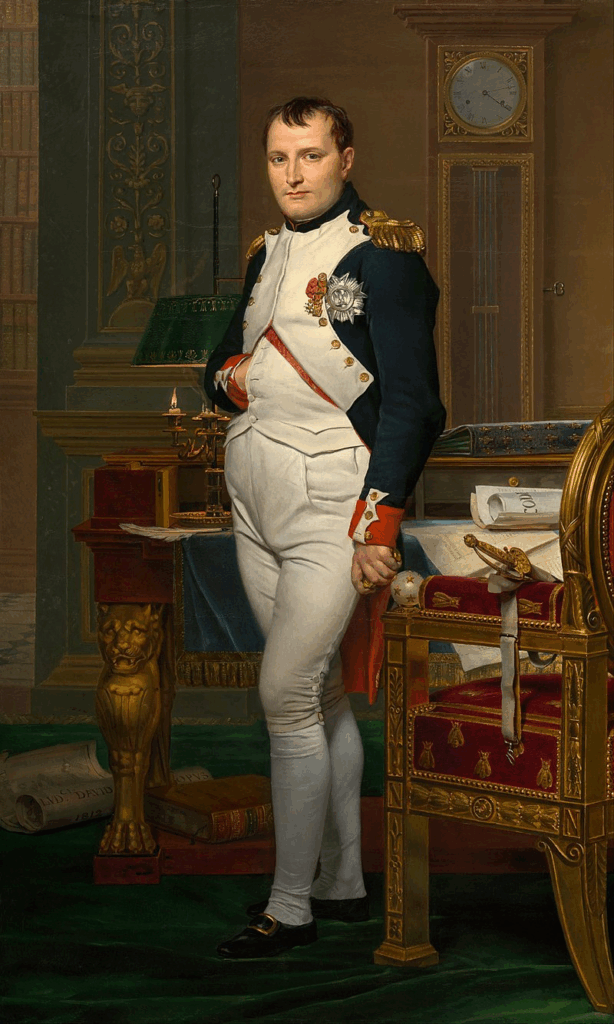
Napoleon’s original plan for Louisiana was ambitious. He intended to rebuild a French colonial empire in the Americas, with Louisiana supplying food and raw materials to the sugar plantations of Saint-Domingue (modern Haiti). But this vision collapsed quickly.
Since 1791, enslaved people in Saint-Domingue had risen in a massive revolt, led first by Toussaint Louverture and later by Jean-Jacques Dessalines. By the early 1800s, Napoleon sent tens of thousands of troops to restore control. Yellow fever devastated the French army, and by 1804, the revolutionaries declared Haiti’s independence. Without Saint-Domingue, Louisiana lost its role as a supporting colony.
Meanwhile, war in Europe loomed. Napoleon needed cash to finance his armies and preferred to see Louisiana in American hands rather than risk it falling to Britain. His decision was pragmatic: better to profit from Louisiana than attempt to defend it.
The Surprise Offer
Jefferson had instructed his envoys, Robert Livingston in Paris and newly dispatched James Monroe, to negotiate for New Orleans and perhaps parts of Florida, with a budget of up to $10 million. They were utterly unprepared for what the French offered.
In April 1803, French Foreign Minister Charles Maurice de Talleyrand stunned the Americans by proposing the sale of the entire Louisiana Territory. Livingston and Monroe quickly grasped the opportunity. For $15 million, the United States would acquire about 828,000 square miles of land, an area stretching from the Mississippi River to the Rocky Mountains, including future states such as Arkansas, Missouri, Iowa, North Dakota, South Dakota, Nebraska, and parts of Montana, Wyoming, Colorado, Louisiana, and Minnesota.
Jefferson’s Constitutional Scruples
The offer delighted Jefferson but troubled him as well. A strict interpreter of the Constitution, he worried that no clause explicitly gave the federal government power to acquire territory. He briefly considered proposing a constitutional amendment but decided instead to rely on the treaty-making power granted to the president.
The Senate ratified the Louisiana Purchase Treaty on October 20, 1803, by a vote of 24 to 7. The House approved the necessary funding soon after. For about four cents an acre, the United States had doubled its size overnight.
Practical Challenges of the New Territory
Even as celebrations spread, the government faced questions. The Louisiana Territory was home to tens of thousands of Indigenous peoples, such as the Osage, Sioux, Mandan, and Pawnee, who had never consented to any transfer of sovereignty. Creoles of French and Spanish descent, free Black communities, and enslaved people also populated it. Governing such a diverse territory posed challenges.
To assert control, Jefferson commissioned Meriwether Lewis and William Clark to lead the Corps of Discovery (1804–1806). Their expedition mapped rivers, recorded plant and animal life, and established relationships, sometimes friendly, sometimes tense with Native nations. The journey demonstrated both the opportunities and complexities of America’s new frontier.
Economic and Geopolitical Impact
The Louisiana Purchase secured the Mississippi River and New Orleans, anchoring the economic future of the western territories. It also gave the United States vast new lands for farming, settlement, and eventual statehood.
Internationally, the purchase rebalanced power. Napoleon gained funds for his European wars, and Britain faced the reality of a stronger United States with continental ambitions. Jefferson’s critics warned that the vast territory would be impossible to govern, but the purchase positioned America as a rising power with room to expand for generations.
Legacy
The Louisiana Purchase remains one of the boldest land deals in history. It doubled the size of the United States, secured its western frontier, and ensured its control of a vital river system. It also set precedents: that presidents could acquire territory through treaty, that America’s destiny was continental, and that expansion carried both promise and peril.
For Jefferson, who once doubted its constitutionality, the purchase became a crowning achievement of his presidency. For Indigenous nations, however, it marked the beginning of greater displacement as American settlers pressed westward.
In 1803, the United States was still a fragile experiment in self-government. In Paris, a single pen stroke transformed the United States into a continental power. The Louisiana Purchase was not just a land transaction; it was a transformation of national identity.