

The Midnight Ride: The Real Story Behind America’s Most Famous Night on Horseback
On the night of April 18, 1775, a silversmith, a tanner, and a young doctor galloped through the Massachusetts countryside, risking capture to warn sleeping towns that British troops were on the march. Only one of their names became legendary. This is the full story — the history behind the myth, and the civic lesson that outlasts both.
A City on Edge
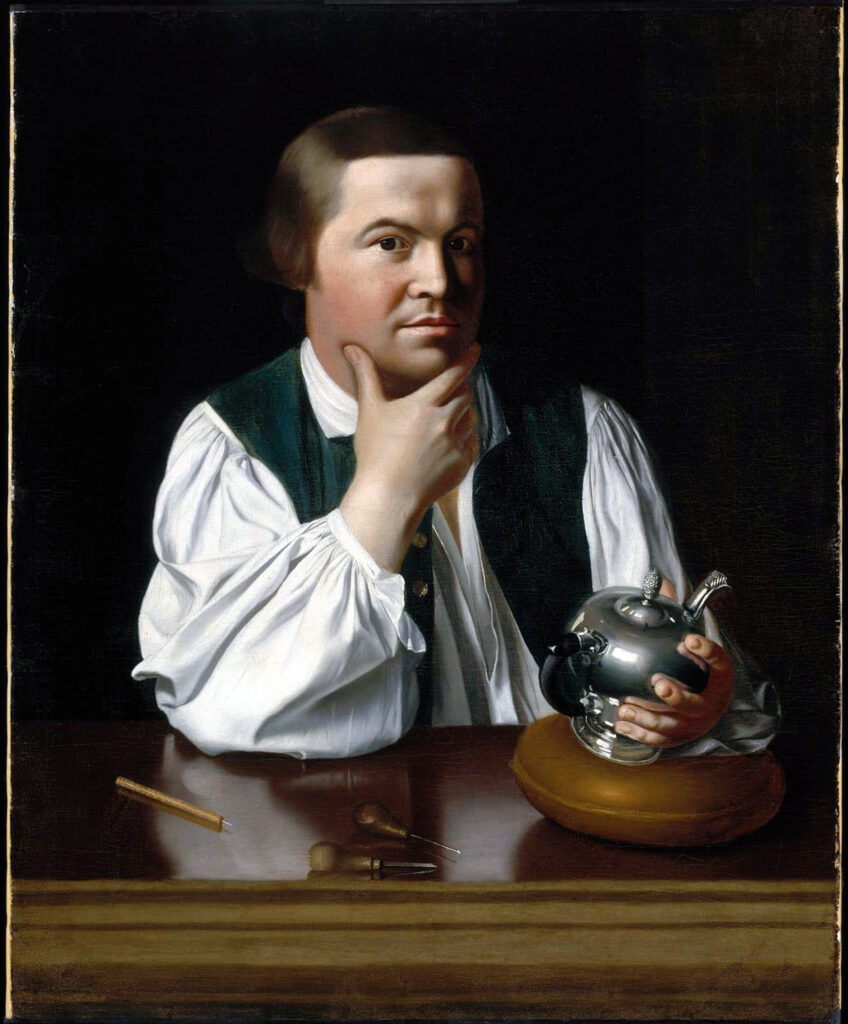
By the spring of 1775, Boston was a city under occupation. British soldiers, known to the colonists as Regulars or Redcoats, had been garrisoned in the city for years. Tensions had been building since the Boston Massacre of 1770, through the Boston Tea Party in 1773, and into the Intolerable Acts of 1774, which closed Boston’s port and effectively placed Massachusetts under military rule. The Sons of Liberty and the colonial Committees of Safety had built a sophisticated intelligence network to monitor British troop movements and issue early warnings. Paul Revere had served as an express rider for this network since 1774, carrying messages and documents as far as New York and Philadelphia.[1]
In mid-April 1775, intelligence reached patriot leaders that the British were preparing a major expedition into the countryside. General Thomas Gage, the British commander in Boston, had received orders to seize the colonial militia’s military stores — gunpowder, ammunition, and cannon — believed to be stockpiled in Concord, about eighteen miles northwest of Boston. There were also reports that British troops intended to arrest patriot leaders Samuel Adams and John Hancock, who were then staying in Lexington. The alarm system was about to be tested in earnest.
| AT A GLANCE Date: Night of April 18–19, 1775 Key riders: Paul Revere, William Dawes, Dr. Samuel Prescott Organized by: Dr. Joseph Warren, Boston Committee of Safety Signal: Two lanterns in Old North Church (“by sea” via Charles River) Revere’s route: Boston → Charlestown → Medford → Lexington (captured near Lincoln) Who reached Concord?: Dr. Samuel Prescott — not Revere Result: Battles of Lexington & Concord, April 19 — the start of the Revolution Poem that changed everything: Longfellow’s “Paul Revere’s Ride,” published December 1860 |
The Evening of April 18: Warren’s Orders
On the evening of April 18, 1775, Dr. Joseph Warren — the patriot leader who would die just two months later at the Battle of Bunker Hill — summoned Paul Revere and William Dawes separately and dispatched them on urgent missions. The decision to send two riders was deliberate: if one were captured, the other would still get through. Revere would take the shorter but more dangerous route — across the Charles River by boat. Dawes would take the longer overland route through Boston Neck.[1]
Before leaving, Revere made a crucial arrangement: he contacted a friend — most likely Robert Newman, the sexton of Christ Church in Boston’s North End — and instructed him to hang signal lanterns in the church steeple to alert Sons of Liberty across the river in Charlestown about the British route of march. Two lanterns meant the troops planned to row across the Charles River rather than march out by land. This was a backup signal in case Revere himself could not get out of Boston. The church is now known as the Old North Church. The moment — “one if by land, and two if by sea” — has since become one of the most famous phrases in American history. However, the signal was intended for Charlestown, not as a message to Revere waiting on the shore, as Longfellow’s poem would later suggest.
“Noise! You’ll have noise enough before long. The Regulars are coming out!”
Paul Revere, upon arriving at the Lexington house where Samuel Adams and John Hancock were staying, April 19, 1775 — per the account of the house’s sentry
The Ride Itself
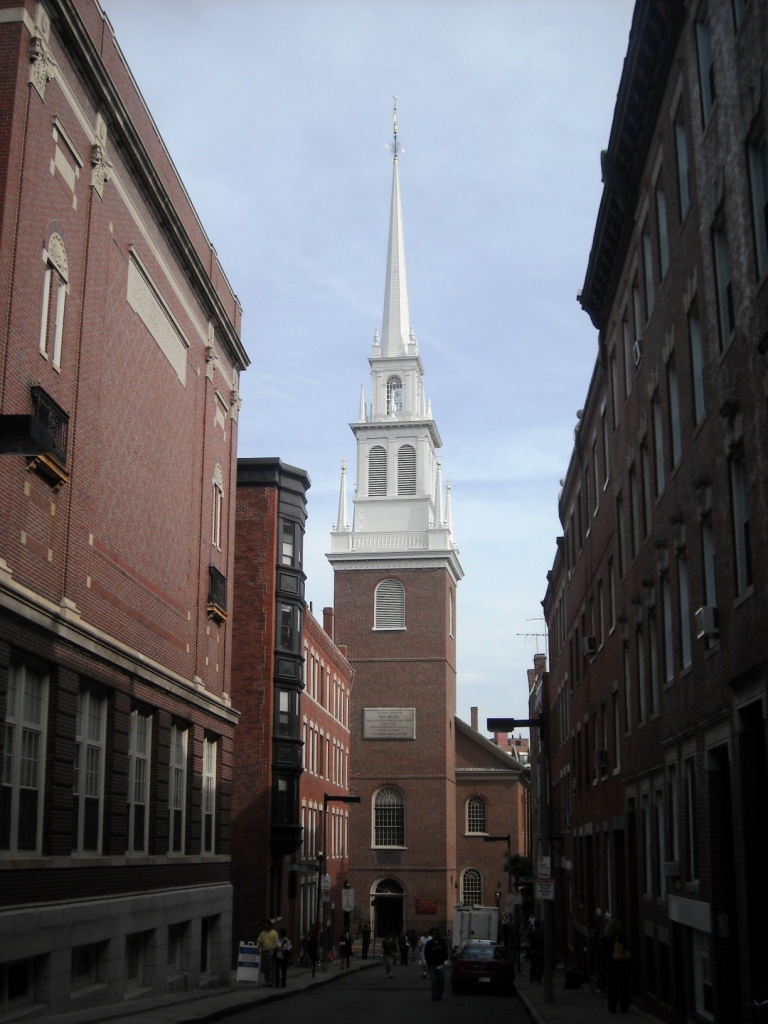
Revere was rowed across the Charles River by two friends, slipping past the British warship HMS Somerset in the darkness. After landing in Charlestown and borrowing a horse from local merchant John Larkin, he was warned by patriot Richard Devens that British patrols were already in the area. Revere changed his planned route, narrowly avoided a pair of patrolling officers just outside Charlestown, and rode through Medford, where he woke the captain of the local militia. He then alarmed nearly every house from Medford through Menotomy — today’s Arlington — and arrived in Lexington shortly after midnight.[1]
At the house where Adams and Hancock were staying, a sentry asked Revere to keep down the noise. “Noise!” Revere reportedly exclaimed. “You’ll have noise enough before long. The Regulars are coming out!” He delivered his message and, around half past midnight, William Dawes arrived by the longer land route, having ridden through Roxbury and Cambridge. After a brief rest, both men decided to press on toward Concord to check on the military stores. Shortly outside of Lexington, they were joined by a third rider: Dr. Samuel Prescott, a young Concord physician who happened to be in Lexington that night, returning from a visit to his fiancée.
Three Riders, One Night: The Full Picture
What happened next is where the popular legend diverges most sharply from the historical record. A British patrol intercepted all three riders on the road toward Concord. Dr. Prescott jumped his horse over a stone wall and escaped into the woods; he eventually reached Concord and warned the militia there. Dawes also escaped, though he fell from his horse not long after and walked back to Lexington. Revere was detained, questioned by the patrol officers, and then released — but his horse was confiscated. He returned to Lexington on foot and arrived in time to witness the opening moments of the battle on Lexington Green on the morning of April 19.[4]
The man who “completed the ride” to Concord was Samuel Prescott. And Revere and Dawes were themselves only the leading edge of a much larger alarm network. As they rode, they triggered a flexible system of riders who spread out into surrounding towns — Medford, Woburn, Burlington, Lincoln, Acton, and beyond. Historians estimate that at least forty riders were ultimately involved in spreading the alarm that night. The image of a lone horseman galloping through the dark countryside, shouting to every village, is… a poem.
Longfellow’s Poem and the Legend It Made
Paul Revere died in 1818. His obituary made no mention of the midnight ride. For more than four decades after his death, he was remembered primarily as a skilled silversmith and a capable, if obscure, patriot. Then Henry Wadsworth Longfellow climbed the tower of the Old North Church on April 5, 1860, and began writing a poem the very next day.
Longfellow published “Paul Revere’s Ride” in December 1860, first in the Boston Evening Transcript and the Atlantic Monthly, and three years later in his collection Tales of a Wayside Inn. The poem was an immediate sensation — and it transformed Revere into a national icon.[2] It also got several things significantly wrong. In Longfellow’s telling, Revere waits on the Charlestown shore to see the lantern signals — but in reality, he arranged the signal himself as a backup plan and was already across the river when the lanterns were shown. The poem has Revere riding all the way to Concord — he never arrived there. And it omits Dawes and Prescott entirely.
Longfellow was aware of the historical liberties he was taking. He was writing not as a historian but as a poet with a political purpose: in 1860, on the eve of the Civil War, he wanted to invoke a shared revolutionary heritage — a sense that Americans of all backgrounds had once united around a common cause. The poem’s closing lines contain a warning to his own divided era: “In the hour of darkness and peril and need / The people will waken and listen to hear / The hurrying hoof-beats of that steed.” The National Park Service notes that Longfellow’s poem should be read as myth or legend, not as a historical account — but that its emotional and civic power is real.[2]

Paul Revere: More Than One Night
Longfellow’s poem has both elevated and, in an odd way, diminished Paul Revere — reducing a man of wide accomplishments to a single galloping night. The Smithsonian’s National Portrait Gallery notes that Revere was “America’s first defense contractor”: his foundry produced sheet copper used in shipbuilding, including sheathing for the USS Constitution, and he manufactured cannon and church bells.[3] He was a leading figure in Boston’s mechanic class — the skilled tradespeople who formed the backbone of colonial civic and commercial life. He participated in the Boston Tea Party, organized intelligence networks for the patriot cause, and served as an officer in the Continental Army. His silverwork, displayed in major museums today, is considered among the finest produced in colonial America.
Revere lived until 1818, long enough to see the Revolution he helped spark conclude in American independence and witness the founding of the republic he had risked his freedom to help create.
What This Night Teaches Us About Civic Action
For students of civics and history, the midnight ride offers a lesson that goes beyond Paul Revere. The most important thing about the night of April 18, 1775, was not the name of any single rider but the system those riders operated within. The Sons of Liberty and the Committees of Safety had spent months building an intelligence and alarm network: identifying trusted contacts in every town, establishing protocols, training riders, and arranging signals. When the night came, that system worked.
It was collective preparation, not individual heroism, that made the warning possible. Revere, Dawes, Prescott, and the dozens of other riders who spread the alarm that night were all part of an organized civic infrastructure built from the ground up by people who understood that liberty required active participation to defend. By the time British regulars reached Lexington Green on the morning of April 19, the militia was ready.
The shot that Ralph Waldo Emerson famously called “heard round the world” was fired on April 19 — in large part because of what happened the night before. The American Revolution did not begin in spite of ordinary citizens; it began because of them.
Timeline: The Night That Started a Revolution
Evening, April 18: Dr. Joseph Warren dispatches Paul Revere and William Dawes from Boston on separate routes to Lexington.
~9–10 PM: Robert Newman hangs two lanterns in the steeple of Old North Church. British troops begin rowing across the Charles River.
~11 PM: Revere crosses the Charles River by boat, borrows John Larkin’s horse in Charlestown, and sets off through Medford and Menotomy.
After midnight, April 19: Revere arrives in Lexington, wakes Adams and Hancock. Dawes arrives ~30 minutes later by the land route.
~1 AM: Revere and Dawes set out for Concord, joined by Dr. Samuel Prescott near Lexington.
~1:30 AM: A British patrol intercepts all three riders near Lincoln. Prescott escapes to Concord; Dawes escapes; Revere is captured and questioned.
Early morning, April 19: Released but horseless, Revere walks back to Lexington. Prescott warns Concord. The alarm spreads to dozens of towns.
~5 AM, April 19: British regulars arrive at Lexington Green. The waiting militia and British troops exchange fire — ‘the shot heard round the world.’
December 1860: Longfellow publishes “Paul Revere’s Ride,” transforming the historical actor into an American legend.
Sources & Further Reading
1. Paul Revere House, “The Real Story of the Midnight Ride”: www.paulreverehouse.org/the-real-story/
2. National Park Service, “Paul Revere’s Ride” (Longfellow House): www.nps.gov/long/learn/historyculture/paul-reveres-ride.htm
3. Smithsonian National Portrait Gallery, “Just the Facts, April 18, 1775”: npg.si.edu/blog/just-facts-april-18-1775-real-midnight-ride-paul-revere
4. American Battlefield Trust, “Paul Revere’s Ride: Legends, Myths, and Realities”: www.battlefields.org/learn/articles/paul-reveres-ride-legends-myths-and-realities