

Thomas Edison’s Public Exhibition of the Light Bulb: Igniting Modern Life
On December 31, 1879, American inventor Thomas Alva Edison staged one of the most iconic public exhibitions in the history of innovation: the first public demonstration of his practical incandescent light bulb at his Menlo Park, New Jersey, laboratory. What might have seemed like a simple technical demonstration at the time was, in reality, a historic moment with far-reaching implications. This event didn’t just unveil a brighter way to light the night—it set in motion a profound transformation in how societies live, work, learn, and govern.
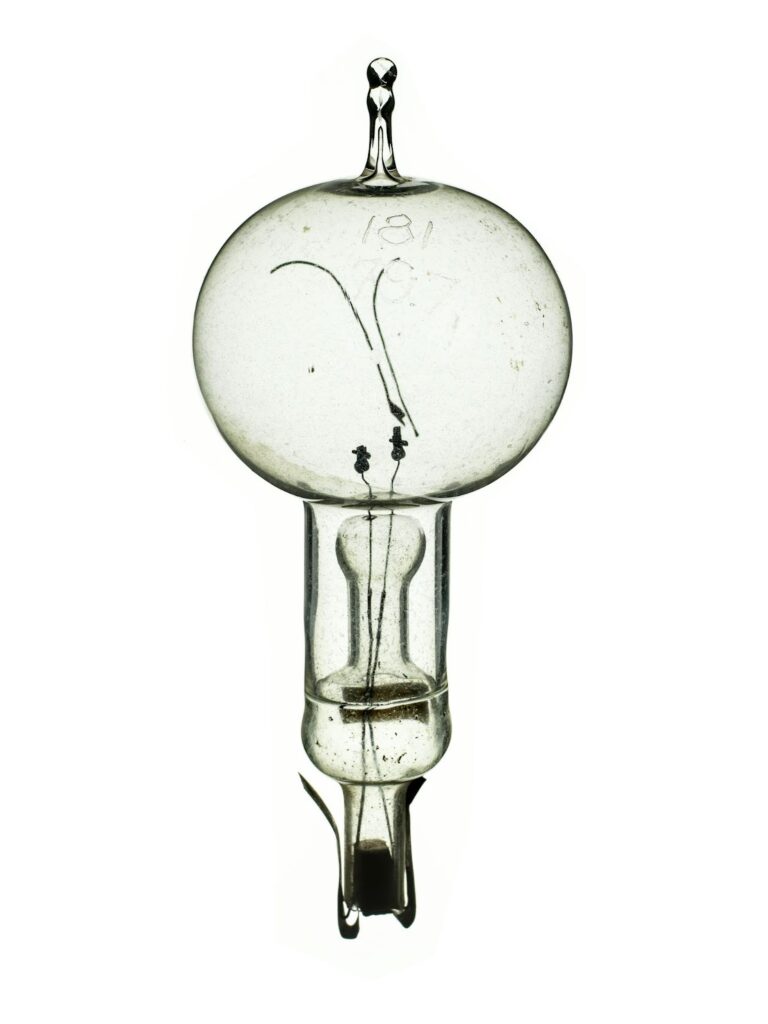
Before Edison, electric light existed primarily as a concept explored by scientists and inventors. Early experiments ranged from Humphry Davy’s arc lamp in 1802, which produced bright but impractical light, to Joseph Swan’s carbon filament lamp in England. While these experiments demonstrated that electricity could produce light, the designs were fragile, short-lived, and prohibitively expensive for everyday use. Edison’s innovation was unique because he approached the problem comprehensively: he not only developed a durable carbon filament that burned for hours but also designed an entire electrical distribution system to deliver power to multiple lamps reliably. This combination of practical design, durability, and scalability transformed electric lighting from a laboratory curiosity into a technology ready for mass adoption.
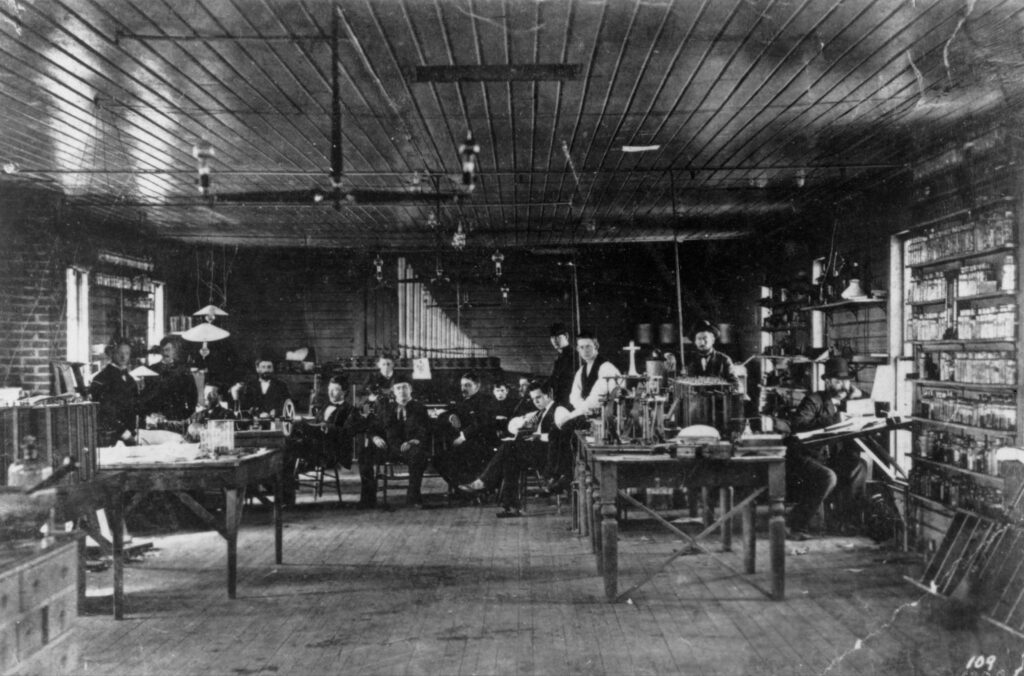
Edison’s approach reflected his broader philosophy of invention. At Menlo Park, often called his “Invention Factory,” Edison and his team of researchers treated every failed filament and burned-out bulb as an opportunity to learn and refine their methods. This relentless trial-and-error approach—over thousands of experiments—culminated in a bulb that could sustain light for more than 13 hours, long enough to demonstrate its practicality to the public and investors alike.
The Menlo Park Exhibition: Lighting Up the World
The exhibition on New Year’s Eve was not only a scientific milestone—it was a public spectacle. Edison opened the doors of his Menlo Park laboratory to guests, journalists, and local citizens, many of whom arrived in horse-drawn carriages or on special trains arranged by the Pennsylvania Railroad Company. Inside, rows of incandescent bulbs glowed steadily, bathing the laboratory in warm light. The effect was mesmerizing: guests who had never seen a room illuminated without gas lamps or candles experienced electricity’s practical application firsthand.
This public demonstration represented more than an engineering achievement; it was a civic moment. By inviting the community to witness the invention, Edison helped democratize knowledge, bridging the gap between laboratory research and public understanding. The Menlo Park exhibition demonstrated that science and innovation could directly improve daily life, influencing not only individual households but also public spaces, industry, and education. The glowing lamps symbolized progress and possibility, inspiring optimism about what human ingenuity could achieve when paired with persistence and public engagement.
From a civic perspective, Edison’s work illustrates the interconnectedness of technological innovation, societal needs, and public policy. Cities soon faced new challenges and opportunities in building electrical grids, regulating public utilities, and ensuring equitable access to electricity. Edison’s exhibition exemplifies how technological breakthroughs can shape civic infrastructure, guide public expectations, and alter the rhythms of daily life in profound ways.
Why Edison’s Work Mattered Civically
Edison’s demonstration underscores several civic themes central to Civics for Life:
- Innovation and Society: Breakthroughs like the light bulb illustrate how sustained problem-solving and collaboration can lead to inventions that shape society at large.
- Public Engagement: Edison’s invitation to the public underscores the importance of early community involvement in fostering understanding, excitement, and trust in new technologies.
- Infrastructure and Progress: The electric light bulb catalyzed the development of modern infrastructure, from street lighting to electrical grids, demonstrating how technological advancements influence economic growth, safety, and quality of life.
The Light Bulb’s Legacy
While Edison did not invent the concept of the light bulb from scratch, his practical design and holistic approach made mass electrical lighting possible, permanently altering human civilization. By creating a reliable, manufacturable lamp alongside a supporting electrical system, Edison paved the way for electric utilities, industrial electrification, and urban modernization.
Edison’s perseverance also inspired future generations of inventors and engineers, showing that trial, failure, and adaptation are integral to discovery. The Menlo Park exhibition remains a powerful example of how scientific achievement can illuminate not just rooms, but entire societies.