

The Treaty of Guadalupe Hidalgo and America’s New Border
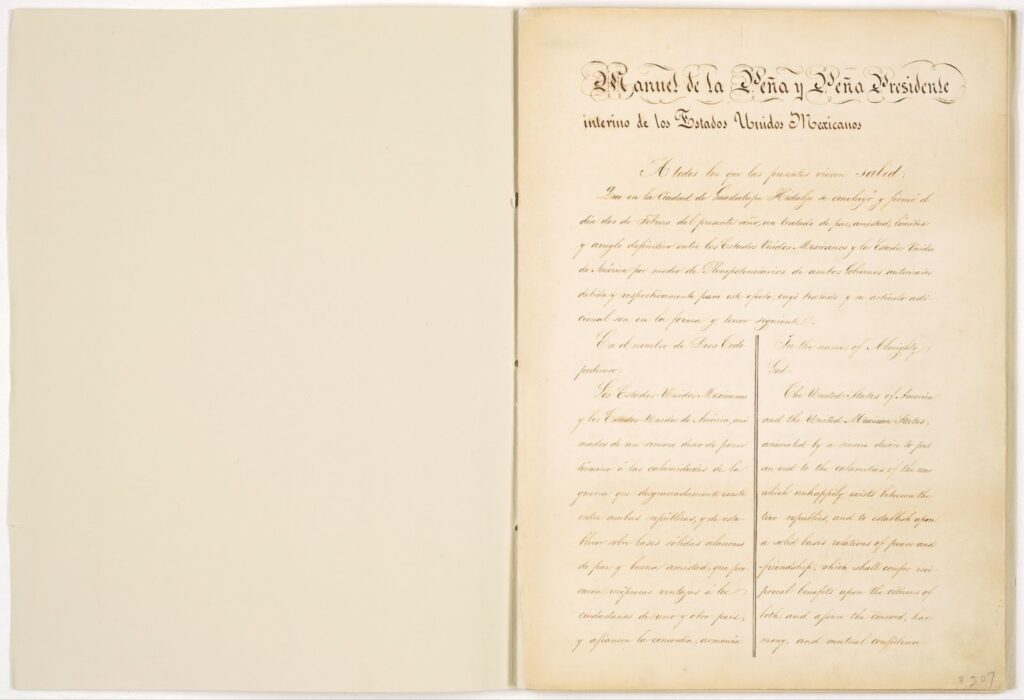
On February 2, 1848, representatives of the United States and Mexico gathered in a small town outside Mexico City to conclude a war that had lasted less than two years—but whose effects would endure for generations. The Treaty of Guadalupe Hidalgo formally ended the Mexican-American War and transferred an enormous swath of land from Mexico to the United States. In doing so, it permanently altered the nation’s geography and raised lasting questions about citizenship, rights, and the responsibilities of a democratic government.
The treaty is often summarized in terms of territory gained or money exchanged. Yet its deeper importance lies in how it shaped the civic and political development of the United States during a period of rapid growth and national uncertainty.
The Road to Conflict
The roots of the Mexican-American War can be traced to westward expansion and unresolved tensions following Mexico’s independence from Spain in 1821. As American settlers moved into Mexican territories, particularly Texas, disagreements over governance, borders, and sovereignty intensified. When Texas was annexed by the United States in 1845, Mexico contested the move, viewing it as an unlawful seizure of territory.1
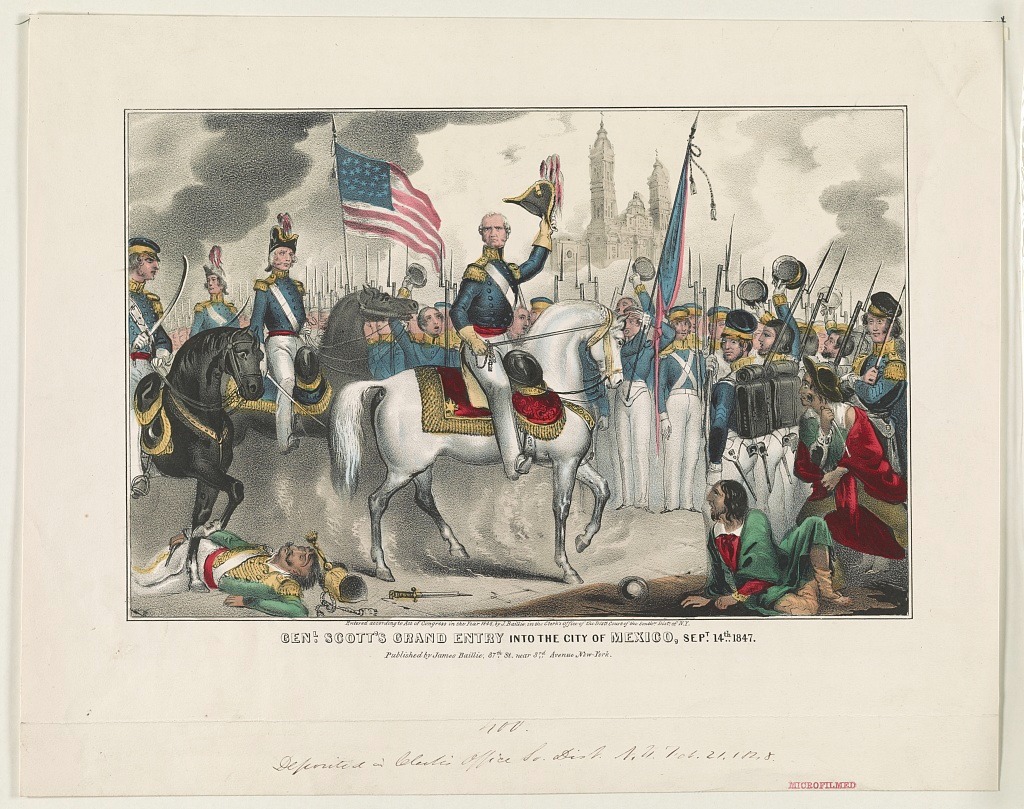
In 1846, fighting broke out along the disputed Texas-Mexico border. Congress soon declared war, and American forces advanced deep into Mexican territory, eventually occupying Mexico City. While the military conflict was relatively brief, it was controversial in both nations and debated intensely within the United States.
Signing the Treaty
Peace negotiations took place in the town of Guadalupe Hidalgo, named for a nearby basilica and now part of modern Mexico City. The treaty signed there ended hostilities and set the terms for peace.
Under the agreement, Mexico ceded approximately 525,000 square miles of territory to the United States—nearly half of its national land at the time. This land included what would become California, Nevada, Utah, and portions of Arizona, New Mexico, Colorado, and Wyoming. In return, the United States agreed to pay Mexico $15 million and to assume certain claims held by American citizens against the Mexican government.2
The U.S. Senate ratified the treaty in March 1848, with some modifications, officially bringing the war to a close.
Citizenship and Promised Protections
One of the treaty’s most significant—and most often overlooked—sections concerned the people who already lived in the transferred territories. Tens of thousands of Mexican residents suddenly found themselves living under a new government.
The treaty promised these residents the option to remain Mexican citizens or become U.S. citizens. It also guaranteed protection of property rights and stated that they would enjoy the same rights as other American citizens.3 These provisions reflected foundational civic ideals, including equal protection under the law and respect for private property.
However, implementation fell far short of these promises. In the decades that followed, many Mexican Americans faced legal challenges to land ownership, exclusion from political power, and discrimination in courts and public life. These outcomes illustrate the gap that can exist between democratic principles and lived reality—a recurring theme in American history.
How the Treaty Reshaped the Nation
The territorial gains from the treaty accelerated major developments in U.S. history. Just days before the treaty was signed, gold was discovered in California, triggering a migration that transformed the nation’s economy and demographics. The newly acquired lands also intensified debates over whether slavery would be permitted in western territories, contributing to sectional tensions that eventually led to the Civil War.4
The treaty also set precedents for how the United States governed newly acquired territories and incorporated culturally diverse populations. These decisions shaped federal-state relations, voting rights, and the long-term evolution of American civic identity.
Why the Treaty Still Matters

The Treaty of Guadalupe Hidalgo remains relevant because it sits at the intersection of geography, law, and citizenship. Modern discussions about borders, civil rights, and representation cannot be fully understood without recognizing how these issues developed in the mid-19th century.
Studying the treaty encourages civic reflection: How should governments honor agreements? What responsibilities accompany national growth? And how do democratic ideals hold up under pressure?
Understanding this moment in history does not require taking sides. Instead, it offers an opportunity to better understand how the United States became what it is today—and how its democratic institutions continue to evolve.
Explore more important dates and stories in History Lessons.
Footnotes
- Library of Congress, Mexican-American War Overview
https://guides.loc.gov/mexican-war - National Archives, Treaty of Guadalupe Hidalgo (1848)
https://www.archives.gov/milestone-documents/treaty-of-guadalupe-hidalgo - Avalon Project, Yale Law School, Treaty of Peace, Friendship, Limits, and Settlement with the Republic of Mexico
https://avalon.law.yale.edu/19th_century/guadhida.asp - Smithsonian National Museum of American History, Westward Expansion and Sectional Conflict
https://learninglab.si.edu/collections/triumph-and-tragedy-westward-expansion-nhd-the-national-museum-of-american-history/facs20nMe9CyxE9D