

William Henry Harrison and the Shortest Presidency
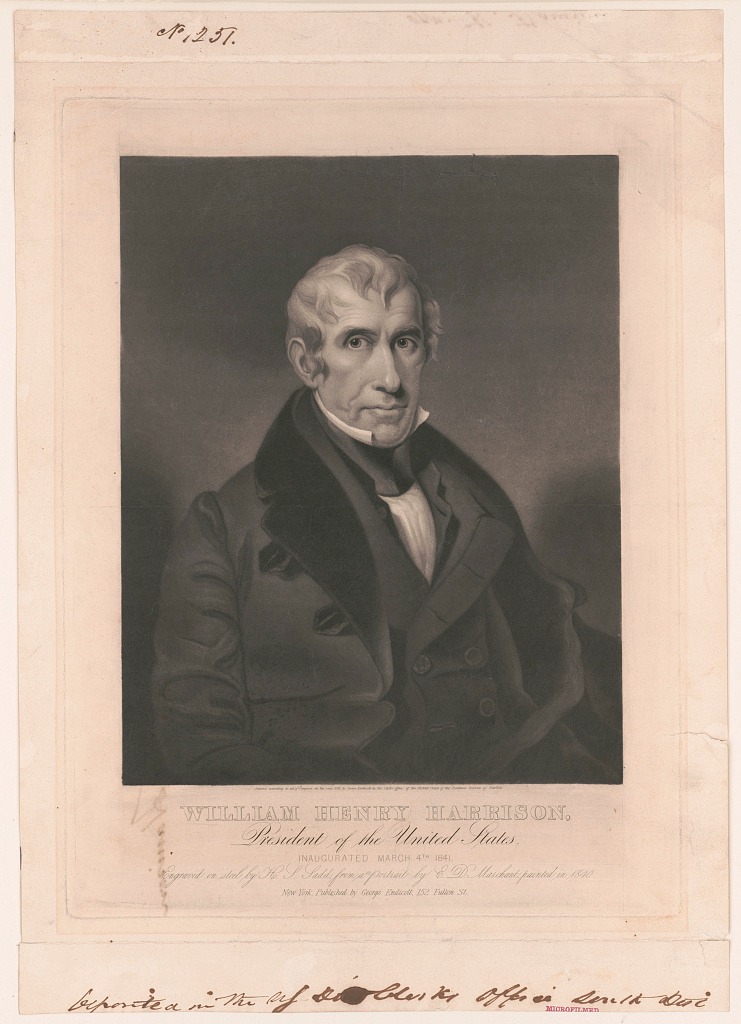
William Henry Harrison is best remembered for his brief presidency. His time in office lasted just 31 days — shorter than any other U.S. president. But the circumstances surrounding his election, inauguration, and death had consequences that reached far beyond that single month. His story touches on early frontier governance, the rise of modern campaigning, and one of the first real-world tests of presidential succession under the Constitution.
Born on February 9, 1773, Harrison entered the world before the United States itself was fully formed. By the time he reached national office, the country had expanded westward, political parties had matured, and presidential elections had become more public and competitive. His life traced the arc of a young nation finding its footing.
Early Life and Frontier Leadership
Harrison was born at Berkeley Plantation in Virginia to a prominent family. His father, Benjamin Harrison V, signed the Declaration of Independence and served as Virginia’s governor. Despite that political background, William Henry Harrison began his career in the military rather than in law or elected office.
He joined the U.S. Army in the 1790s and served in the Northwest Territory, where the federal government was working to establish authority and organize settlement. The region was complex and often volatile, with overlapping claims and frequent conflict.
In 1801, Harrison was appointed governor of the Indiana Territory. In that role, he negotiated a series of treaties with Native American tribes that transferred large areas of land to the United States for settlement. These treaties were significant to American expansion, though many were contested at the time and remain debated by historians today for how they were negotiated and enforced.[1]
Tippecanoe and a National Reputation
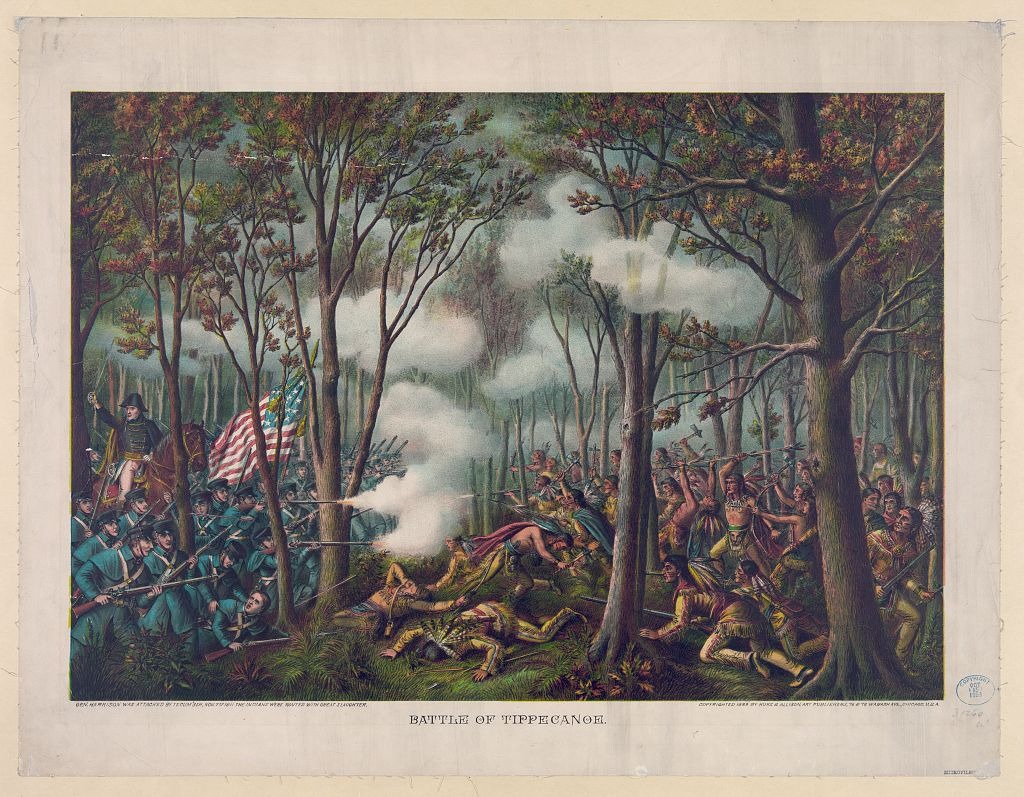
Harrison became widely known after the Battle of Tippecanoe in 1811. Forces under his command fought Native American resistance fighters associated with Shawnee leaders Tecumseh and Tenskwatawa. While the broader regional conflict continued, the battle elevated Harrison’s national profile and established his public image as a military leader.[2]
He later served in Congress and in diplomatic posts, remaining active in public life. His military reputation and name recognition made him an appealing presidential candidate years later.
The Election of 1840 and a New Campaign Style
By 1840, presidential campaigns were changing. Expanded voting rights for white male citizens and the growth of party organization meant campaigns reached voters more directly than in earlier decades.
Harrison, nominated by the Whig Party, was promoted as a war hero and man of the people. His supporters organized rallies, distributed campaign materials, and popularized slogans and songs. The phrase “Tippecanoe and Tyler Too,” referring to Harrison and his running mate John Tyler, became one of the best-known campaign slogans in American history. Voter turnout in the 1840 election was notably high for the period, reflecting the growing energy of party politics.[3]

A Historic Inauguration — and a Sudden Loss
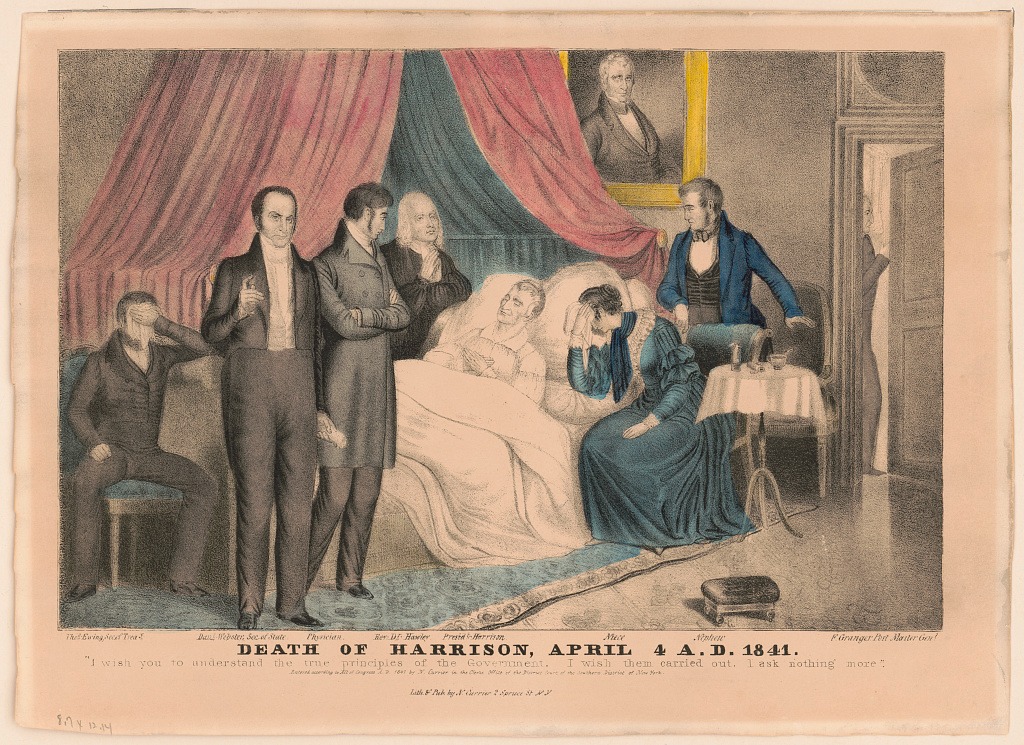
Harrison took the oath of office on March 4, 1841. His inaugural address — still the longest on record — focused heavily on constitutional structure, limits on executive power, and civic responsibility.
Within weeks, he became seriously ill. Medical understanding and treatment were limited by the standards of the time. Harrison died on April 4, 1841, only one month after his inauguration.[4]
His death came as a shock to the country and created an immediate constitutional question.
Testing Presidential Succession in Practice
The Constitution provided that presidential powers would pass to the vice president if a president died in office, but it did not specify every detail of how that transfer would work. Was the vice president meant to serve temporarily or fully assume the office?
Vice President John Tyler chose to treat the transfer as complete and permanent. He took the presidential oath and exercised the full powers of the office. Although some political figures initially objected, his approach was accepted in practice and followed in later successions. This early precedent helped establish how presidential transitions would function in times of crisis — a precedent later reinforced by constitutional amendment.
Why Harrison Is Worth Remembering
Harrison did not serve long enough to shape major policy, but his place in civic history is still meaningful.
His career reflects:
- The realities of early territorial and frontier governance
- The emergence of modern campaign techniques
- The importance of clear succession practices in constitutional government
Moments of institutional stress often reveal how systems truly work. Harrison’s presidency — brief as it was — helped clarify how the nation handles unexpected executive transition. That alone gives his story lasting civic value.
Remembering William Henry Harrison on his birthday offers more than a historical footnote. It provides a window into how the American government adapted as it grew.
Explore more important dates and stories in History Lessons.
Footnotes
- National Park Service, William Henry Harrison Biography — https://www.nps.gov/people/william-henry-harrison.htm
- U.S. Army Center of Military History, Tippecanoe — https://history.army.mil/Research/Reference-Topics/Army-Campaigns/Brief-Summaries/Indian-Wars/#tippecanoe
- Miller Center, University of Virginia, Election of 1840 — https://millercenter.org/president/harrison/campaigns-and-elections[4] White House Historical Association, William Henry Harrison — https://www.whitehousehistory.org/bios/william-henry-harrison