

Alexander Graham Bell’s First Telephone Call

On March 10, 1876, in a modest Boston boardinghouse laboratory, a young inventor spoke a sentence that would echo through modern history.
“Mr. Watson — come here — I want to see you.”
The words were not shouted. They were not delivered to a crowd. They traveled along a thin copper wire from one room to another. But in that moment, for the first time, human speech had been successfully transmitted electrically and understood at the other end. The speaker was Alexander Graham Bell. The listener was his assistant, Thomas A. Watson. And the device between them would soon be known as the telephone.¹
A Race to Capture the Human Voice
By the mid-19th century, the telegraph had already transformed communication. Messages that once took days could now cross states in minutes. But telegraph lines carried coded pulses—dots and dashes—not the human voice.
Bell, a teacher of the deaf with a deep interest in acoustics, believed that electrical currents could be made to fluctuate in patterns that matched sound waves. If successful, speech itself could be transmitted over wire. He pursued what he called a “harmonic telegraph,” hoping to send multiple signals simultaneously. In the process, he inched closer to something more ambitious: a machine that could speak.¹
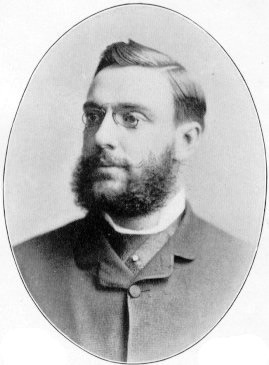
On March 7, 1876, Bell was granted U.S. Patent No. 174,465 for his method of transmitting vocal or other sounds telegraphically.² Just three days later, in his Boston workspace, he proved the concept worked.
According to accounts preserved by the Science Museum Group and the Library of Congress, Bell had accidentally spilled acid on himself during an experiment. As he called for Watson, he spoke into the transmitter. Watson, in a nearby room, heard the words clearly through the receiving instrument.³
The breakthrough was not theatrical. There were no reporters present. Yet it marked the first confirmed instance of intelligible speech transmitted electrically and reproduced at a distance.
From Experiment to Public Demonstration

Within months, Bell began publicly demonstrating the telephone. In 1877 and 1878, audiences watched with skepticism, and then astonishment as voices traveled across wires stretched between buildings and, eventually, across towns.⁴
One notable early long-distance call took place in 1877 between Boston and Salem, Massachusetts, showing that the technology could extend beyond a laboratory novelty.⁵ Newspapers across the country reported on the invention, helping move the telephone from scientific curiosity to commercial possibility.³
Bell also demonstrated the telephone before learned societies, including members of the American Academy of Arts and Sciences, where scientists and scholars evaluated its promise.⁴
By the end of the decade, telephone exchanges began appearing in American cities. What started as a wire strung between two rooms evolved into networks connecting businesses, homes, and eventually continents.
Why This Moment Matters in Civic Life
The telephone did more than change personal communication. It reshaped commerce, journalism, governance, and civic participation.
Local governments could coordinate more efficiently. Businesses could negotiate across distances. Newspapers could gather information faster. Citizens could respond to emergencies in real time. The invention shortened the practical distance between communities and altered expectations about speed, access, and responsiveness.
In civic terms, the telephone strengthened the connective tissue of society. It made it easier for institutions to function—and for individuals to engage with those institutions.
Today’s digital networks trace their lineage back to that first successful transmission of speech in 1876. While the tools have changed, the principle remains: technology can expand participation, speed decision-making, and connect citizens across geographic divides.
A Sentence That Changed the World
Bell later reflected that the first successful call was the result of sustained experimentation rather than sudden inspiration. His work built on decades of research in telegraphy, acoustics, and electrical engineering. The telephone was not inevitable; it required persistence, technical insight, and timely patent protection.²
Yet history often turns on quiet moments. In a small room in Boston, one man asked another to come see him. The request was ordinary. The means by which it traveled was not.
On March 10, 1876, the world first heard a human voice carried by wire, and communication would never be the same.
Explore more important dates and stories in History Lessons.
Footnotes
- Science Museum Group, “Ahoy! Alexander Graham Bell and the first telephone call,” https://www.sciencemuseum.org.uk/objects-and-stories/ahoy-alexander-graham-bell-and-first-telephone-call
- Library of Congress, “Telephone Invention,” Chronicling America Research Guide, https://guides.loc.gov/chronicling-america-telephone-invention
- Library of Congress, “Who Is Credited with Inventing the Telephone?” https://www.loc.gov
- American Academy of Arts and Sciences, “Bell Demonstrates the Telephone,” https://www.amacad.org/news/bell-demonstrates-telephone
- Destination Salem, “Bell’s First Long Distance Call from Salem,” https://www.salem.org/blog/bell-long-distance-call-salem/
- Encyclopedia Britannica, “Alexander Graham Bell: Overview of the invention of the telephone,”https://www.britannica.com/video/Overview-invention-telephone-focus-work-Alexander-Graham/-192158