

Abigail Adams: The Conscience of a Revolution
Abigail Adams stands as one of the most influential women of America’s founding era—not because she held office or commanded armies, but because she wielded intellect, moral conviction, and a pen that never stopped challenging the boundaries of her time. As the wife of John Adams, the nation’s second president, and mother of John Quincy Adams, the sixth, she moved at the very center of revolutionary politics. Yet she was far more than a political spouse; Abigail was a thinker, a chronicler, and an early advocate for women’s political voice in a republic still defining itself.
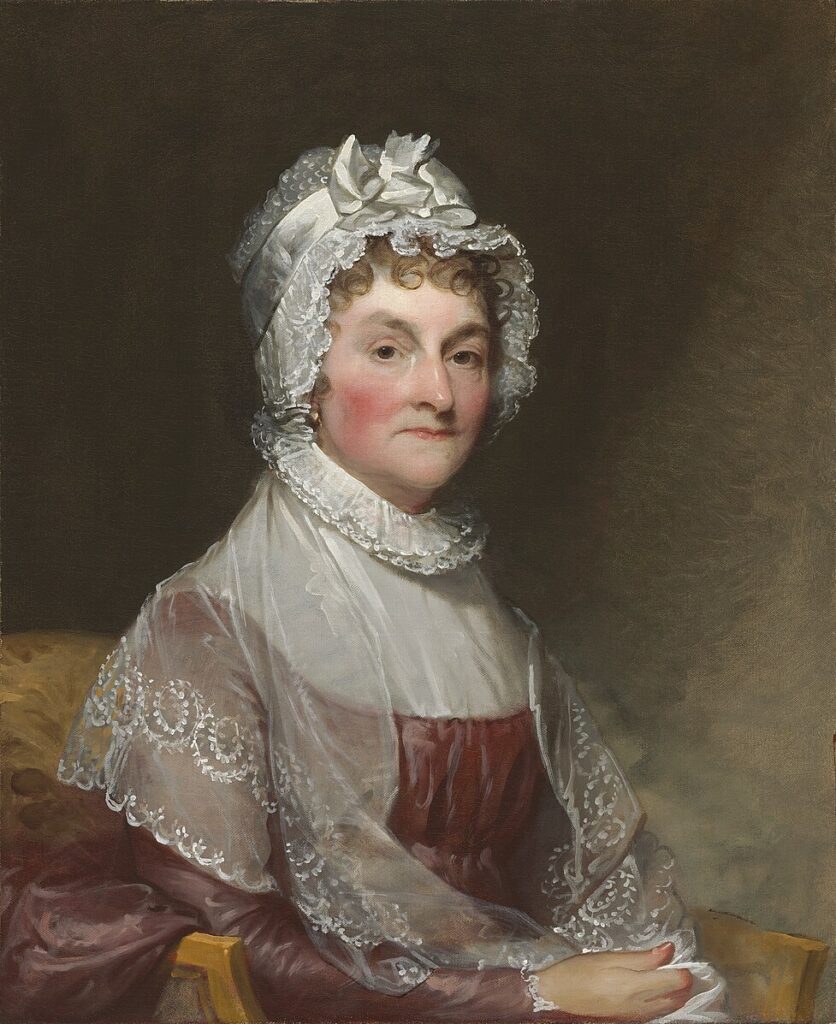
Early Life in a World of Limited Paths for Women
Abigail Smith was born on November 22, 1744, in Weymouth, Massachusetts, the second of four children in a respected Congregationalist family. Her father, Reverend William Smith, was the minister of the North Parish Congregational Church, and her mother, Elizabeth Quincy Smith, came from one of Massachusetts’s most politically connected families.
Unlike most girls of her time, Abigail had access to her father’s library, which fed her lifelong appetite for reading. Although she did not receive a formal education—common for women in colonial New England—she learned literature, philosophy, history, and theology through self-study. This intellectual foundation would shape her sharp political insight and her ability to correspond on equal footing with some of the most influential men of her age.
Marriage and Partnership in a Revolutionary Age
In 1764, at age 19, Abigail married John Adams, a young lawyer from nearby Braintree. Their marriage was marked from the beginning by mutual respect and intellectual partnership. John often referred to Abigail as “my dearest friend” and sought her counsel on political and legal matters—a remarkable dynamic in a society where women were largely excluded from public debate.
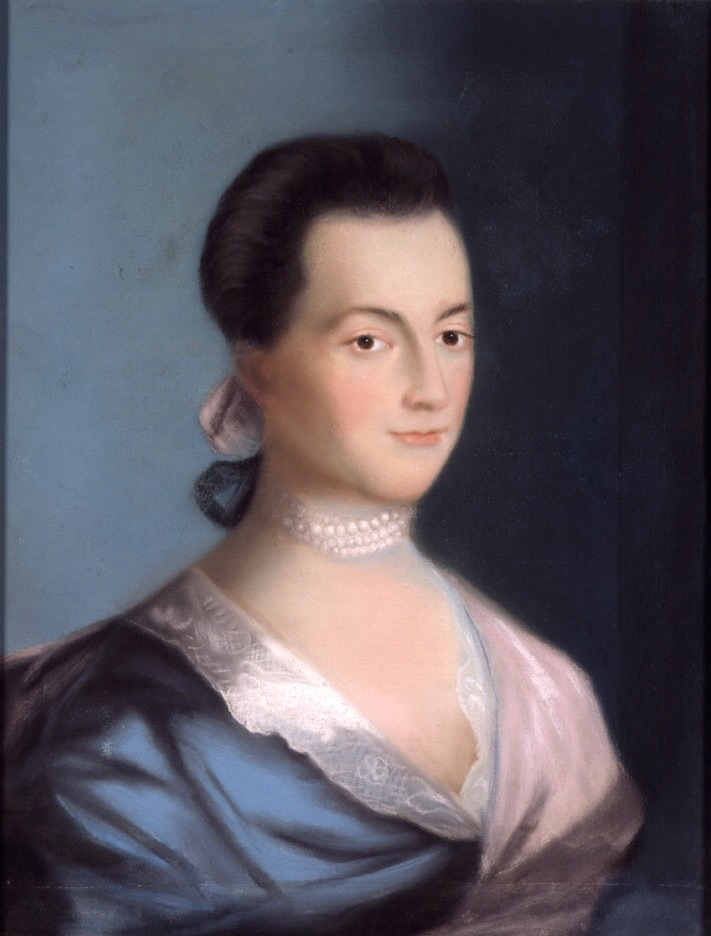
The couple settled in Braintree (later Quincy), raising children while John’s legal and political career accelerated. Abigail’s role as both homemaker and political sounding board grew especially important as tensions with Britain escalated. Their letters from this period reveal a deep, sometimes playful, but always intellectually engaged relationship, filled with discussions of philosophy, governance, and the future of the colonies.
The Long Absences and the “Remember the Ladies” Letter
The Revolutionary War tested Abigail’s independence as much as it tested the new nation. From 1774 onward, John’s duties as a delegate to the Continental Congress and later as a diplomat in Europe kept him away from home for years at a time. Abigail managed the family farm, oversaw finances, educated their children, and coped with shortages and wartime insecurity—proving her capability in both domestic and business matters.
In March 1776, with independence on the horizon, Abigail wrote one of her most famous letters to John in Philadelphia. She urged him to “Remember the Ladies” in the new laws of the land, warning that if men did not take women’s rights into account, “we are determined to foment a rebellion.” This statement was both a plea and a provocation—Abigail envisioned a republic in which women had a recognized political voice, even though that idea was decades ahead of its time.
A Witness and Commentator on the Birth of a Nation
Throughout the Revolution, Abigail’s letters became a vital record of home-front experiences. She wrote vividly about inflation, troop movements near Boston, and the hardships of war, while also reflecting on the philosophical stakes of independence. Her correspondence with John provided him with a constant stream of practical news from Massachusetts and moral encouragement at critical moments.
When John was posted as U.S. envoy to France and later to the Netherlands and Britain, Abigail joined him in Europe in 1784. There she observed continental politics firsthand, met leading thinkers, and gained a global perspective that would influence her view of the young American republic. In London, she served as America’s first diplomatic hostess at the Court of St. James’s, navigating the subtleties of European protocol while representing a nation barely out of its infancy.
First Lady and Guardian of Republican Virtues
Abigail Adams became First Lady in 1797 when John succeeded George Washington as president. The position was unofficial and ill-defined, but Abigail shaped it with a combination of dignity, discretion, and political engagement. She continued to advise John on policy matters, particularly foreign relations and domestic unrest, and she remained a strong supporter of the Federalist vision for the new government.
Her time in the White House—then located in Philadelphia and later in the unfinished executive mansion in Washington, D.C.—was marked by the bitter partisan struggles between Federalists and Democratic-Republicans. Abigail’s letters from this period reveal her sharp criticisms of Thomas Jefferson’s faction and her deep concern for the survival of republican values in the face of factional politics.
Life After the Presidency
After John’s defeat in the election of 1800, the Adamses retired to Peacefield, their farm in Quincy. Abigail devoted her remaining years to family, overseeing the education of her grandchildren and maintaining her extensive correspondence. Her son, John Quincy Adams, embarked on a political career that would eventually make him president, continuing the Adams family’s legacy of public service.

Even in retirement, Abigail remained an astute observer of national affairs. She opposed slavery, supported education for women, and championed civic virtue as the foundation of the republic. Her letters, now recognized as one of the richest primary sources from the Revolutionary era, reveal a mind deeply engaged with the moral and political questions of her time.
Legacy
Abigail Adams died on October 28, 1818, at age 73. She left behind a legacy as one of America’s most eloquent chroniclers of its founding era. Through thousands of letters, she gave voice to the experiences of women in the Revolution, articulated an early vision for women’s rights, and helped shape the moral compass of a nation still learning to live up to its ideals.
Her influence endures not only as a partner to presidents but as a political thinker in her own right—proof that the Revolution’s ideas reached far beyond the battlefield and into the minds and hearts of those who dared to imagine a more equal future.