

Gouverneur Morris: The Revolutionary’s Pen and the Nation’s Architect
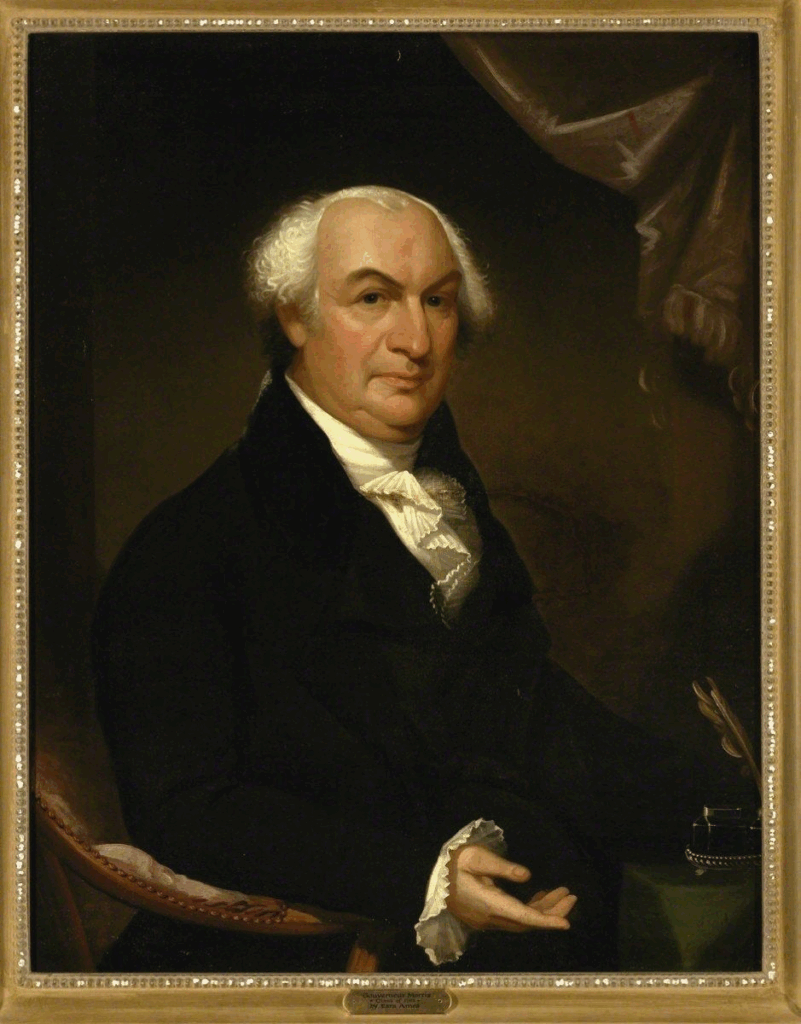
Gouverneur Morris is often celebrated as the man who physically wrote the final draft of the United States Constitution, crafting the famous preamble that begins, “We the People of the United States…” Before that defining moment in Philadelphia, he played a critical role in the American Revolution, not on the battlefield but in the political chambers where the Revolution’s survival depended on finance, administration, and long-term vision. His story blends privilege, injury, diplomacy, and steadfast advocacy for a stronger union.
An Unlikely Revolutionary
Born January 31, 1752, at the Morrisania estate in Westchester County, New York (now part of the Bronx), Gouverneur Morris came from one of the colony’s wealthiest and most politically connected families. His father, Lewis Morris, was a large landowner and judge; his mother, Sarah Gouverneur, came from a Dutch merchant dynasty. The Morrises effortlessly navigated Loyalist circles, and the colonial aristocracy deeply influenced Gouverneur’s upbringing.
Educated at King’s College (now Columbia University), Morris mastered the classics, mathematics, and law. By the early 1770s, he was a practicing lawyer in New York City, representing some of the colony’s most prominent families. Unlike many in his class who sided with the Crown, Morris became convinced that Britain’s policies posed an irreversible threat to colonial self-government. His decision to join the Patriot cause put him at odds with many relatives—some of whom would remain Loyalists throughout the war.
From New York Politics to the Continental Congress
Morris’s political career began in the New York Provincial Congress in 1775, where his talent for clear, forceful argument and his grasp of finance drew immediate attention. He served on committees responsible for securing arms, organizing militia forces, and preparing the colony for war.
In 1778, at just 26 years old, he was elected to the Continental Congress. There he became one of its most vocal “nationalists”—a faction that believed the new states needed a strong central government to win the war and survive afterward. This put him in close working relationships with Robert Morris of Pennsylvania (no relation) and Alexander Hamilton, both of whom shared his belief that without centralized financial control, the Revolution was doomed.
The Pen Behind Policy and Finance
In Congress, Morris proved invaluable in matters of fiscal policy and supply. He served on the Board of War, the Marine Committee, and finance-related committees, pushing for standardized procurement systems and stricter accountability in military contracts. He championed the idea of a national bank to stabilize currency and improve credit for the Continental Army—a controversial stance in a period when many feared any form of centralized authority.
Morris also warned that the loose framework of the Articles of Confederation would leave the nation too weak to defend itself or pay its debts. His speeches and writings from this period foreshadowed the constitutional debates to come.
Personal Injury and Enduring Resolve
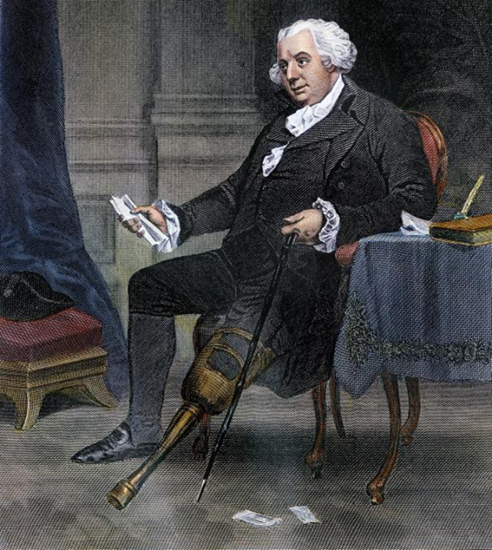
In May 1780, during his Congressional service, Morris suffered a life-changing accident. While in Philadelphia, his carriage overturned, crushing his left leg so severely that it had to be amputated below the knee. For most men of his era, such an injury could have ended a public career. Morris refused to retreat. He learned to walk with a wooden prosthetic leg, sometimes using it to make a wry point about resilience in political conversation. The amputation only deepened his reputation for fearlessness and determination.
War’s End and the Call for a Stronger Union
By the time Cornwallis surrendered at Yorktown in 1781, Morris had already begun thinking beyond the Revolution. He saw that without a new framework for governance, the hard-won independence could dissolve into economic collapse and political fragmentation.
In 1781, he left Congress to work directly with Superintendent of Finance Robert Morris on reorganizing the nation’s wartime finances, introducing stricter fiscal control, and pushing for reliable revenue sources—ideas that would later influence the fiscal powers granted to Congress in the Constitution.
The Penman of the Constitution
Although his direct Revolutionary service concluded before the war’s formal end, Morris’s nationalist vision carried into the Constitutional Convention of 1787. There, as a delegate from Pennsylvania (he had moved from New York after the war), he served on the Committee of Style, tasked with drafting the Constitution’s final language.

It was Morris who restructured the document’s opening to read: “We the People of the United States, in Order to form a more perfect Union…” This shift from listing individual states to a single national identity was a deliberate statement of sovereignty resting in the people, not the states—a central principle he had championed since the war.
Legacy in the Revolutionary Era
During the American Revolution, Gouverneur Morris was not a battlefield hero, but his behind-the-scenes work was essential to sustaining the Patriot cause. He secured supplies, reformed financial systems, and articulated the need for unity at a time when state loyalties threatened to fracture the new nation. His later authorship of the Constitution’s preamble cemented his place as one of the most influential framers in American history.
His resilience in surviving the loss of his leg, confronting fierce political opposition, and remaining active in high office embodied the determination and fortitude the Revolutionary era required.