

Haym Salomon: The Financier Who Helped Pay for American Independence
Haym Salomon’s story begins far from the battlefields of the American Revolution in Leszno, Poland, around 1740. He was born into a Sephardic Jewish family of modest means, descendants of Jews who had fled persecution in Spain centuries earlier. As a young man, Salomon received a classical education and proved gifted in languages and trade, skills that would later make him invaluable to a struggling new nation.
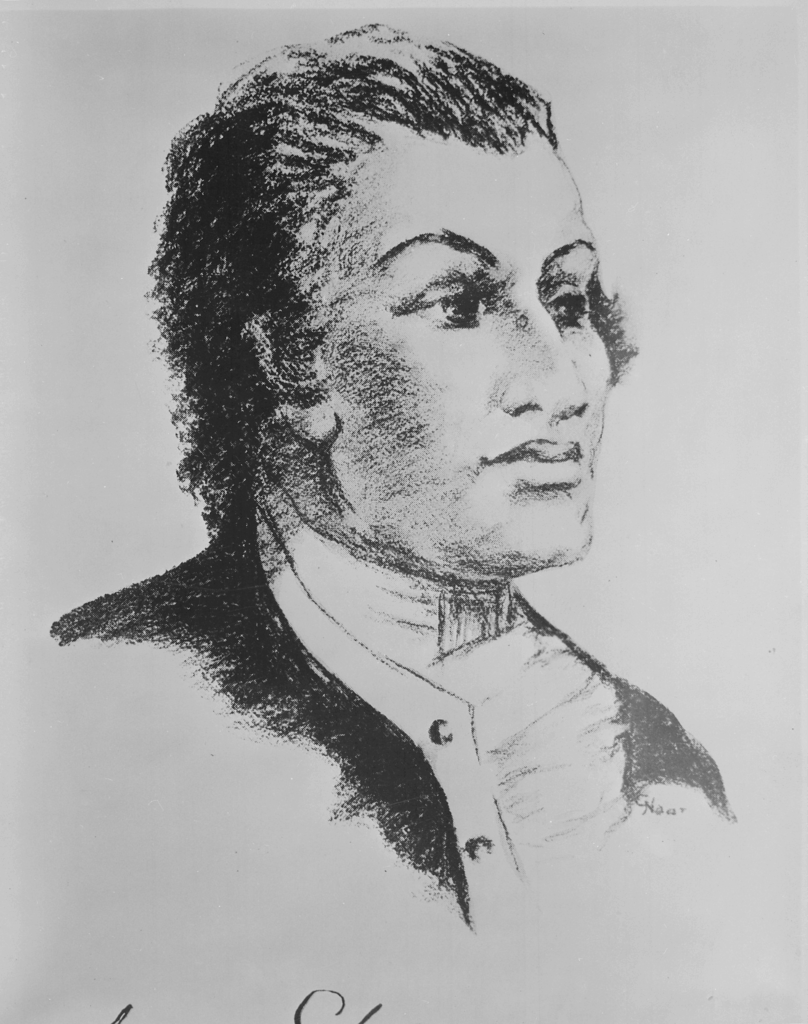
In his twenties, he traveled widely across Europe as a merchant and broker. These experiences broadened his worldview and gave him a deep understanding of international finance. He also witnessed firsthand the persecution of Jews across the continent, which helped shape his belief in liberty and tolerance.
By the early 1770s, seeking greater opportunity and freedom, Salomon emigrated to New York City, then one of the busiest ports in the British Empire. There, he established himself as a successful merchant and financial broker, quickly becoming a respected member of the city’s small but influential Jewish community.
When the colonies began to resist British rule, Salomon’s sympathies were immediate and unmistakable. Having experienced the oppressive influence of tyranny in Europe, Salomon perceived America’s struggle as a universal battle for freedom, surpassing faith, language, or nationality.
A Revolutionary Patriot
When the Revolutionary War erupted in 1775, New York became a center of espionage and intrigue. Salomon, fluent in several languages and known for his intelligence, was soon recruited by the Sons of Liberty, a secret network of patriots opposing British rule. His role was not on the battlefield but in the shadows, gathering intelligence, aiding prisoners, and arranging supplies.
After British forces captured New York in 1776, they arrested Salomon for his suspected revolutionary activities. He was accused of inciting Hessian mercenaries (German soldiers hired by Britain) to desert the royal cause, a charge that could have meant execution. Through resourcefulness and charm, he managed to secure his release, likely through bribes and the intervention of sympathetic officers.
Rather than flee to safety, Salomon immediately resumed his work for the patriot cause, this time more discreetly. When he was arrested again in 1778, he escaped a second time, an extraordinary act of courage and luck, and fled to Philadelphia, then the seat of the Continental Congress. There, in the heart of the Revolution, his talents found their fullest expression.
The Financier of the Revolution
Philadelphia in 1781 was a city of high ideals and empty coffers. The Continental Congress was nearly bankrupt; soldiers went unpaid, supplies dwindled, and the credit of the new nation teetered on collapse. The paper currency issued by Congress was almost worthless. Robert Morris, often referred to as the “Financier of the Revolution,” confronted an unachievable challenge: financing a war without any financial resources.
Into this crisis stepped Haym Salomon. Fluent in several European languages and with deep contacts among Philadelphia’s merchant and banking communities, he became Morris’s trusted broker and agent.
Salomon used his credit, reputation, and business network to raise the funds that kept the Revolution alive. He successfully negotiated loans from French, Dutch, and Spanish merchants, and even extended personal funds to Congress members and the Continental Army. James Madison, future President of the United States, was among those who relied on his personal loans.
When General George Washington prepared for the decisive Yorktown campaign in 1781, the treasury was nearly empty. It was Salomon who raised the money to pay the troops, purchase provisions, and finance the army’s movement southward. Without those funds, the victory at Yorktown and the Revolution itself might have faltered.
Morris later wrote that without Salomon’s “zeal, activity, and patriotism,” the government “could not have carried on the public business.”
Faith and Freedom
Salomon’s patriotism was deeply tied to his faith. As a Jewish immigrant, he knew the sting of exclusion, yet in revolutionary America, he found a cause that promised liberty of conscience for all. He became a leading member of Philadelphia’s Congregation Mikveh Israel, one of the oldest Jewish congregations in the United States. He was active in advocating for religious freedom within the new republic.
At a time when some states still maintained religious tests for public office, Salomon’s success challenged prejudice and proved that civic virtue and patriotism knew no religious boundaries. In 1783, when George Washington attended a celebration of peace in Philadelphia’s synagogue, it symbolized the very ideal that Salomon had fought to uphold: a nation founded not on uniformity of faith, but on freedom of it.
A Life of Sacrifice
Despite his success as a financier, Salomon’s generosity came at an enormous personal cost. He only sought repayment for a few loans he had advanced to the government or its officials. When he died suddenly in 1785, at just forty-four, he left behind a wife, Rachel Franks Salomon, and four young children, but little fortune. The United States and various individuals owed him large sums that were unrepaid, according to his accounts.
His widow petitioned Congress several times over the following decades, asking for restitution. Committees acknowledged the government’s debt to Salomon but never appropriated funds, leaving the family impoverished.
Yet among those who knew him, his reputation remained untarnished. He was remembered as a man of integrity, courage, and generosity, a patriot who gave without expectation of reward.
Legacy
Though not as widely remembered as Washington or Hamilton, Haym Salomon played a vital role in ensuring their victories were possible. His work as a financier, broker, and advocate of liberty made him indispensable to the cause of independence.
In the 19th and 20th centuries, Jewish American leaders worked to restore his memory to its rightful place in the nation’s founding story. Monuments to him stand in Chicago, Philadelphia, and Washington, D.C., often depicting him alongside George Washington and Robert Morris, the trio representing faith, finance, and freedom.
His life symbolizes the promise of America itself: that an immigrant, driven by ideals rather than ambition, could help shape the destiny of a nation. He embodied the Revolution’s truest meaning, not just independence from tyranny, but the creation of a country where all people, regardless of faith or origin, might attain liberty and purpose.
Today, historians regard Haym Salomon as a founding patriot of finance, the man who, in the darkest days of the Revolution, used trust and credit to keep the dream of independence alive.
In his own words, written shortly before his death, he summarized his creed:
“To serve my adopted country is to serve humanity. Freedom, once gained, must be guarded by all who cherish it.”
Through courage, sacrifice, and unyielding faith in the cause of liberty, Haym Salomon earned his place among the builders of the American Republic, not with musket or sword, but with pen, credit, and conviction.