

Honoring the Legacy of Susan B. Anthony and the Women’s Suffrage Movement
On November 5, 1872, Susan B. Anthony cast a vote in the presidential election, an act that would become a defining moment in American history. At a time when women were legally prohibited from voting, Anthony’s action was both bold and groundbreaking, challenging the limitations placed on citizens and asserting the power of the individual to shape government.

Photo credit: Brady, Mathew B., Approximately, photographer. Susan B. Anthony / Napoleon Sarony; Alfred S. Campbell. , ca. 1870. [New York: Sarony & Co., photographers, 680 Broadway, N.Y] Photograph. https://www.loc.gov/item/2012646556/.
A Historic Act of Civic Courage
Anthony’s decision to vote was deliberate and symbolic. She believed that women, as full citizens, had the right and responsibility to participate in elections. Her act of voting was not merely personal—it was a public challenge to the laws that excluded women from influencing the direction of the nation.
Shortly after casting her vote, Anthony was arrested, tried, and fined for violating the law. She refused to pay the fine, standing by her conviction that every individual has the right to exercise their civic power. Her courage drew national attention to the suffrage movement, highlighting the disconnect between legal restrictions and the principles of equality and civic responsibility.
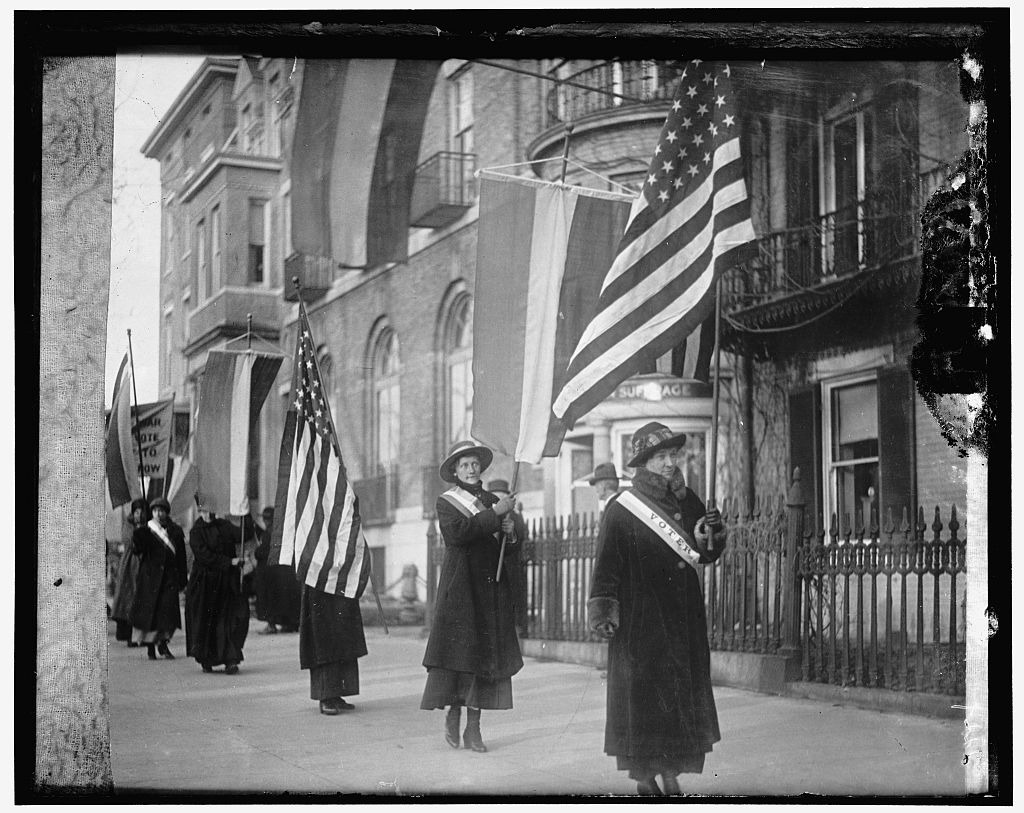
Image: Suffragette Pickets. United States District of Columbia Washington D.C. Washington D.C, None. [Between 1910 and 1920] Photograph. https://www.loc.gov/item/2016854985/.
The Lasting Impact
Anthony’s vote on November 5, 1872, served as a catalyst for the broader women’s suffrage movement. It demonstrated the determination of individuals to assert their rights and inspired countless others to join the fight for inclusion in the civic process. While the 19th Amendment would not be ratified until 1920, Anthony’s defiance marked a crucial step in the journey toward legal recognition of women’s right to vote.
By challenging the status quo, Anthony underscored a fundamental truth: the strength of our government depends on the active engagement of all its citizens. Her actions illustrated how individual courage and persistence can influence public policy and expand civic participation.
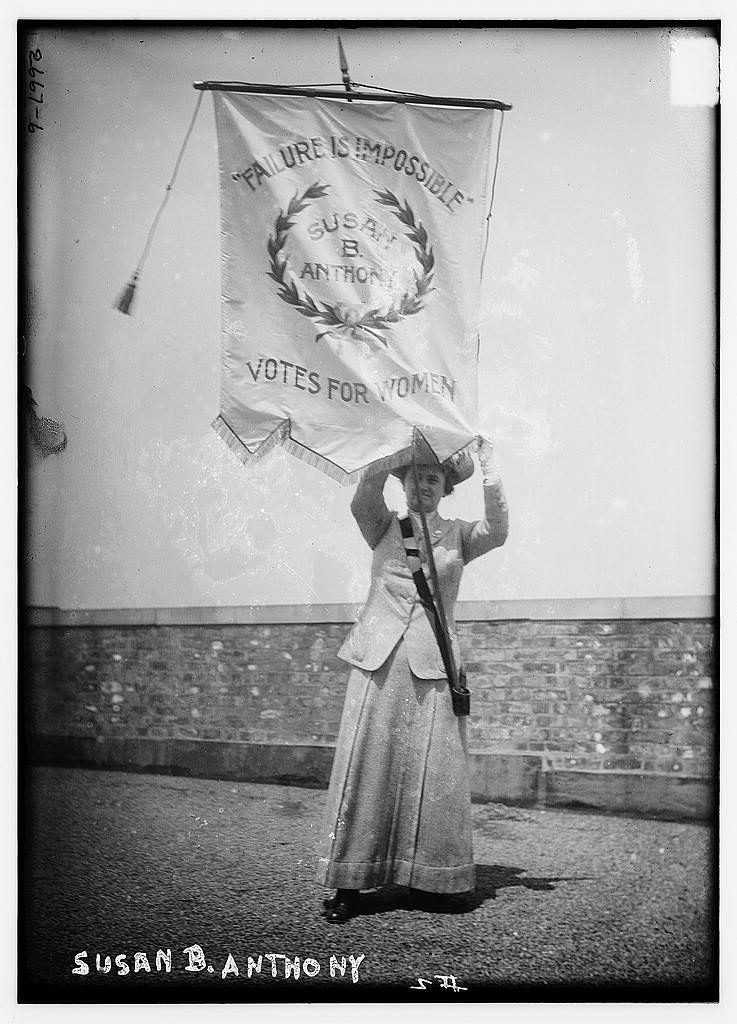
Photo shows suffragist Florence Jaffray “Daisy” Harriman (1870-1967) holding a banner with the words “‘Failure Is Impossible.’ Susan B. Anthony. Votes for Women.” Credit: Bain News Service, Publisher. https://www.loc.gov/item/2014692799/.
Reflecting on Civic Engagement
Remembering Susan B. Anthony’s historic vote encourages us to consider the ongoing role of individuals in shaping government. Voting, advocacy, and active community involvement are essential ways citizens strengthen the nation and uphold the rights hard-won by previous generations.
Learning from the Past
Honoring Anthony and the suffragists of her era reminds us that civic rights are the product of persistent effort and courageous action. Their stories serve as an enduring lesson in the power of the individual and the responsibility of every citizen to contribute to a strong and resilient government.
Learn more about the ratification of the 19th Amendment.
Learn more about the Supreme Court Case that would uphold the 19th Amendment here.