

Mercy Otis Warren: The Conscience of the American Revolution
Mercy Otis was born on September 14, 1728, in Barnstable, Massachusetts, into one of the colony’s most politically engaged families. Her father, Colonel James Otis Sr., was a wealthy farmer, militia officer, and prominent local leader. Her mother, Mary Allyne Otis, came from a respected New England family. Though colonial society offered few opportunities for women’s education, Mercy benefited from the family’s intellectual environment.
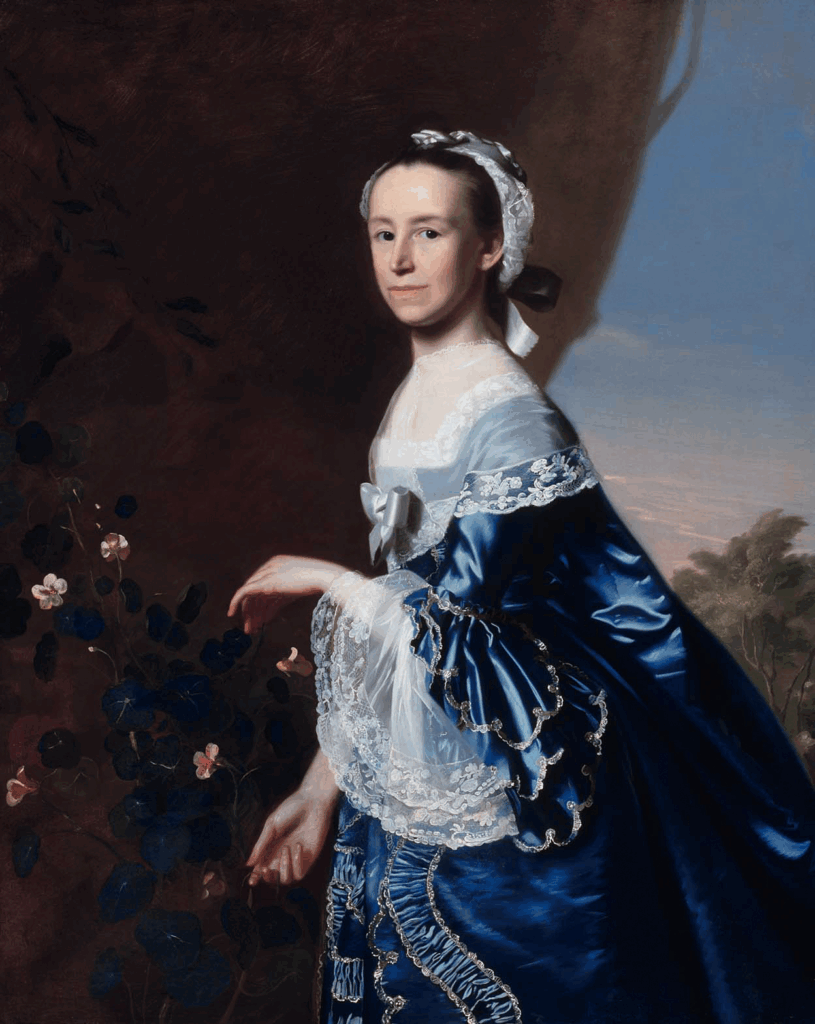
Her older brother, James Otis Jr., became one of the earliest and most passionate voices against British authority. His fiery speeches and pamphlets, particularly his arguments against the Writs of Assistance, helped lay the intellectual groundwork for revolution. As children, Mercy often studied alongside him. This unusual access to Latin, history, and political theory gave her a foundation that few women of her generation possessed.
Marriage and Political Partnerships
In 1754, Mercy married James Warren, a wealthy merchant and farmer from Plymouth. James was deeply involved in colonial politics, later serving as Speaker of the Massachusetts House of Representatives and as president of the provincial congress. Their marriage was a true partnership. James encouraged Mercy’s intellectual pursuits, and their home became a hub for revolutionary leaders.
The couple’s friendships extended to Samuel Adams, John Adams, Abigail Adams, and John Hancock, among others. Visitors to their parlor often found Mercy listening and offering sharp insights on events. At a time when political life was almost entirely male, she carved out influence through her salon-like gatherings and her pen.
The Pen as a Revolutionary Weapon
Mercy Otis Warren believed that liberty’s fate depended as much on shaping public opinion as on fighting battles in the field. Convinced that ideas could inspire action, she turned to her pen in the early 1770s, crafting satirical plays and pamphlets that she published anonymously to shield herself from criticism for stepping beyond the traditional role of women. In The Adulateur (1772), she created a political allegory that dramatized the colonies’ resistance to tyranny, its characters modeled on Governor Thomas Hutchinson and his Loyalist allies. A year later, in The Defeat, she sharpened her attacks, mocking British authority while celebrating the spirit of colonial unity. By 1775, with the Revolution on the brink, she produced The Group, a work that painted Loyalists as cowardly and corrupt, urging readers to stand firmly on the side of resistance.
Her widely circulated writings and performances in private gatherings fueled revolutionary sentiment at a critical moment. They reminded colonists that their struggle was not only a practical contest of power but also a moral battle over virtue and corruption. Through her biting humor and fearless critique, Warren secured her place as one of the Revolution’s most influential propagandists.
Political Influence Beyond Print
Warren did more than write. During the Revolution, she corresponded with leading patriots, offering advice and encouragement. She exchanged letters with George Washington, John and Abigail Adams, Samuel Adams, Thomas Jefferson, and Patrick Henry. Her correspondence reveals both her sharp intellect and her willingness to critique even her closest allies.
She also helped shape the work of her husband, who, as a political leader, often relied on her input. In this way, she influenced decisions that extended well beyond her household. Her role illustrates how women, though barred from office, participated actively in the political life of the Revolution.
Historian of the Revolution
After the Revolution ended, Mercy Otis Warren turned to the task of recording its history. In 1805, she published History of the Rise, Progress, and Termination of the American Revolution, a monumental three-volume work.

Her history was groundbreaking in several ways. It stood among the earliest comprehensive accounts of the Revolution, offering not just a record of events but a sweeping interpretation of their meaning. Even more remarkable, it was written by a woman in an age when female authors were seldom accepted in serious political or historical writing. Mercy Otis Warren defied that barrier with confidence. In her volumes, she wove together narrative and moral judgment, celebrating the virtues that had guided the Revolution while warning against the corruption and ambition that, in her view, threatened to undermine the republic’s hard-won liberty.
Warren did not shy away from controversy. She criticized the leaders she felt betrayed republican ideals, including John Adams, who had once been her close friend. Adams, offended by her portrayal of him as overly ambitious, engaged in a sharp exchange of letters with her. Though their friendship never fully recovered, Warren stood firm in her belief that truth and principle outweighed personal loyalty.
Later Life and Enduring Spirit
Mercy Otis Warren lived through the turbulent birth of the United States, witnessing the drafting of the Constitution, the rise of political parties, and the second war with Britain in 1812. She continued to write letters and essays until her death in October 1814, at the age of eighty-six.
By then, she had seen her sons establish themselves in politics and law, and she had left behind a record of a woman who refused to remain silent during one of the most critical eras of history.
Legacy
Mercy Otis Warren is remembered as the “Conscience of the American Revolution.” Her writings captured the urgency, fears, and hopes of the independence movement. She challenged the notion that politics was a male domain and demonstrated that women could shape public discourse.
Her work serves as a reminder that not only do muskets and declarations fight revolutions, but also words that rally, satirize, persuade, and preserve memory. She used her voice to demand that liberty remain anchored in virtue in a nation still forming its identity.