

Susan Ahn Cuddy: Breaking Barriers in Uniform and in Intelligence
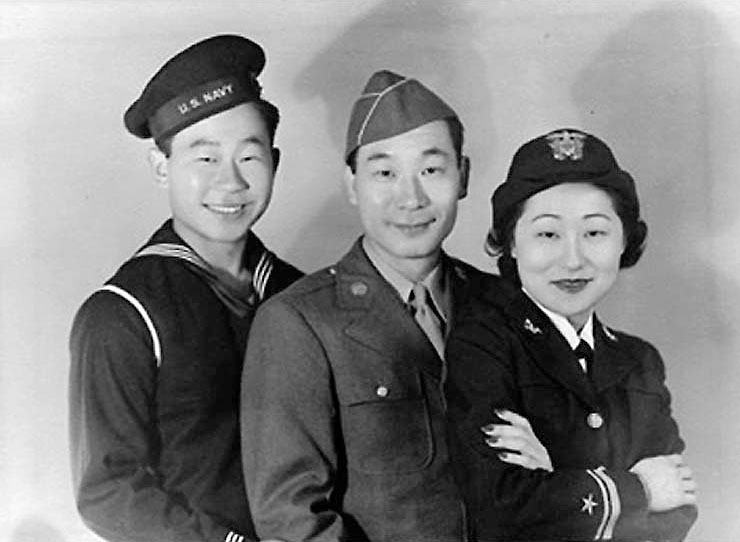
Susan Ahn Cuddy’s life story begins with resistance — not rebellion against the United States, but against injustice itself. Born in Los Angeles in 1908, she was the daughter of Ahn Chang Ho (Dosan), a leading Korean independence activist who fought against Japanese colonial rule in Korea. Her childhood was shaped by political organizing, community leadership, and a belief that civic engagement was both a right and a responsibility. Civic participation was not an abstract concept in the Ahn household; it was a daily practice rooted in sacrifice and public duty.²
These early lessons would guide Susan Ahn Cuddy throughout her life, especially when she confronted barriers few Americans — let alone women of color — had successfully crossed.
Defying Expectations in World War II
When the United States entered World War II after the attack on Pearl Harbor, Asian Americans found themselves in a precarious position. Japanese Americans were incarcerated en masse, while Asian Americans more broadly faced suspicion, restricted opportunities, and overt discrimination. Military service — long considered a pathway to citizenship and belonging — was often closed to them.
Susan Ahn Cuddy refused to accept exclusion.
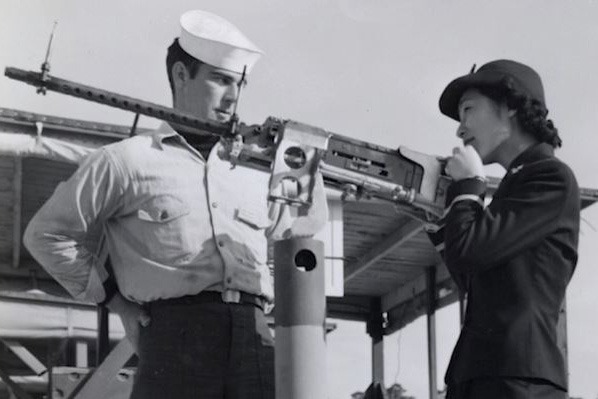
In 1942, she enlisted in the U.S. Navy, becoming the first Asian American woman to serve in the Navy. At a time when women were largely relegated to clerical or support roles, she went further — becoming the first woman gunnery officer in Navy history.¹²
As a gunnery officer, Ahn trained male sailors in anti‑aircraft weaponry, preparing them to defend ships and installations against enemy attacks. Her authority in this role challenged both gender norms and racial assumptions. She was not symbolic; she was operational — responsible for training others in life‑or‑death skills during wartime.
Invisible Service in U.S. Intelligence
Following the war, Susan Ahn Cuddy’s path took another unusual turn. She joined the newly formed National Security Agency (NSA), where she worked as an intelligence officer during the early stages of the Cold War.¹
The nature of intelligence work meant her contributions remained classified and largely unacknowledged for decades. Unlike elected officials or decorated generals, intelligence officers rarely receive public recognition — yet democratic societies rely on their discretion, analysis, and vigilance.
Her work reflected a deeper civic truth: democracy depends not only on visible leadership but also on the quiet labor of individuals committed to safeguarding national security and democratic institutions.
Civic Engagement Beyond Federal Service
Susan Ahn Cuddy’s commitment to civic life extended well beyond her federal career. After leaving government service, she became active in Los Angeles‑area community organizations, with a particular focus on immigrant rights, Asian American civic participation, and the preservation of Korean American history.³
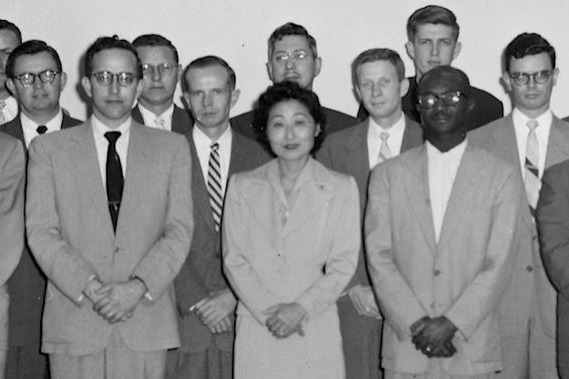
She spoke publicly about her experiences as a woman, as an Asian American, and as a veteran — offering younger generations both representation and encouragement. By sharing her story, she helped broaden the public understanding of who has served the nation and how.
Her advocacy reinforced a central democratic principle: civic participation does not end when uniformed service does. It evolves — into mentorship, education, and community engagement.
What Susan Ahn Cuddy Teaches Us About Civic Duty
Susan Ahn Cuddy never sought fame. Much of her most important work was unseen, uncelebrated, or officially secret. Yet her life offers enduring civic lessons:
- Civic duty can require challenging unjust systems from within
- Public service takes many forms — military, intelligence, and community leadership
- Democracy depends on expanding who is recognized as a legitimate contributor
Her story reminds us that civic equality often advances not through speeches or elections, but through persistence — by those willing to serve even when recognition is withheld.
Sources & Further Reading
- U.S. Department of Defense, Navy Lt. Susan Ahn Cuddy: WWII Trailblazer
- Encyclopedia Britannica, Susan Ahn Cuddy
- StoryCorps, A Brother and Sister Remember Their Trailblazing Mother
- U.S. National Archives, Women in WWII Military Service Collections