

The Supreme Court’s First Day: A Quiet Beginning
On a cold January day in 1790, six men gathered quietly in New York City to begin an experiment that would help shape American democracy for centuries to come. There were no television cameras, no packed courtroom, and no landmark cases on the docket. Yet what happened on January 22, 1790—the first convening of the United States Supreme Court—marked a turning point in the young nation’s effort to turn constitutional ideals into a functioning system of government.
Today, the Supreme Court is one of the most powerful and closely watched institutions in the country. But at its first meeting, its future influence was far from guaranteed.
A New Nation Still Finding Its Footing
The United States Constitution had been ratified only months earlier, in 1788, and the federal government itself was still taking shape. Congress was meeting, George Washington had been sworn in as the nation’s first president, and the Bill of Rights had not yet been ratified.
Article III of the Constitution established “one supreme Court,” but it offered few details about how that court would operate day to day. That task fell to Congress, which passed the Judiciary Act of 1789, creating a federal court system and defining the structure of the Supreme Court.
Under the new law, the Supreme Court would consist of six justices—one Chief Justice and five Associate Justices—who would also “ride circuit,” traveling long distances to hear cases in lower federal courts. It was demanding work, especially in an era of rough roads and slow travel.
The First Justices Take Their Seats
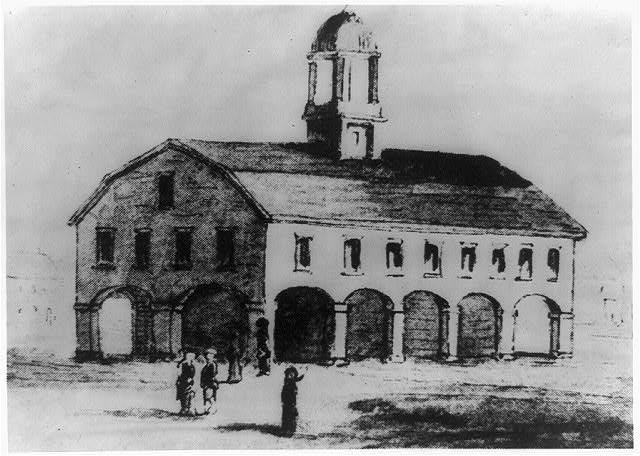
On January 22, 1790, the Supreme Court convened for the first time at the Royal Exchange Building in New York City, then the nation’s capital.
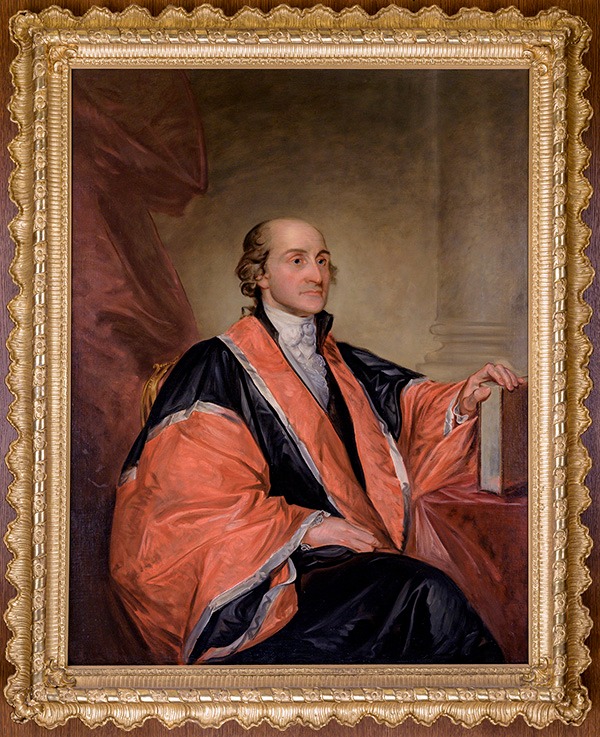
Chief Justice John Jay, a Founding Father and former diplomat, presided. Joining him were Associate Justices John Rutledge, William Cushing, James Wilson, John Blair, and Robert Harrison (though Harrison never served due to declining the position).
Despite their impressive credentials, the Court faced an immediate challenge: there was almost nothing to do.
No cases had yet reached the Supreme Court. For days, the justices met, waited, and ultimately adjourned without hearing a single argument. It was an unglamorous beginning for what would become the final interpreter of the Constitution.
Why the Court’s Quiet Start Mattered
The Supreme Court’s slow beginning reflected the uncertainty of the moment. Americans remained wary of centralized power, especially after their experience under British rule. Many wondered whether a strong national judiciary was even necessary.
But the Court’s early restraint was also a strength. By avoiding overreach and carefully defining its role, the Supreme Court gradually earned legitimacy and public trust.
Chief Justice John Jay understood that the Court’s authority would not come from force, but from public confidence in its judgment and independence. That principle—judicial legitimacy grounded in reason and fairness—remains central to the Court’s role today.
From Modest Meetings to Lasting Impact
Over time, the Supreme Court began to hear cases that clarified federal power, protected contracts, and resolved disputes between states. In 1803, just over a decade after that first meeting, the Court issued its landmark decision in Marbury v. Madison, establishing the principle of judicial review—the power to declare laws unconstitutional.
That authority, now taken for granted, traces its roots back to the institution quietly convened in January 1790.
Why This Moment Still Matters Today
The first convening of the Supreme Court reminds us that democratic institutions are not born fully formed. They develop through practice, precedent, and public trust.
At a time when debates about the judiciary are front-page news, understanding the Court’s origins helps put its role into perspective. The Supreme Court was designed to be independent, deliberate, and grounded in the rule of law—not public opinion or political pressure.
For citizens today, especially adults who may not have had a strong foundation in civics education, this history underscores an essential truth: democracy depends not just on elections, but on institutions that uphold constitutional principles over time.
Civics for Life Takeaway
The Supreme Court’s first meeting was quiet, uncertain, and even anticlimactic. Yet from that modest beginning grew an institution that continues to shape American life.
Civics isn’t just about knowing what the branches of government are—it’s about understanding how they came to be, why they were designed the way they were, and what role we play in sustaining them.