

Mary Ellen Pleasant: Fortune, Freedom, and a Fight for Equal Rights
How a shrewd Gold Rush businesswoman built a fortune, backed the abolitionist cause, and took racial exclusion in San Francisco to court — while carefully controlling the story of her own life.
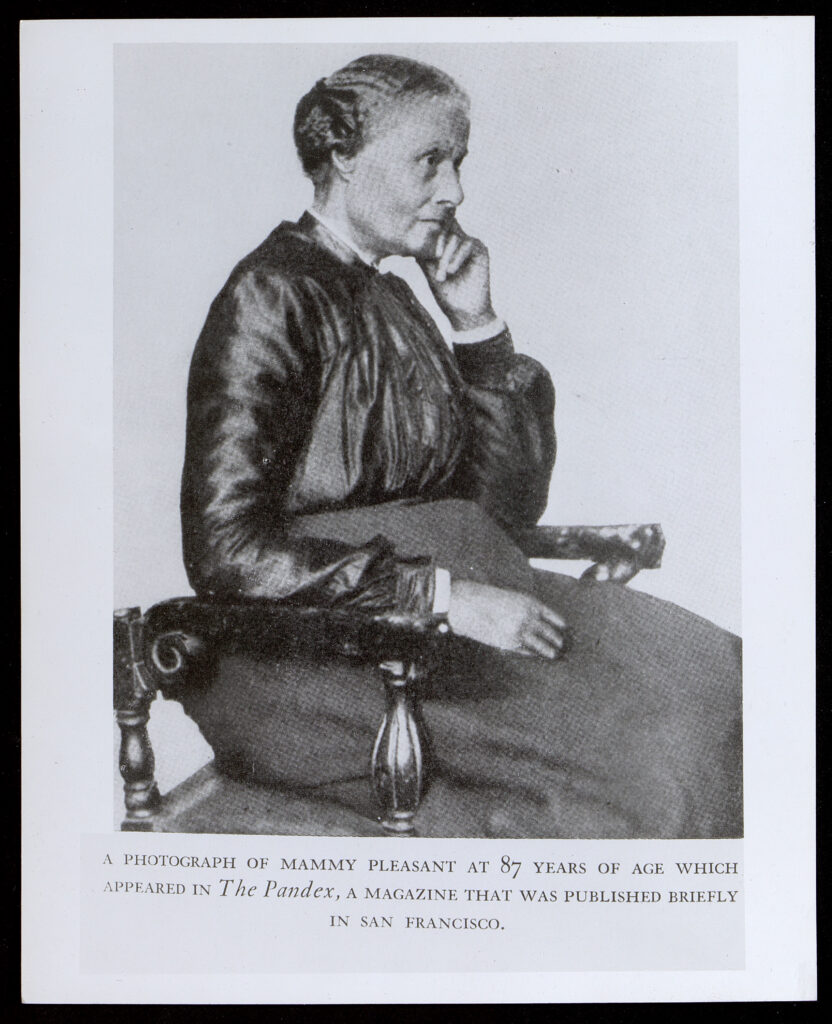
By the time Mary Ellen Pleasant died in San Francisco in 1904, she had been called a millionaire, a capitalist, a voodoo queen, a madam, and the mother of California’s civil rights movement — sometimes all in the same newspaper column.1
She was one of the most influential Black women in Gold Rush–era San Francisco. Using inherited capital, business skill, and carefully cultivated networks, Pleasant built wealth through lending, gold-and-silver exchange, real estate, mining stock, boardinghouses, and other ventures. She supported abolitionist and Black civic causes, and later challenged racial exclusion on San Francisco streetcars through the courts.1
She was also one of the hardest historical figures to pin down. Pleasant gave differing accounts of her own beginnings, while newspapers and later biographers added layers of rumor and legend. More than a century after her death, historians are still working to separate the documented woman from the mythology surrounding her.2
A Story With Many Beginnings
Even the basic facts of Mary Ellen Pleasant’s early life remain disputed. Pleasant said that she was born free in Philadelphia in 1819, while later accounts — including the semi-fictionalized biography Mammy Pleasant — claimed she had been born enslaved in Georgia. The surviving record does not settle the question; what is clear is that, by the 1820s, she was living in Nantucket, Massachusetts.2
In Nantucket, Pleasant worked as a shop clerk and later described the experience as the beginning of her business education. She recalled learning to manage transactions and customers quickly in the busy store environment.2
Nantucket and the Hussey Store
The shop belonged to a family remembered as the Husseys. Pleasant became close with the family’s granddaughter, Phebe Hussey Gardner, and stayed in touch with her Nantucket connections for decades, even after she left the island around 1840 and began working more directly within the abolitionist movement.3
Boston, Abolition, and Two Marriages
Pleasant later moved to Boston, where she met James Smith, an abolitionist of some means. When Smith died in the 1840s, he left her capital that helped finance her move west. Pleasant later married John James Pleasant, and accounts place her arrival in San Francisco during the early 1850s, though the precise date remains disputed.2
Gold Fever and a New Life in San Francisco
John James Pleasant sailed for San Francisco not long after news of the 1848 gold discovery reached the East Coast, finding work as a ship’s cook. Sources differ on whether Pleasant arrived in 1849 or 1852; most accounts place her in San Francisco during the early Gold Rush boom, when the city’s rapid expansion created opportunities in lodging, domestic service, finance, and real estate.2
From Housekeeper to Capitalist

Pleasant arrived with inherited capital and put it to work through lending, investment, and business ventures.1
At the same time, she worked as a housekeeper for some of San Francisco’s prominent merchants.1
Over time, her investments expanded dramatically. She became a major investor in real estate and mining stock, with property that eventually extended across the bay to Oakland, and built a financial position unusual for any woman in mid-nineteenth-century San Francisco. She was notoriously guarded about the exact scope of her fortune, a caution that historians attribute partly to savvy and partly to the very real legal and social risks a Black woman of enormous wealth faced in nineteenth-century California.2
The “Black City Hall”
Pleasant used her wealth and connections in support of San Francisco’s Black community.1 Black newcomers could turn to her network for employment, housing, and practical assistance, and she became so well known as a community resource that she acquired one of her most memorable nicknames: the “Black City Hall.”7
She also contributed to the Athenaeum Building, a library and gathering place for San Francisco’s Black residents, and supported the Black press and the African Methodist Episcopal Zion Church.1
Financing Freedom: Pleasant and John Brown
Near the end of her life, Pleasant told a reporter that she had helped finance John Brown’s 1859 raid on the federal arsenal at Harpers Ferry.1
Pleasant said she had traveled to Canada, met with Brown, and supplied money for his plans. She also claimed authorship of a note associated with Brown and said that her initials had been misread, helping conceal her identity after the raid failed.7
In Pleasant’s telling, she then abandoned her original return ticket and traveled back toward California under less conspicuous circumstances.7
The account became one of the most famous episodes in Pleasant’s biography. But it comes principally from recollections she gave late in life, and documentary support for all of its details is limited. What is much more firmly established is Pleasant’s longstanding involvement in abolitionist circles and her admiration for Brown.2
By her own account, she kept this claimed role a closely held secret for the rest of her life, sharing it only in her final years. She requested that her tombstone identify her simply as “a friend of John Brown” — an inscription not actually added to her grave marker until 1965, more than sixty years after her death.1
Mother of California’s Civil Rights Movement
Pleasant’s activism did not end with the Civil War. San Francisco’s horse-drawn streetcars in the 1860s frequently excluded Black passengers, and Pleasant became one of the people who challenged that practice.4
The Streetcar Cases
In 1866, she brought a complaint after being denied service by one streetcar company. Contemporary accounts indicate that she withdrew that complaint after company officials agreed that Black passengers would be permitted to ride.7
Her second case produced a longer legal fight.
Pleasant attempted to board a car operated by the North Beach and Mission Railroad Company while her friend Elizabeth “Lisette” Woodworth was already aboard. Evidence introduced in the resulting case attributed a blunt response to the conductor:
“We don’t take colored people in the cars.”5
Pleasant sued.
A jury initially awarded Pleasant $500 in damages. The railroad appealed, and in 1868 the California Supreme Court reversed that award, finding insufficient proof of a willful injury by the company.5
The litigation nonetheless mattered. Pleasant’s case became part of a broader series of legal and civic challenges to racial exclusion on San Francisco transit. Later institutional summaries describe the case as helping to end segregated public transportation in the city, but that broader characterization should be distinguished from the appellate court’s narrower reversal of her damages judgment.6
A Change in the Law
Pleasant has also been associated with the successful campaign to repeal California’s restriction on Black testimony against white defendants. The law was repealed in 1863, although the precise extent of Pleasant’s personal role is less firmly documented than her later streetcar litigation.4
Between her legal efforts, her financial support for civil rights causes, and her decades of direct assistance to formerly enslaved people building new lives in California, Pleasant became known by a title still used to describe her today: the mother of civil rights in California.4
Wealth, Scandal, and “Mammy Pleasant”
Historians describe Pleasant as someone who carefully controlled public information about her finances, alliances, and past — a plausible form of self-protection for a wealthy Black woman operating in nineteenth-century San Francisco.2
Pleasant’s later years were shadowed by a business partnership and a controversy that would follow her reputation long after her death. In the 1870s, following her husband’s death, she began investing alongside a wealthy banker, Thomas Bell, and the two built an extensive, closely intertwined financial partnership that included a shared mansion at Bush and Octavia Streets.7
In 1892, the pair purchased a ranch in Sonoma Valley, and their finances remained deeply entangled even after Bell married a much younger woman named Teresa.7 After Bell died from a fall in 1892, his family and Pleasant became locked in lengthy litigation over their deeply intertwined finances. Pleasant ultimately lost control of much of the wealth and property associated with the partnership.7
The legal battles were accompanied by sensational newspaper coverage. Reporters increasingly called her “Mammy Pleasant,” a name Pleasant herself objected to.7
Newspapers also repeated accusations involving fraud, manipulation, and the occult. Those stories became part of the mythology that accumulated around Pleasant and have made it particularly difficult for historians to reconstruct her later life with confidence.2
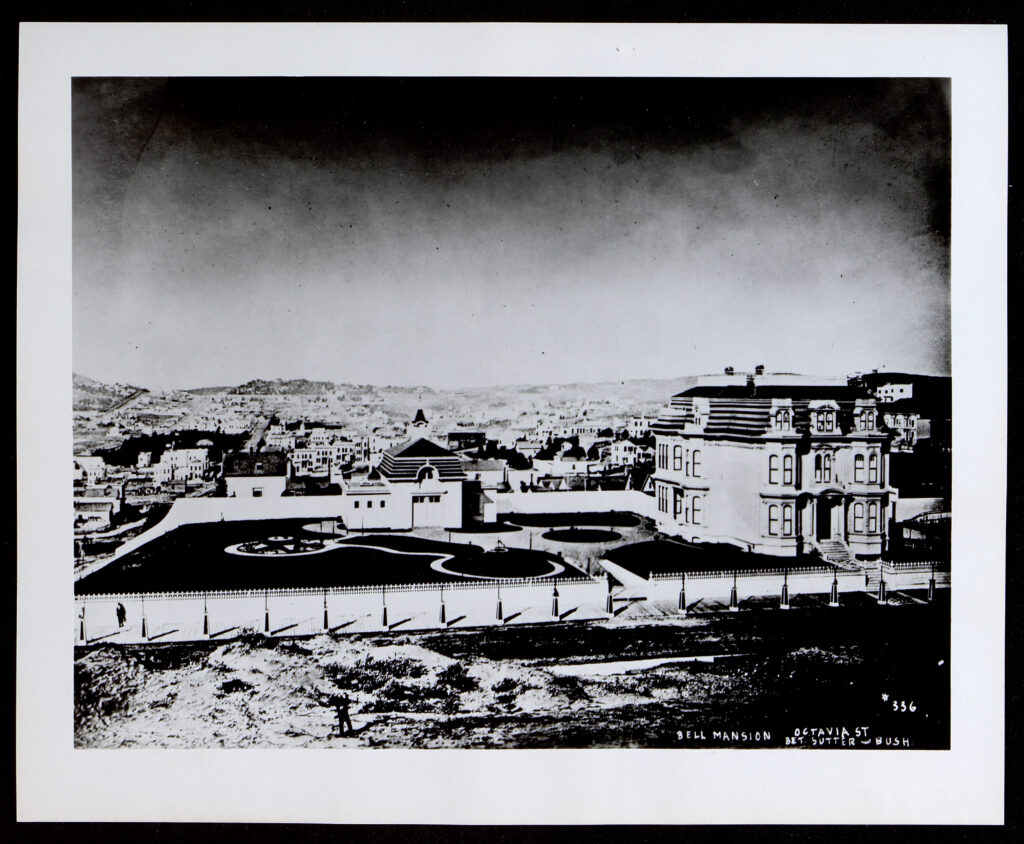
Pleasant was ultimately declared insolvent before her death in 1904, making the reversal from her earlier financial success all the more striking. Whatever the exact size of her fortune at its height — and estimates vary widely — she had spent decades as a significant investor and property owner in San Francisco.2
According to a later account, Pleasant spent her final months working with a Nevada journalist to record her own version of her life — an attempt to preserve her own account of a life increasingly surrounded by competing stories.7
Legacy and Civic Relevance
Mary Ellen Pleasant’s life resists a simple summary, and that may be part of why she remains such a compelling figure in California history.
She arrived in Gold Rush San Francisco with capital and multiplied it through investment, property, and business. She used money and influence in support of abolitionist causes and San Francisco’s Black community. She challenged racial exclusion on public transportation through the courts. And by the end of her life, she had become surrounded by enough conflicting stories, lawsuits, newspaper accusations, and self-created mystery that historians are still working to establish where documentation ends and legend begins.2
Her story offers several unusually rich civic questions.
How can an individual use courts to challenge the conduct of powerful institutions? What roles do property, entrepreneurship, philanthropy, churches, newspapers, and civic networks play in building influence outside government? And how should historians evaluate a public figure when autobiographical accounts, court records, newspapers, and later recollections do not always agree?
Pleasant’s life brings all of those questions together. She was simultaneously a businesswoman, investor, abolitionist, litigant, philanthropist, and one of nineteenth-century San Francisco’s most elusive public figures.
Whatever uncertainty remains about Mary Ellen Pleasant’s birthplace, the exact size of her fortune, or some of the stories she told about her own life, the documented record is remarkable enough: she became a successful capitalist in Gold Rush San Francisco, supported abolitionist and Black civic causes, built an extensive network of businesses and property, and challenged racial exclusion through the courts.
Her life accumulated titles, accusations, fortunes, lawsuits, and legends.
But when Pleasant considered how she wanted to be remembered, she chose something much simpler:
A friend of John Brown.
Read more about the era this discovery launched in our companion article, California Gold Rush Begins.
Footnotes
- National Park Service, “Mary Ellen Pleasant,” National Park Service: https://home.nps.gov/people/mary-ellen-pleasant.htm
- Lynn M. Hudson, “Mary Ellen Pleasant, Freedom-Fighting Entrepreneur,” Gilder Lehrman Institute of American History: https://www.gilderlehrman.org/history-resources/essays/mary-ellen-pleasant-freedom-fighting-entrepreneur
- Nantucket Historical Association, “Who Was Mary Ellen Pleasant?”: https://nha.org/research/nantucket-history/history-topics/mary-ellen-pleasant/
- ACLU of Northern California, “Mary Ellen Pleasant, Mother of California Civil Rights Movement,” Gold Chains: The Hidden History of Slavery in California: https://goldchains.aclunorcal.org/explore/mary-ellen-pleasant.html
- Pleasants v. North Beach & Mission Railroad Co., 34 Cal. 586 (Cal. 1868). The California Supreme Court decision reversed the lower-court damages award: https://exhibits.sos.ca.gov/s/breaking-barriers-african-americans/item/54974
- California State Archives, “Mary Ellen Pleasants (1814–1904),” Breaking Barriers: African Americans Shaping California: https://exhibits.sos.ca.gov/s/breaking-barriers-african-americans/page/aasc-7
- Kate Kelly, “Mary Ellen Pleasant, Entrepreneur and Abolitionist,” America Comes Alive: https://americacomesalive.com/mary-ellen-pleasant-entrepreneur-and-abolitionist/
- Sterling C. McIntyre, “View of San Francisco harbor,” 1851, Library of Congress, Prints and Photographs Division, Daguerreotype Collection, DAG no. 1330: https://www.loc.gov/item/2004664511/
- “Mary Ellen Pleasant, 1901,” Miriam Matthews Photograph Collection, UCLA Library Digital Collections, catalog record ark:/21198/z1cg1746: https://digital.library.ucla.edu/catalog/ark:/21198/z1cg1746
- San Francisco Heritage, “Landmark Tuesdays: Mary Ellen Pleasant Memorial Park.” Identifies the former Pleasant/Bell mansion site and an OpenSFHistory image of the mansion as wnp71.1598: https://www.sfheritage.org/community/landmark-tuesdays-mary-ellen-pleasant-memorial-park/