

Benjamin Banneker: Science, Citizenship, and the Republic
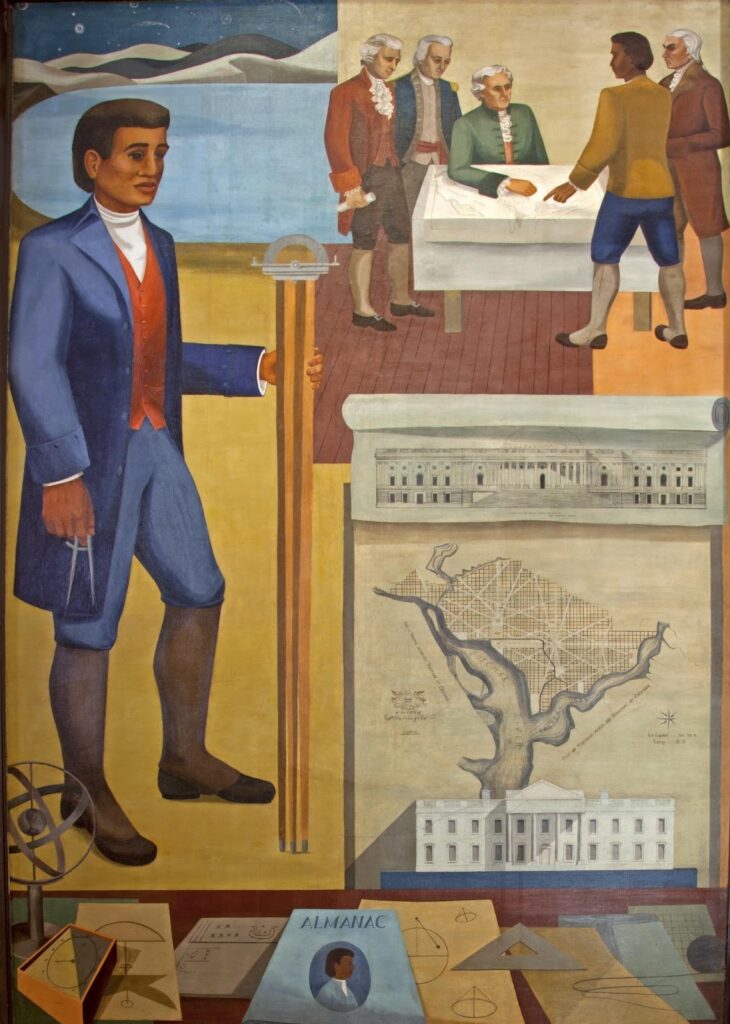
Benjamin Banneker was born free in 1731 on a small farm near the Patapsco River in Maryland, far from the centers of political power shaping the young nation. He never held office, never voted, and never addressed a legislature in person. Yet Banneker became one of the most widely known Black intellectual figures of the early republic, using mathematics, astronomy, and the written word to assert his place in American civic life.¹
At a time when many Americans questioned whether people of African descent were capable of reason or learning, Banneker responded with evidence. His work—carefully calculated, publicly shared, and unmistakably rigorous—stood as a quiet but powerful challenge to the racial assumptions embedded in the political culture of the founding era.
Education Outside the Classroom
Banneker received little formal schooling. His early education came primarily from his grandmother, Molly Walsh, who taught him to read, and later from supportive neighbors who encouraged his curiosity. From a young age, Banneker demonstrated an aptitude for numbers and mechanics. He famously constructed a striking wooden clock after studying a borrowed pocket watch—one of the first clocks entirely made in America.²
Banneker’s learning was self-directed and disciplined. He studied astronomy, mathematics, and natural science late into the night, often after long days of farm labor. His notebooks reveal a methodical thinker who tested calculations repeatedly, confident that knowledge itself could demonstrate the intellectual capabilities of Black Americans.
Science in Service of the Public
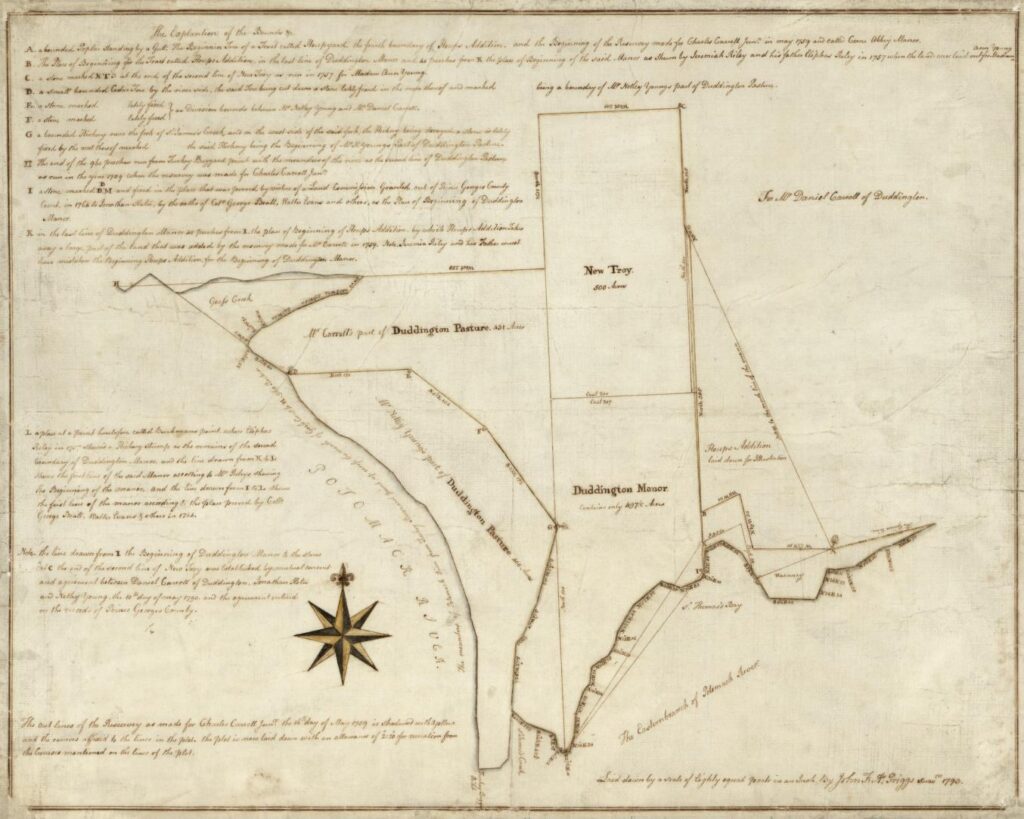
Banneker’s reputation reached beyond Maryland in the early 1790s when he assisted Major Andrew Ellicott with the survey of the federal district that would become Washington, D.C. Though his time on the project was brief, his participation carried symbolic weight. He was one of the few Black men involved in a federal undertaking at the nation’s founding, contributing scientific expertise to the creation of the capital city.³
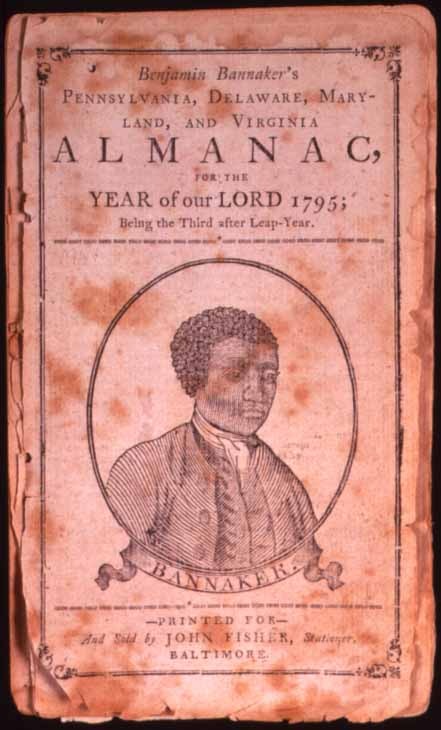
His most lasting public contribution came through his almanacs, published annually between 1792 and 1797. These publications included astronomical data, tide tables, weather predictions, essays, and commentary. Almanacs were widely read and practical tools in early America, and Banneker used the format deliberately. By placing his calculations before the public, he demonstrated intellectual authority in a genre trusted by farmers, merchants, and lawmakers alike.
A Letter to Thomas Jefferson
In 1791, Benjamin Banneker wrote directly to Secretary of State Thomas Jefferson, enclosing a manuscript of his astronomical calculations. The letter was measured but pointed. Banneker reminded Jefferson—author of the Declaration of Independence—that its claims about liberty and equality stood in tension with the continued existence of slavery.⁴
Banneker did not accuse; he reasoned. He appealed to Jefferson’s own words, asking whether a nation founded on natural rights could justify denying those rights to others. Jefferson responded respectfully, acknowledging Banneker’s talent and forwarding the almanac to the French Academy of Sciences as evidence of Black intellectual achievement. The exchange did not end slavery, but it marked a rare moment of dialogue between an African American and one of the republic’s most powerful figures—conducted through logic, evidence, and civic argument.
Citizenship Without Office
Banneker never sought fame and did not hold public office. His civic engagement took a quieter form: he believed knowledge should be shared, that reason could persuade, and that public work—done well—could reshape assumptions about who belonged in the republic. His almanacs frequently included reflections on morality, peace, and justice, underscoring his belief that civic life depended on more than laws alone. It depended on character, education, and a willingness to engage the public honestly.
A Lasting Civic Legacy
Banneker died in 1806, just months before Prince Hall and decades before Elizabeth Freeman and Paul Cuffe would rise to prominence. Like them, he worked within the constraints of a society that denied him full civic standing. And like them, he refused invisibility. Through science, writing, and public contribution, Banneker insisted that African Americans were shaping the nation as fully as anyone else.
His life reminds us that civic participation has always taken many forms. Some wrote laws. Others tested them. Still others, like Benjamin Banneker, measured the stars and asked the nation to measure itself by the same standards it claimed to uphold.
Explore more stories from the Revolutionary era in our Founding Generation series.
- Encyclopædia Britannica — Benjamin Banneker biography: Comprehensive overview of his life, work as a mathematician, astronomer, and almanac author.
https://www.britannica.com/biography/Benjamin-Banneker - Encyclopædia Britannica — Letter to Thomas Jefferson: Details Banneker’s 1791 letter to Jefferson urging justice and equality.
https://www.britannica.com/topic/Letter-to-Thomas-Jefferson-from-Benjamin-Banneker-August-19-1791 - Founders Online — Benjamin Banneker to Thomas Jefferson, 19 August 1791: Primary transcription of Banneker’s letter preserved in the Jefferson Papers.
https://founders.archives.gov/documents/Jefferson/01-22-02-0049 - History.com — Banneker writes to Jefferson (August 19, 1791): Reliable overview of the letter in its historical context.
https://www.history.com/this-day-in-history/august-19/benjamin-banneker-writes-letter-to-thomas-jefferson-slavery - Wikipedia — Benjamin Banneker: Well-sourced article summarizing his life, survey work for Washington, D.C., and correspondence with Jefferson (with references to primary sources). https://en.wikipedia.org/wiki/Benjamin_Banneker