

Carter Braxton: The Founder Who Risked Everything for Independence
In the early Among the fifty-six men who pledged their lives, fortunes, and sacred honor by signing the Declaration of Independence, Carter Braxton of Virginia stands out as a figure of genuine complexity — a conservative aristocrat who ultimately chose the cause of American liberty even at great personal cost. Born into one of Virginia’s most powerful dynasties and shaped by the world of colonial plantation life, Braxton navigated the tensions between caution and conviction, between loyalty to tradition and the demands of a revolutionary moment. His story offers a window into the difficult choices faced by the Founding Generation and the civic courage required for independence.
Early Life and a World of Privilege
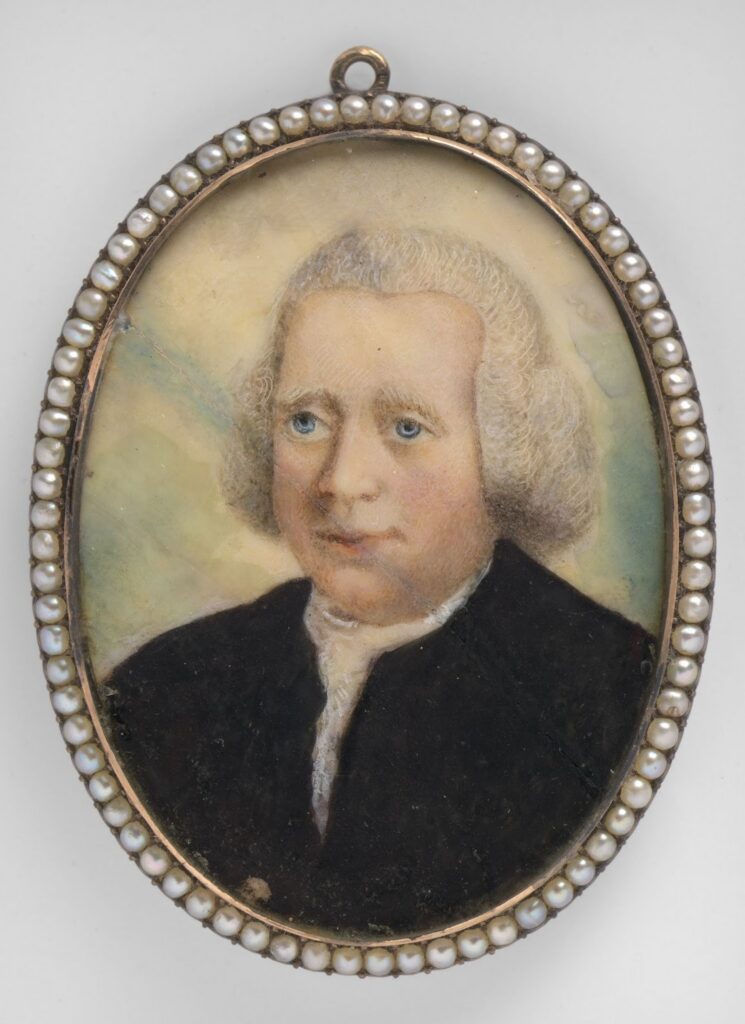
Carter Braxton was born on September 10, 1736, at Newington Plantation in King and Queen County, Virginia, the son of George Braxton Jr. and Mary Carter. His mother — the youngest daughter of the famously wealthy Robert “King” Carter, whose vast estate comprised some 300,000 acres — died just days after giving birth. When his father also died during Braxton’s teenage years, he was raised by family friends and came into his inheritance young.¹
Braxton was educated at the College of William and Mary and, at the age of nineteen, married Judith Robinson, the niece of the powerful Speaker of the Virginia House of Burgesses. Her death in 1757, just two years into their marriage, was a devastating blow. A grieving Braxton traveled to England for two years, where — by his own account — he gained firsthand knowledge of British political designs and the Crown’s intentions to extract new revenues from the American colonies.² Upon returning to Virginia in 1760, he married Elizabeth Corbin, daughter of the royal revenue collector for the colony. Together, they would have sixteen children.
When his elder brother died in 1761, Braxton inherited the family estate — though both brothers had lived extravagantly, leaving substantial debts. Even so, he remained one of Virginia’s most substantial landowners, holding more than 12,000 acres and overseeing large-scale tobacco cultivation and trade.³
A Career in Public Service
As a member of Virginia’s landed elite, Braxton understood public office as both a duty and a privilege. Elected to represent King William County in the House of Burgesses in 1761, he served in that body almost continuously until 1775, sitting on influential committees including Propositions and Grievances, Trade, and Religion. He was a fixture of Virginia’s colonial legislative life, even as the political climate around him grew increasingly charged.⁴
Braxton generally aligned with the moderate, conservative wing of Virginia politics, often standing in contrast to Patrick Henry’s more confrontational style. This tension came to a dramatic head in May 1775, when the royal governor, Lord Dunmore, seized the colony’s gunpowder and stored it aboard a British warship. Henry, leading a company of militiamen, marched on Williamsburg to demand restitution. Braxton — acting alone — stepped into the confrontation and arranged for his father-in-law, the royal revenue collector Richard Corbin, to personally cover the cost of the powder. The crisis was averted, though Braxton’s intervention made him Henry’s political enemy for years to come.¹
From Reluctance to Revolution
Braxton’s path to independence was neither swift nor simple. In April 1776, even as sentiment in the Continental Congress moved clearly toward separation, he wrote skeptically that independence was “an elusive bait which men inconsiderably catch at, without knowing the hook to which it is affixed.” He doubted whether republican government could succeed in practice, pointing to the troubled histories of Venice and the Netherlands as cautionary examples.²
Yet by the time Richard Henry Lee formally moved for independence in June 1776, Braxton had changed his mind. He voted in favor of independence on July 2, supported the Declaration on July 4, and affixed his signature to the document on August 2, 1776. Whatever his private reservations, he made his choice and stood by it.
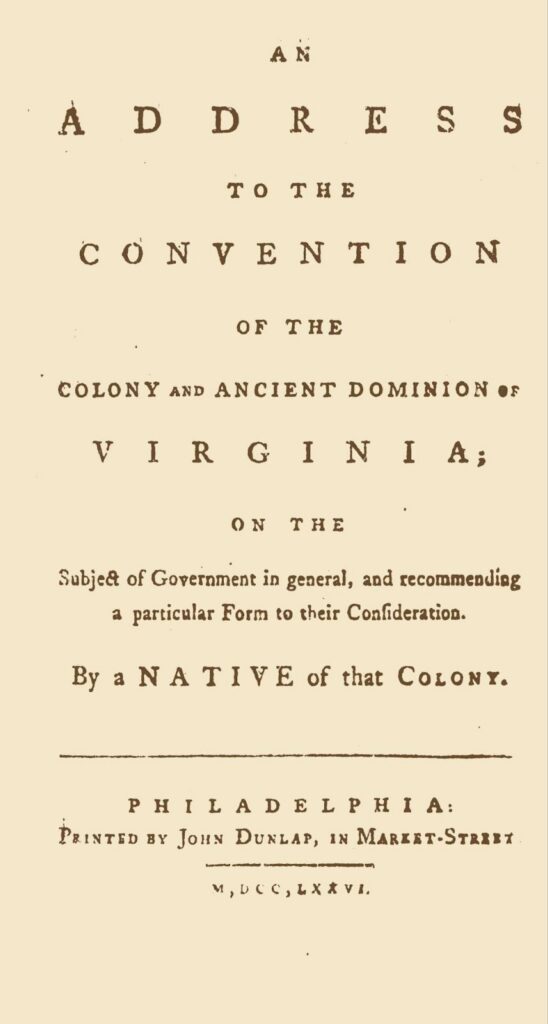
That same spring, however, Braxton published a pamphlet challenging what he viewed as John Adams’s overly democratic political ideas. The pamphlet drew sharp criticism from fellow Revolutionary leaders, and the Virginia Convention took the extraordinary step of reducing the number of delegates to Congress specifically to remove Braxton — and his ally Benjamin Harrison — from the delegation. He returned to Virginia in the autumn of 1776.³
Service Through Sacrifice
The Revolutionary War cost Braxton dearly. He invested heavily in the American cause, helping finance privateering vessels and lending money to support the war effort. British forces destroyed several of his ships, ravaged his plantations, and a fire in December 1776 consumed the main house at his Chericoke estate. By the war’s end, Braxton was virtually insolvent.⁴
Yet he did not retreat from public life. He served in Virginia’s House of Delegates for nearly a decade after the war, chairing key committees and continuing to shape the new state’s legislature. Fellow Signer Dr. Benjamin Rush described him as “agreeable, a sensible speaker, and an accomplished gentleman.” Others recalled him as a man of cultivated mind whose oratory was “easy and flowing” and whose reputation as an able and faithful public servant remained intact despite his financial reverses.²
In late 1785, Braxton was elected to the Council of State — the governor’s executive advisory board — a position that came with both prestige and a salary. There, he and Patrick Henry ultimately made their peace, working harmoniously together during Henry’s term as governor. Braxton supported ratification of the United States Constitution, though he did not attend either the Constitutional Convention or Virginia’s ratifying convention. He served on the Council of State until his death in Richmond on October 10, 1797.³
Legacy and Civic Relevance
Carter Braxton did not fit the heroic mold of the boldest Founders. He was cautious by temperament, conservative by conviction, and reluctant in his journey toward independence. But his story is a meaningful one precisely because of that complexity. He demonstrates that the Founding Generation was not a monolith — that the decision for independence was reached through genuine debate, genuine doubt, and genuine sacrifice by men who held a range of views.
Braxton’s willingness to serve across decades of Virginia public life, even after personal ruin, speaks to a civic ethic that transcended party and private interest. His signature on the Declaration was not the act of an idealist swept up in revolutionary fervor, but of a man who weighed the risks, accepted the cost, and chose his country.
As the nation commemorates America 250, Braxton’s example reminds us that civic participation sometimes demands difficult choices — and that the work of self-governance belongs to citizens of every temperament and background who are willing to show up and serve.
Explore more stories from the Revolutionary era in our Founding Generation series.
Footnotes
- Descendants of the Signers of the Declaration of Independence (DSDI), “Carter Braxton,” https://www.dsdi1776.com/signer/carter-braxton/
- National Constitution Center, “Carter Braxton,” https://constitutioncenter.org/signers/carter-braxton
- Encyclopedia Virginia (Virginia Humanities), “Carter Braxton (1736–1797),” https://encyclopediavirginia.org/entries/braxton-carter-1736-1797/
- Wikipedia, “Carter Braxton,” https://en.wikipedia.org/wiki/Carter_Braxton