

The Erie Canal: The Waterway That Connected a Growing Nation
Completed in 1825, the Erie Canal connected the Great Lakes to the Atlantic, transforming commerce, accelerating westward expansion, and helping create America’s first national economy.
In the fall of 1825, New Yorkers lined riverbanks, canal towpaths, village streets, and harbor docks to witness an event that many believed would change the future of the United States. Eight years earlier, workers had begun digging a narrow channel across hundreds of miles of wilderness, connecting the Hudson River to Lake Erie. The undertaking was so ambitious that critics mocked it as “Clinton’s Ditch” and predicted it would become a costly failure. Yet as Governor DeWitt Clinton traveled along the newly completed Erie Canal aboard the Seneca Chief, those doubts were rapidly fading.
When Clinton arrived in New York Harbor and poured water from Lake Erie into the Atlantic Ocean, the symbolic “Wedding of the Waters” celebrated far more than the completion of a transportation project. It marked the successful linking of America’s eastern seaboard with its rapidly growing interior.¹
Few infrastructure projects in American history have reshaped the nation as profoundly as the Erie Canal. The 363-mile waterway transformed commerce, accelerated westward migration, stimulated industrial growth, and helped establish New York City as the nation’s leading commercial center. More importantly, it helped create something the young republic had previously lacked: an integrated national economy. Before the canal, regions were often isolated by distance and transportation costs.
After its completion, farmers, merchants, manufacturers, and consumers found themselves increasingly connected through expanding networks of trade and exchange. The canal did not simply shorten travel times. It changed the way Americans thought about opportunity, growth, and the possibilities of a nation stretching across a continent.¹
A Nation Divided by Geography
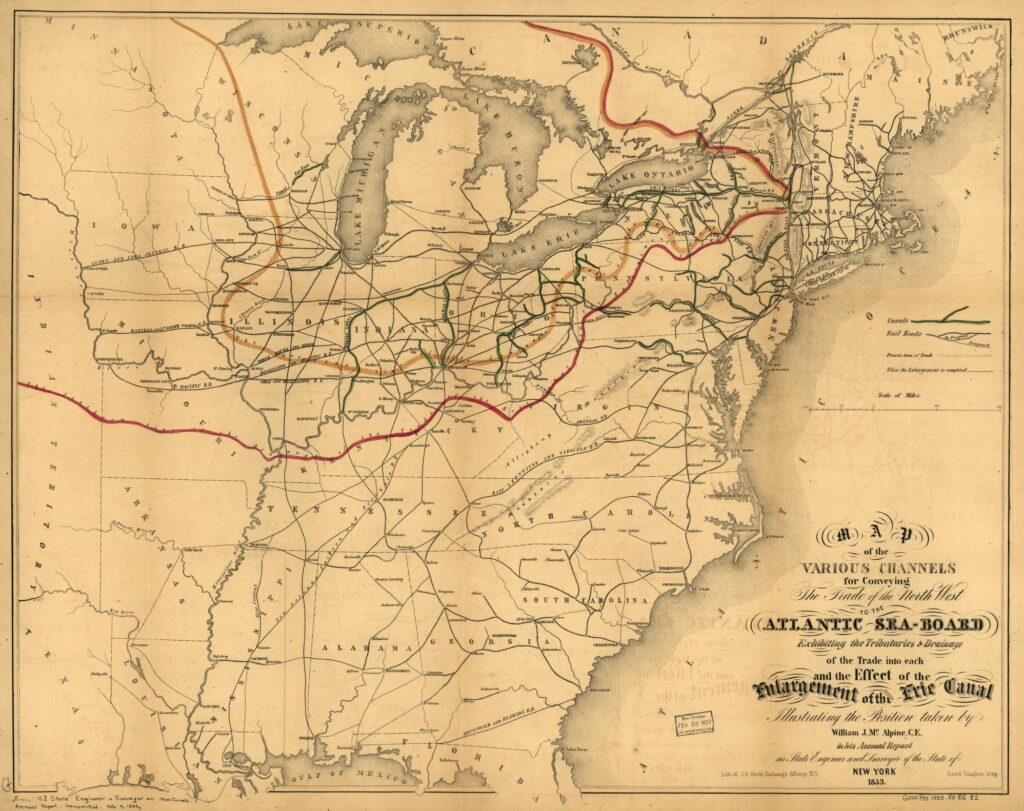
In the decades following the American Revolution, the United States faced a problem that threatened to limit its economic development. The country’s population continued to grow, and settlers steadily moved westward beyond the Appalachian Mountains. New communities emerged throughout western New York, Ohio, and territories farther inland. These regions possessed fertile soil, abundant natural resources, and enormous economic potential. Yet transporting goods to eastern markets remained difficult, expensive, and often unreliable.²
Roads offered only limited solutions. Most were little more than rough dirt pathways that became muddy during rain and nearly impassable during certain seasons. Heavy freight moved slowly, and transportation costs frequently consumed a large portion of a farmer’s profits. A barrel of flour grown in the interior might cost more to transport than to produce. Merchants recognized the opportunities represented by western settlement, but reaching customers hundreds of miles away remained an enormous logistical challenge. What the nation needed was not simply more land or more production. It needed a way to connect distant regions economically.
The geography of New York presented a unique opportunity. Unlike many portions of the Appalachian chain, the Mohawk River Valley offered a relatively natural east-west passage. For generations, Native peoples had used this route to travel across the region. Some political leaders and merchants began envisioning a waterway that would connect the Hudson River to the Great Lakes, creating a continuous transportation corridor between the Atlantic Ocean and the nation’s interior. Such a project promised not only commercial benefits but also national significance. A canal could strengthen economic ties between regions and help bind together a republic that continued to expand geographically with remarkable speed.²
The Visionaries Who Imagined the Canal
Among the earliest advocates for such a project was Jesse Hawley, a flour merchant from western New York. Hawley understood firsthand the frustrations caused by inadequate transportation networks. Unable to move goods efficiently to market, he struggled financially and eventually landed in debtor’s prison. While incarcerated, he began writing essays outlining a bold proposal: a canal connecting the Great Lakes to the Hudson River. Publishing under the pen name “Hercules,” Hawley argued that improved transportation would unlock the economic potential of the American interior and transform commerce throughout the nation.³
His ideas found a powerful ally in DeWitt Clinton, one of the most influential political figures in New York. Clinton recognized that a canal could provide enormous advantages for both the state and the nation. As a former mayor of New York City, U.S. senator, and future governor, he possessed the political influence necessary to advance the project. More importantly, he possessed the vision to see how dramatically transportation improvements could reshape economic development. Clinton championed the canal at a time when many dismissed the proposal as impractical or financially reckless.³
Opposition was widespread. Some critics argued that the project was too expensive. Others questioned whether such an ambitious engineering feat could even be completed. Thomas Jefferson reportedly viewed the idea with skepticism, considering it difficult to imagine constructing such a lengthy canal through wilderness terrain. Newspapers and political opponents mocked the undertaking as “Clinton’s Folly.” Yet despite persistent criticism, Clinton continued building political support. His determination ultimately proved crucial in transforming a visionary proposal into one of the largest public works projects in North American history.¹
Building an American Engineering Marvel
Construction officially began on July 4, 1817, near Rome, New York. The date reflected the symbolic importance many supporters attached to the project. They viewed the canal as a demonstration of American ingenuity and national progress. The task facing workers, however, was daunting. The canal would stretch 363 miles across forests, wetlands, rocky ridges, and river valleys. Few Americans possessed experience building canals, and the nation had yet to develop a mature engineering profession.³
Thousands of laborers participated in the effort over the next eight years. Some were immigrants, including many Irish workers. Others were American-born farmers seeking seasonal employment. Working mostly with picks, shovels, axes, and animal power, they cleared forests, removed stumps, excavated earth, and blasted through rock formations. Conditions were often harsh. Workers endured summer heat, insects, disease, winter cold, and physically demanding labor. Construction equipment that would later define large-scale infrastructure projects simply did not exist. The canal was carved largely through human effort and determination.¹
As challenges emerged, innovation followed. Builders developed new tools and techniques to address obstacles encountered along the route. They experimented with methods for removing tree stumps, improving excavation, and creating hydraulic cement capable of hardening underwater. Historians often describe the Erie Canal as the nation’s first practical school of civil engineering because so many workers, surveyors, and engineers gained experience that later influenced other major transportation projects. The knowledge developed during canal construction would help shape future American railroads, bridges, and public works projects for decades to come.¹
The Challenge of Lockport
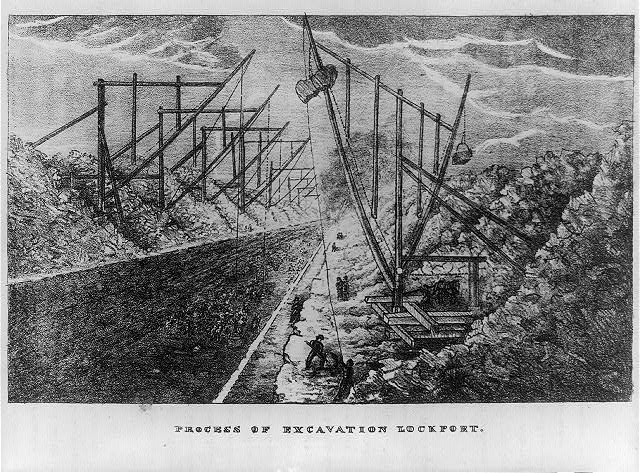
One of the most impressive achievements occurred near Lockport, where engineers confronted the Niagara Escarpment. This massive limestone ridge presented one of the greatest obstacles along the canal route. Workers spent years cutting through rock and constructing an elaborate series of locks capable of moving boats safely between dramatically different elevations. The resulting Lockport Flight became one of the canal’s defining engineering accomplishments and demonstrated the ingenuity that characterized the project as a whole.¹
The Opening of the Erie Canal
After eight years of construction, the canal officially opened in October 1825. Celebrations occurred throughout New York as residents gathered to witness the completion of a project that many now recognized as historic. Governor Clinton departed Buffalo aboard the packet boat Seneca Chief and traveled eastward along the canal toward New York City. Communities along the route hosted ceremonies, speeches, and festivities. The journey became a statewide celebration of human ingenuity and public investment.³
The most famous moment occurred at the conclusion of the voyage. Upon arriving in New York Harbor, Clinton ceremonially poured water from Lake Erie into the Atlantic Ocean. The event became known as the “Wedding of the Waters,” symbolizing the successful connection of two previously distant waterways. While highly theatrical, the ceremony reflected a deeper reality. The canal had fundamentally altered the nation’s transportation geography. What once required difficult overland travel could now be accomplished through an interconnected system of inland waterways.³
Creating America’s First National Economy
The Erie Canal’s greatest impact extended far beyond New York. While it is often remembered as an engineering achievement, its most significant legacy may be its role in helping create a truly national economy. Prior to the canal, many regions operated largely within separate economic spheres. Distance limited trade. Transportation costs restricted markets. Local economies remained relatively isolated from one another.
The canal changed those relationships dramatically. Transportation costs fell by approximately 90 percent compared with overland wagon transport. Products that previously moved only short distances could now travel hundreds of miles economically. Farmers gained access to urban markets. Merchants expanded their customer base. Manufacturers found new opportunities to distribute goods across a wider geographic area. The canal reduced barriers that had long separated producers from consumers.¹
The effects rippled outward through nearly every sector of the economy. Grain cultivated in western New York and the Midwest could move eastward efficiently and predictably. Lumber harvested in frontier regions reached growing cities along the Atlantic seaboard. Manufactured goods produced in eastern factories could flow westward to communities that previously lacked reliable access to these products. The exchange created a powerful economic feedback loop. Increased trade encouraged greater production, which in turn stimulated further investment, migration, and growth.
The canal also helped integrate emerging regional economies into a larger national marketplace. Before the canal, a farmer in Ohio and a merchant in New York City inhabited vastly different economic worlds. After the canal’s completion, their livelihoods became increasingly interconnected. Agricultural success in the Midwest affected commercial activity in eastern ports. Manufacturing growth in urban centers created demand for western resources and food supplies. The canal fostered economic relationships that tied distant communities together through shared commercial interests.
Historians often describe the nineteenth century as the period during which the United States transitioned from a collection of regional economies into a national market economy. The Erie Canal played a central role in that transformation. It provided the infrastructure necessary for large-scale commerce and demonstrated the economic value of transportation investment. While railroads would later expand these connections even further, the canal established a framework upon which future national transportation networks would be built.⁴
Why New York City Became America’s Commercial Capital
The Erie Canal delivered particularly dramatic benefits to New York City. During the early nineteenth century, several Atlantic ports competed for commercial dominance. Boston, Philadelphia, Baltimore, and New York all sought to attract trade and investment. The canal gave New York a decisive advantage.
Through the canal and the Hudson River, products from the Great Lakes region could reach New York Harbor efficiently. This connection allowed merchants to move goods between inland producers and international markets more effectively than many competitors. Commercial traffic increased significantly, drawing shipping companies, banks, insurance firms, and investors to the city. The resulting growth helped establish New York as the nation’s leading financial and commercial center.⁴
The impact extended beyond New York City itself. Communities along the canal experienced rapid growth as commerce expanded. Rochester became a major center for flour production. Syracuse benefited from nearby salt production. Buffalo emerged as an important transportation hub where canal traffic met Great Lakes shipping. The canal stimulated urban development throughout the region, earning its reputation as the “Mother of Cities.”¹
Opening the Door to Westward Expansion
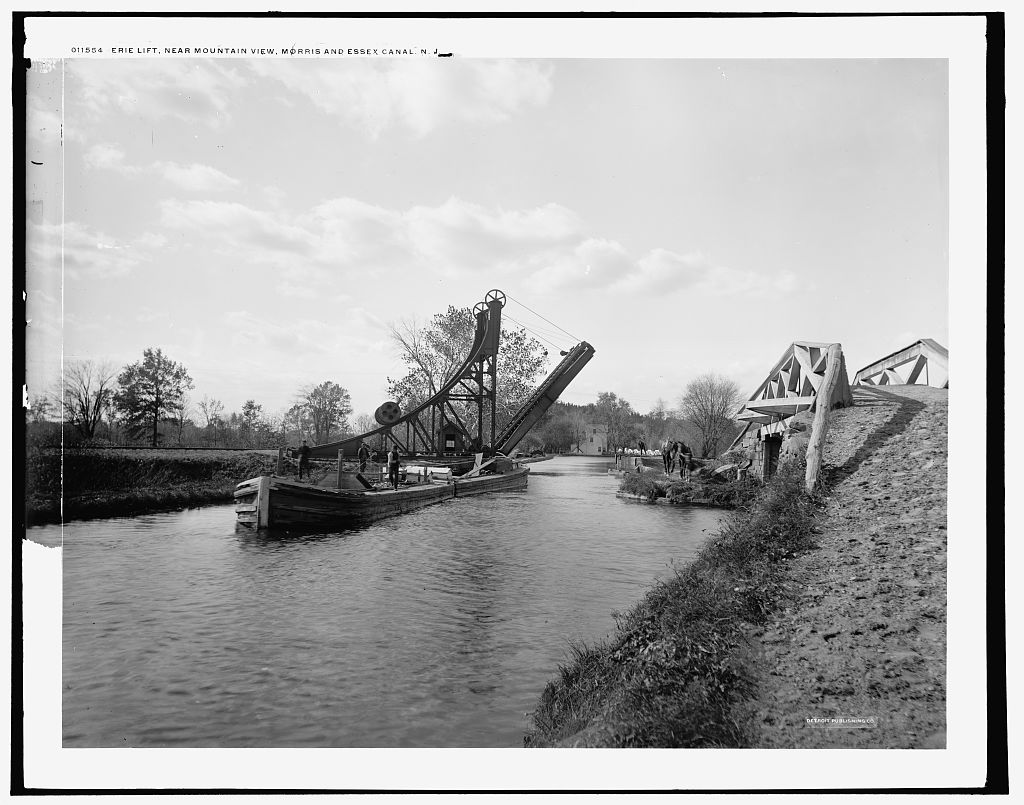
Economic growth was closely connected to westward migration. As transportation improved, settlers found it easier to move into new territories and establish communities. Families heading west could travel more efficiently through New York and into the Great Lakes region. Supplies became less expensive, while access to distant markets became more reliable. These advantages encouraged further settlement and accelerated population growth throughout the interior.²
The canal also strengthened national unity during a period of remarkable geographic expansion. Americans living hundreds of miles apart became increasingly connected through trade networks and shared economic interests. Farmers, merchants, manufacturers, and consumers participated in an expanding system of exchange that linked regions previously separated by distance and cost. The canal helped transform the United States from a collection of developing frontier settlements into a more interconnected nation.²
The Canal’s Enduring Legacy
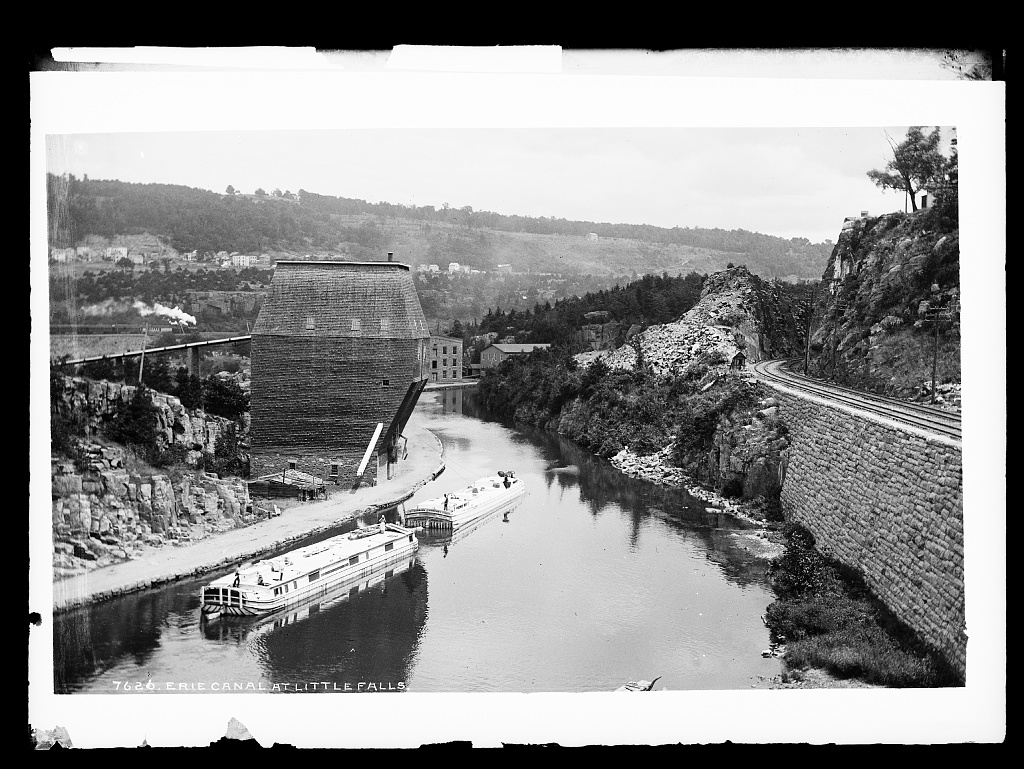
Although railroads eventually surpassed canals as the nation’s dominant transportation system, the influence of the Erie Canal continued long after its commercial peak. The project demonstrated the transformative power of infrastructure investment and provided a model for future transportation initiatives. It also helped shape an American belief that ambitious public works projects could create lasting economic opportunities and strengthen national development.¹
Today, the Erie Canal remains one of the most significant infrastructure projects in American history. Its waters carried people, crops, manufactured goods, and raw materials. More importantly, they carried ideas, investment, and opportunity across a growing nation. By connecting the Atlantic world with the American interior, the canal accelerated westward expansion, fueled economic growth, and helped create the interconnected marketplace that would support the nation’s rise during the nineteenth century. Its legacy can still be seen in the cities it helped build, the trade networks it helped establish, and the enduring belief that infrastructure can shape a nation’s future.
Endnotes
- Erie Canalway National Heritage Corridor, History and Culture, https://eriecanalway.org/learn/history-culture
- National Park Service, The Erie Canal, https://www.nps.gov/wori/learn/historyculture/the-erie-canal.htm
- HISTORY, Construction on the Erie Canal Begins, https://www.history.com/this-day-in-history/July-4/construction-begins-erie-canal
- Smithsonian National Museum of American History, The Artificial River: The Erie Canal, https://americanhistory.si.edu/explore/exhibitions/on-the-water/online/inland-waterways/river-towns-networks/artificial-river-erie-canal
- Erie Canal Museum, https://eriecanalmuseum.org/
Image Sources:
- Library of Congress, Excavation of an Erie Canal lock at Lockport, New York, https://www.loc.gov/item/2022640031/
- Library of Congress, Canal boats traveling near Little Falls, New York, https://www.loc.gov/item/2016817495/
- Library of Congress, Historic view of commercial traffic along the Erie Canal, https://www.loc.gov/item/2016801326/
- Library of Congress, Map of Channels, https://www.loc.gov/item/98688357/
Explore more articles and stories in our History Lessons.