

Esther de Berdt Reed: Civic Organization and Patriot Support in the Revolution
A Transatlantic Beginning
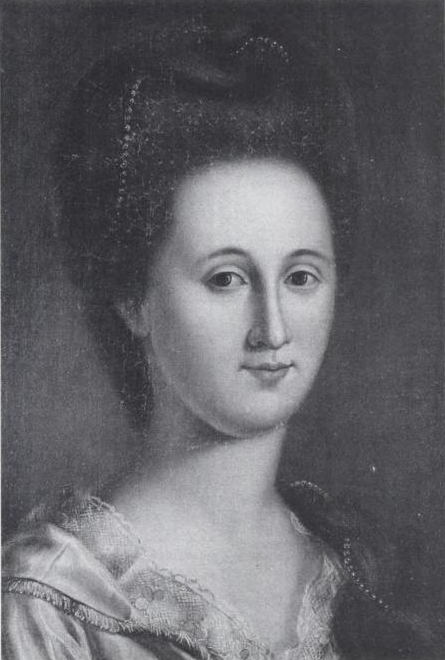
Esther de Berdt Reed (1746–1780) was born in London to a family with strong civic traditions. She married Joseph Reed, an American who would become a leader in Pennsylvania politics and service during the Revolutionary War. When Esther moved to Philadelphia, she brought with her not only a transatlantic worldview but also a belief that ordinary citizens — including women — could contribute meaningfully to national causes.¹
In Philadelphia’s charged revolutionary atmosphere, Reed developed a reputation for organization and public spirit. Her engagement with civic affairs went beyond private support, leading her to help mobilize women in effective, structured participation during the war years.
Organizing Women for Patriot Relief
As the Revolutionary War progressed and the Continental Army faced shortages of clothing, blankets, and supplies, Reed played a central role in organizing women’s support for soldiers. In 1775 and 1776, she helped establish what became known as the Ladies Association of Philadelphia, a group that coordinated fundraising, the collection of materials, and the production of supplies for troops on the front lines.²
Reed and her colleagues coordinated efforts across social lines, soliciting contributions from women in different communities and facilitating the production of goods that would be sent to soldiers. The Association’s work was notable for its scale and structure, reflecting both civic commitment and administrative skill.₂
Reed’s leadership emphasized that support for independence was not limited to battlefields or legislatures — it was also built through sustained effort within local communities. By organizing women into a cohesive, productive group, she helped demonstrate that civic engagement and patriotic service could take many forms and have a significant impact.

Sentiments of an American Woman: A Call to Action
Reed’s most enduring contribution to Revolutionary thought was her pamphlet Sentiments of an American Woman (1776), one of the earliest published calls for female participation in the patriot cause. In it, she articulated a vision of women’s involvement that went beyond charity to encompass responsibility for collective well-being. Her words linked personal sacrifice with national purpose, urging women to see themselves as partners in the fight for independence.³
The pamphlet resonated in its time and remains historically significant as an early expression of organized female civic agency in the founding era. Reed argued that women possessed both the capacity and the obligation to contribute to public efforts, a message that helped broaden civic participation in her day.
Coordination with National Leadership
Reed’s efforts connected with senior American leaders. Correspondence between Reed and George Washington indicates that she coordinated logistics and support with national authorities. A letter in the Founders Online collection shows Washington acknowledging supplies and arrangements facilitated by Reed’s group — a testament to the tangible impact of her organizational work.⁴
This exchange demonstrates that civic support in the early republic was intertwined with formal leadership structures. Reed and her colleagues did not operate on the margins; they provided essential backing to the Continental Army’s needs, illustrating how civic networks and public leaders interacted to sustain collective effort.
Legacy of Civic Engagement
Esther de Berdt Reed died in 1780 at the age of 34, during the Revolutionary War. Although her life was brief, her work left a lasting imprint on the war effort and on early American understandings of civic participation. Her example shows that building a nation required not only political resolve and military strategy, but also organized community action and a shared sense of responsibility among ordinary citizens.
Reed’s contributions — both written and practical — remind us that civic engagement can take many forms: from public leadership to collective production, from persuasive writing to coordinated logistics. Her leadership in the Ladies Association of Philadelphia reflects a model of collaboration and service that remains relevant to civic life today.
Why Esther de Berdt Reed Matters Today
Reed’s story encourages civic learners to recognize that democratic societies depend on active participation beyond formal office. Her work highlights essential themes in civic life:
- Collective action: organizing community resources for the public good.
- Civil responsibility: responding to collective need with sustained effort.
- Broadening participation: enabling voices beyond formal political roles to support national objectives.
Her leadership during the Revolutionary era exemplifies how citizens — working through structured organizations — helped sustain independence and build the civic foundations of the United States.
Explore more stories from the Revolutionary era in our Founding Generation series.
Footnotes
- Smith College, “Esther de Berdt Reed,” Voices of the American Revolution, https://sites.smith.edu/voices-of-the-american-revolution/esther-de-berdt-reed/
- American Battlefield Trust, “Esther de Berdt Reed Biography,” https://www.battlefields.org/learn/biographies/esther-de-berdt-reed
- American Revolution Museum at Yorktown, “Esther de Berdt Reed,” When Women Lost the Vote, https://www.amrevmuseum.org/virtualexhibits/when-women-lost-the-vote-a-revolutionary-story/pages/esther-de-berdt-reed
- Founders Online, Letter from George Washington to Joseph Reed acknowledging supplies, March 1780,https://founders.archives.gov/documents/Washington/03-27-02-0093