
From Crisis to Constitution: How Philadelphia Changed America in 1787
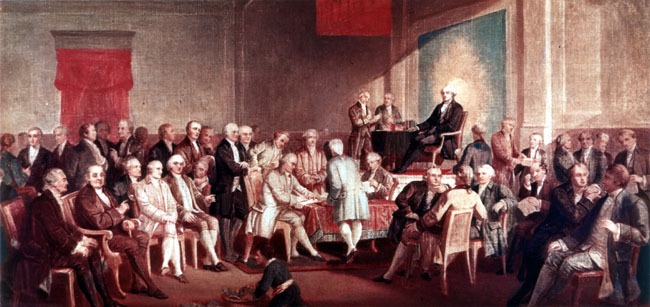
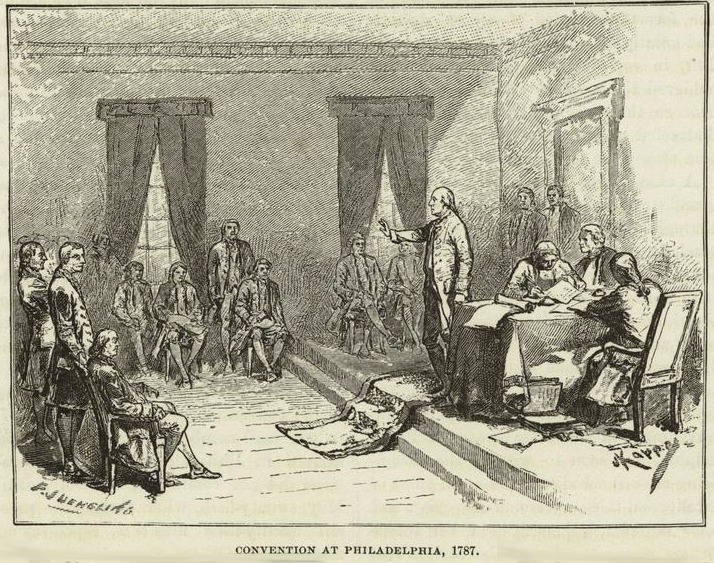
On May 25, 1787, delegates gathered in Philadelphia to address a growing crisis facing the young United States. What began as an effort to revise the Articles of Confederation quickly became a historic debate over democracy, representation, and national power — resulting in the creation of the United States Constitution. More than two centuries later, the Constitutional Convention remains one of the most influential moments in American civic history.
At a Glance
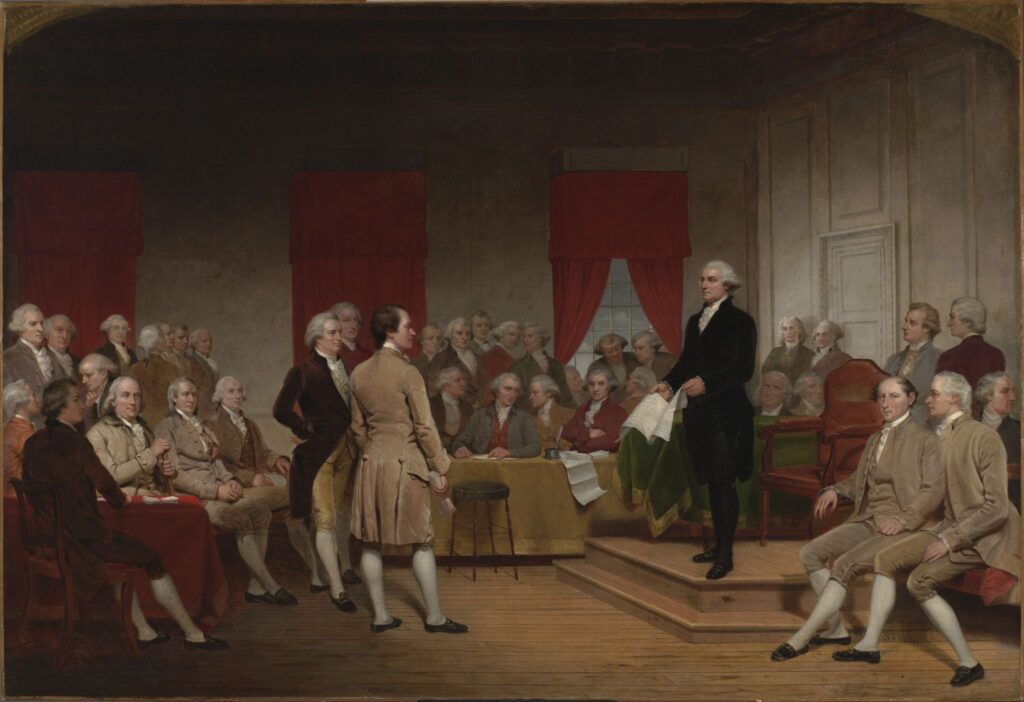
- The Constitutional Convention officially began on May 25, 1787, in Philadelphia.
- Delegates originally met to revise the Articles of Confederation, but instead created a completely new Constitution.
- Fifty-five delegates attended the convention, including George Washington, James Madison, and Benjamin Franklin.
- Major debates centered on representation, federal power, slavery, and the structure of government.
- The Constitution established three branches of government and a system of checks and balances.
- The convention continues to shape civic life and constitutional democracy in the United States today.
When delegates from twelve states assembled in Philadelphia in the spring of 1787, the future of the United States was uncertain. The nation had won independence from Great Britain only a few years earlier, but many leaders feared the fragile new republic might not survive.
The federal government lacked the power to regulate trade, collect taxes, or effectively maintain national unity. Economic instability and political unrest raised urgent questions about whether the United States could function as a single nation.
What followed would become one of the most important political gatherings in world history: the Constitutional Convention.[1]
Over four months, delegates debated the meaning of liberty, the balance of governmental power, and the future of representative democracy. Their work produced the United States Constitution — a document that continues to shape American government and civic life more than 235 years later.
Why the Convention Was Called
After the Revolutionary War, the United States operated under the Articles of Confederation, the nation’s first governing framework. The Articles intentionally created a weak central government because many Americans feared concentrated political power after their experience under British rule.[1]
Under the Articles, Congress had limited authority. It could not effectively collect taxes, regulate interstate commerce, or compel states to follow national laws. Economic instability, disputes between states, and political unrest soon revealed weaknesses in the system.[1][2]
One event that alarmed national leaders was Shays’ Rebellion in Massachusetts in 1786–1787. The uprising, led largely by struggling farmers protesting debt and taxation policies, convinced many political leaders that the federal government lacked the power needed to maintain order and stability.[2][3]
In response, delegates first met at the Annapolis Convention in 1786 and called for a broader meeting to discuss reforming the national government. Philadelphia was selected as the location for the new convention.[1]
Timeline: Events Leading to the Constitutional Convention
- 1776 — Declaration of Independence
- The thirteen colonies formally declared independence from Great Britain, beginning the process of creating a new national government.
- 1781 — Articles of Confederation Ratified
- The Articles of Confederation became the nation’s first governing framework, creating a loose alliance of states with a weak central government.
- 1783 — End of the Revolutionary War
- The Treaty of Paris officially ended the Revolutionary War, leaving the new United States to govern itself independently.
- 1786 — Annapolis Convention
- Delegates from several states met in Annapolis, Maryland, to discuss trade and interstate issues. The convention concluded that broader reforms were needed and called for a larger meeting in Philadelphia.
- 1786–1787 — Shays’ Rebellion
- Economic hardship and debt led farmers in Massachusetts to revolt against state authorities. The rebellion intensified concerns that the federal government lacked the power to maintain order.
- May 14, 1787 — Convention Scheduled to Begin
- Delegates were originally expected to begin meeting in Philadelphia, but travel delays prevented enough representatives from arriving to form a quorum.
- May 25, 1787 — Constitutional Convention Officially Begins
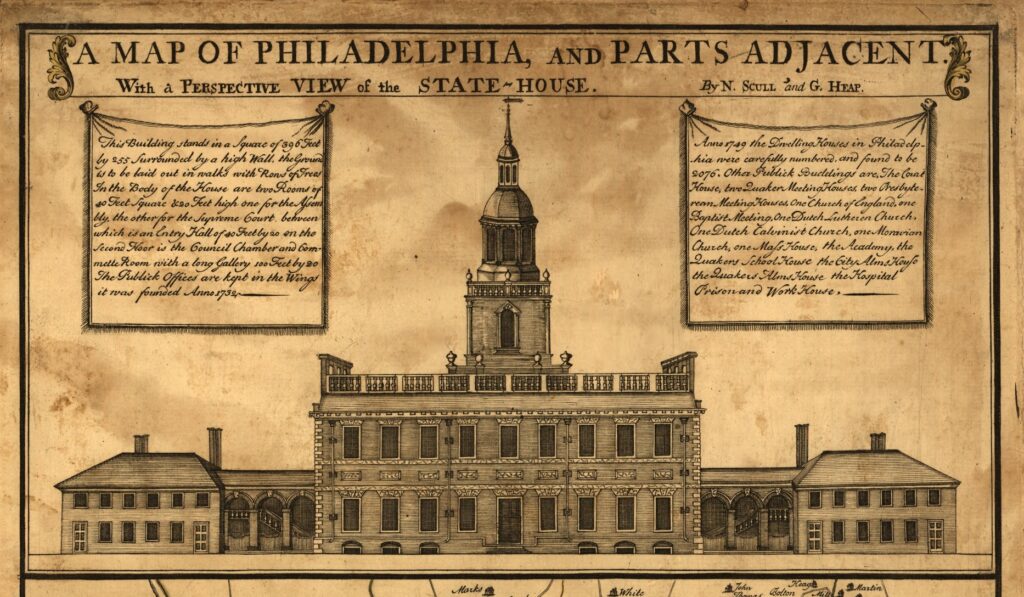
- A quorum of delegates from seven states arrived in Philadelphia, allowing the Constitutional Convention to formally begin inside Pennsylvania’s State House, now known as Independence Hall.
Gathering in Philadelphia
Fifty-five delegates eventually attended the convention over the course of the summer, including many of the most influential figures of the Revolutionary era:
- George Washington
- James Madison
- Benjamin Franklin
- Alexander Hamilton
- Gouverneur Morris
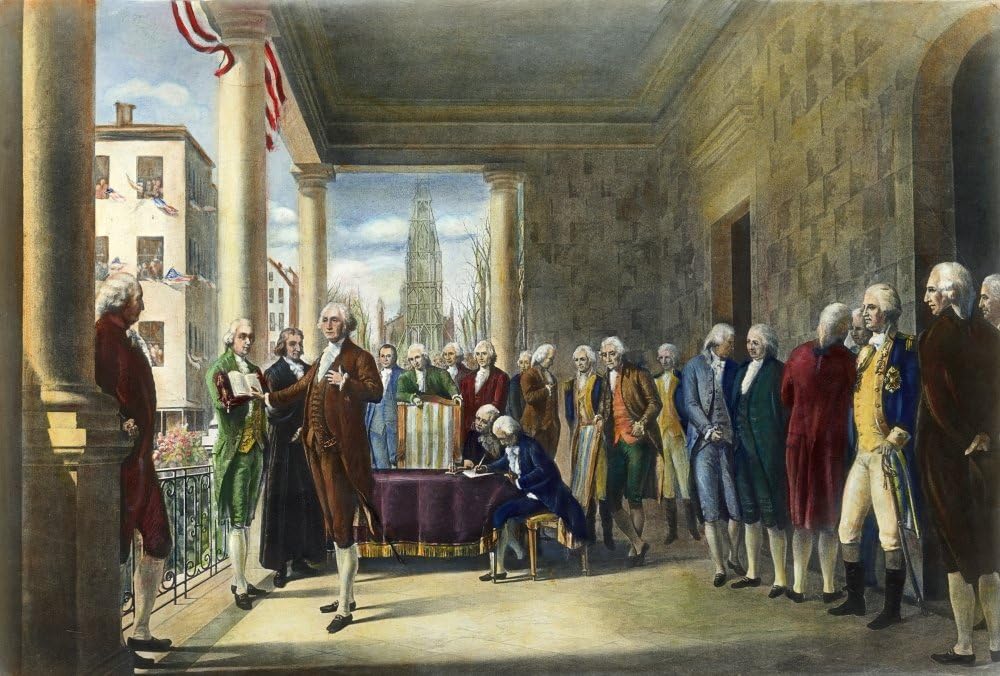
Rhode Island was the only state that chose not to send delegates, reflecting concerns that a stronger federal government might threaten state authority.
The delegates met inside Pennsylvania’s State House — now known as Independence Hall — the same building where the Declaration of Independence had been debated and signed just eleven years earlier.
Almost immediately, delegates decided not simply to revise the Articles of Confederation, but to create an entirely new framework of government.
Debates and Compromises
The Constitutional Convention quickly became a forum for intense debate. Delegates agreed that the nation needed a stronger federal government, but they disagreed about how power should be distributed.
Large states favored representation based on population, while smaller states feared losing political influence. The disagreement was resolved through the Connecticut Compromise, which created a bicameral legislature:
- The House of Representatives would be based on population.
- The Senate would provide equal representation for each state.
Delegates also debated the powers of the executive branch, the structure of the judiciary, and the balance between federal and state authority.
Some of the convention’s most difficult and painful debates centered on slavery. Compromises reached during the convention, including the Three-Fifths Compromise, reflected deep divisions that would continue to shape American history for generations.[4]
Throughout the summer, delegates conducted their discussions in secret, with guards stationed outside the meeting hall and windows kept closed despite the heat. The secrecy allowed delegates to debate freely and change positions without immediate public pressure.[2]
Timeline: From Convention to Constitution
- June–July 1787 — Representation Debates
- Delegates argued over how states would be represented in Congress, leading to the Connecticut Compromise.
- July 1787 — Debates Over Slavery and Commerce
- Delegates negotiated compromises on slavery, taxation, and trade among the states.
- August 1787 — Drafting the Constitution
- Committees refined and organized the proposed Constitution into its final structure.
- September 17, 1787 — Constitution Signed
- Thirty-nine delegates signed the Constitution, completing the work of the convention.
- 1787–1788 — Ratification Debates
- States debated whether to approve the Constitution, with supporters and critics publishing essays and arguments nationwide.
- June 21, 1788 — Constitution Ratified
- New Hampshire became the ninth state to ratify the Constitution, allowing it to take effect officially.
- March 4, 1789 — New Government Begins
- The new United States government officially began operating under the Constitution.
- December 15, 1791 — Bill of Rights Ratified
- The first ten amendments to the Constitution, known as the Bill of Rights, were ratified to protect individual liberties and address concerns raised during ratification debates.
The Constitution Emerges
After months of negotiation and revision, delegates finalized the Constitution on September 17, 1787. Thirty-nine delegates signed the document.
The Constitution established a federal system with three branches of government:
- Legislative
- Executive
- Judicial
It also created a system of checks and balances designed to prevent any one branch from becoming too powerful.
The Constitution did not immediately become law. It still required ratification by nine states before taking effect. The ratification debates that followed helped produce another foundational American document: the Bill of Rights.
Why the Constitutional Convention Still Matters
The Constitutional Convention remains one of the most important moments in American civic history, demonstrating the challenges and possibilities of self-government.
The delegates arrived in Philadelphia with competing interests, regional loyalties, and different visions for the nation’s future. Through debate, compromise, and negotiation, they created a governing framework that has endured for more than two centuries.
At the same time, the convention also reflected the limitations and contradictions of its era. Women, enslaved people, Native Americans, and many others were excluded from the political process, even as delegates debated liberty and representation.
Understanding both the achievements and shortcomings of the Constitutional Convention helps Americans better understand the continuing work of democracy.
The Constitutional Convention reminds Americans that democratic government is not automatic — it requires participation, civic knowledge, compromise, and an ongoing commitment to constitutional principles.
A Lasting Civic Legacy
When delegates gathered in Philadelphia on May 25, 1787, few could have predicted the lasting impact of their work. The Constitution they produced became the foundation of the United States government and one of the world’s most influential governing documents.
More than 235 years later, the debates that began in Philadelphia continue to shape civic life in the United States — reminding Americans that democracy is both an inheritance and a responsibility.