
Hannah Adams: Scholar of Religion and Civic Understanding
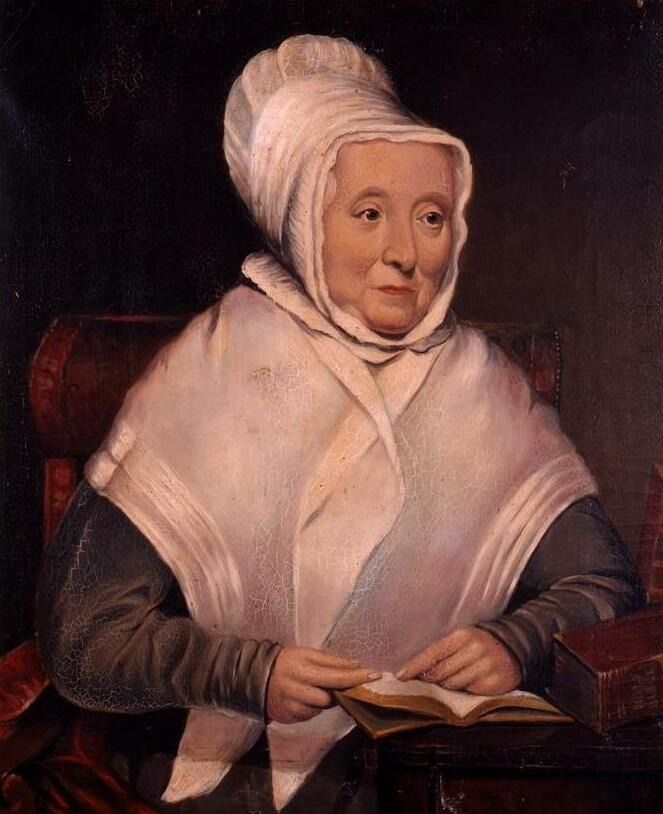
In the early years of the United States, as the new nation defined its values and institutions, a remarkable scholar emerged whose work helped shape Americans’ understanding of religion, identity, and civic life. Hannah Adams (1755–1831) became one of the first American women to support herself through writing, producing influential reference works and histories that emphasized religious liberty and mutual understanding across diverse faiths. Her career offers an early example of how scholarship and civic engagement together contribute to a more informed and inclusive society.
Early Life and Intellectual Curiosity
Hannah Adams was born in 1755 in Medford, Massachusetts. Despite limited formal education opportunities for women in her era, she developed a passion for learning and reading from a young age. Her father’s death when she was a teenager placed economic pressure on the family, and Adams supported herself initially through teaching and bookbinding — work that brought her into contact with books and scholars. Over time, she turned to writing as a way to combine her intellectual interests with her growing professional career.¹
Pioneering American Authorship
Adams made a living through her writing at a time when few American women did so, particularly outside of poetry or devotional genres. Her first major success came with the Summary of the Various Sects of Christians (1784), a work that catalogued religious groups in America and Europe, emphasizing factual description rather than polemic. By documenting similarities and differences among faiths, Adams’s work advanced broader public understanding of religion in the early republic and reflected the era’s evolving commitment to religious liberty as articulated in the First Amendment.²
Her approach was novel: rather than advocating for a particular creed, she aimed to explain and contextualize beliefs in ways accessible to general readers. This method made her work valuable not only to scholars but also to citizens seeking to navigate a religiously diverse society.
Advancing Civic Values Through Scholarship
Adams continued to publish widely used reference works, including later editions of her History of the Jews and expansions on her survey of Christian sects. Her scholarship underscored the importance of mutual respect among religious communities — a theme resonant with the early republic’s civic ideals, which sought to balance liberty of conscience with peaceful cooperation among citizens.
At a time when national identity was still forming, her efforts helped foster informed engagement with complex cultural questions. Her writing modeled a respectful, evidence-based approach to sensitive topics, contributing to civic discourse rooted in understanding rather than conflict.
A Career of Independence and Influence
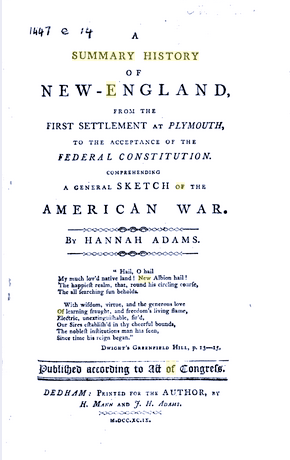
Unlike many women of her day, Adams did not rely on male relatives to secure her professional standing. She negotiated her own contracts, revised her work through multiple editions, and gained a readership that extended across the young United States. Her success as a professional writer expanded the possibilities of women’s intellectual participation at a time when such paths were limited.
Adams’s work was well regarded, and she was invited to contribute to learned societies and to correspond with prominent thinkers of her time. Though she lived modestly, her impact on American letters and civic culture was significant.
Legacy and Civic Relevance
Hannah Adams died in 1831, leaving behind a body of work that continues to be recognized for its historical and civic significance. She demonstrated that a commitment to understanding — especially across religious divides — is itself a form of civic engagement. In approaching sensitive subject matter with clarity, curiosity, and respect, she modeled an early American ethos of inquiry that speaks to contemporary challenges as well.Her life and writings remind us that in a democracy, informed public understanding of differing views is essential to peaceful coexistence and collective action. As the nation commemorates America 250, Adams’s example highlights the ongoing importance of scholarship that fosters empathy, context, and unity. civic spirit that emerges when people step forward to meet collective challenges.
Explore more stories from the Revolutionary era in our Founding Generation series.
Footnotes
- Boston Athenaeum, “Hannah Adams,” https://bostonathenaeum.org/news/hannah-adams/
- Library Company of Philadelphia, “Hannah Adams — Religion & Portraits,” https://www.librarycompany.org/women/portraits_religion/adams.htm
- Amy Smart Girls, “Meet Hannah Adams — Scholar and First American Female to Make a Living as an Author,”https://amysmartgirls.com/meet-hannah-adams-scholar-and-first-american-female-to-make-a-living-as-an-author-b975315907d4