

James Marshall and John Sutter: The Discovery That Changed America
How a chance discovery by James Marshall at a remote sawmill transformed California, the United States, and the lives of the two men at its center — and consumed them both.
The morning of January 24, 1848, began like dozens before it along the South Fork of California’s American River. A layer of frost still clung to the valley floor as the first light crept over the Sierra Nevada foothills. Water rushed through the newly constructed sawmill, its sound steady and ordinary, while workers prepared for another day of hard labor among the pines. Nothing about the morning suggested it would alter the course of American history.
James Wilson Marshall, the mill’s builder, walked to the tailrace — the channel that carried water away from the waterwheel — to inspect the overnight work. Recent flooding had deposited gravel and sediment into the channel, and Marshall wanted to ensure the water flowed freely. As he peered into the shallow stream, something caught his eye. Scattered among the gravel were several bright yellow flakes unlike anything in the surrounding stone. He reached down and picked one up.
“I reached my hand down and picked it up; it made my heart thump, for I was certain it was gold. Then I saw another.” — James W. Marshall, later recalling the discovery
What began as a routine inspection of a sawmill would soon ignite the California Gold Rush, attract more than 300,000 people from around the world, accelerate California’s admission to the Union, and permanently reshape the American West.1 Yet neither Marshall nor John Sutter, the Swiss immigrant who owned the mill, would capture lasting wealth from the discovery. Their story is one of the great ironies in American history: two men whose names are synonymous with one of the country’s most consequential moments, neither of whom profited from it.
Their story is also a reminder that history is rarely made by the people who expected to make it, and that the consequences of a single unexpected moment can ripple outward far beyond the control of anyone who set it in motion.
California on the Eve of Discovery
When Marshall discovered gold in January 1848, California stood at a crossroads in its history. The Mexican-American War had effectively ended with the capture of Mexico City the previous September, and California was under United States military administration. The Treaty of Guadalupe Hidalgo, which formally ended the war and transferred California to the United States, would not be signed until February 2, 1848, just nine days after Marshall’s discovery, nor ratified until that spring.2
California remained sparsely populated by American standards. Its population was approximately 160,000, the vast majority of whom were Native Americans who had inhabited the region for thousands of years.2 Mexican Californios, immigrants from Europe and Asia, and a relatively small number of American settlers made up the rest. Reaching California required either months of overland travel across deserts, mountains, and rivers, or an equally arduous sea voyage around Cape Horn at the southern tip of South America. For most Americans east of the Rocky Mountains, California felt impossibly far away.
Within two years, that would change dramatically. The catalyst was a Swiss immigrant whose ambitions had nothing to do with gold.
John Sutter’s Vision for New Helvetia
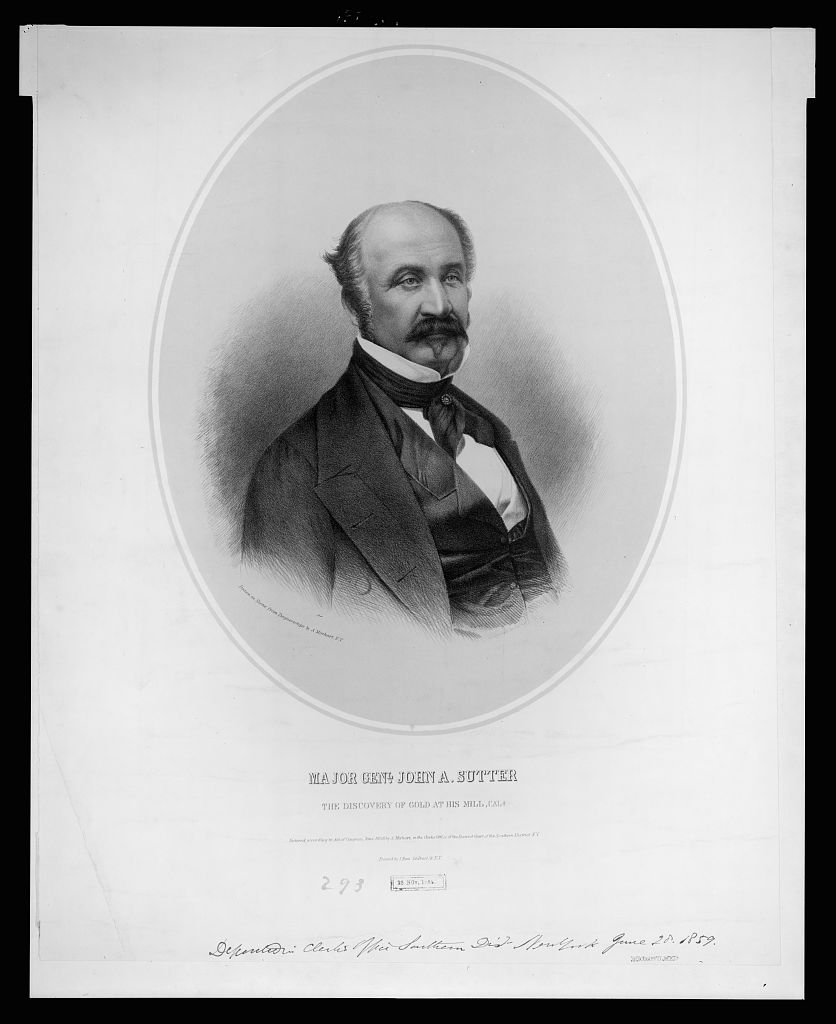
Johann Augustus Sutter was born in Kandern, Germany, in 1803 and spent much of his youth in neighboring Switzerland, where he built a career as a merchant. Financial setbacks convinced him that greater opportunities awaited in America. In 1834, he left Europe and traveled westward through Missouri before sailing to the Hawaiian Islands and finally arriving in Alta California, then a province of Mexico.4
Sutter quickly recognized California’s potential. In 1839, Mexican authorities permitted Sutter to establish a settlement in the fertile Sacramento Valley. Two years later, Governor Juan Bautista Alvarado granted him nearly 50,000 acres. Sutter named his colony New Helvetia — the Latin name for Switzerland, honoring his homeland. At its center stood Sutter’s Fort, a large adobe trading post that became one of the most important destinations in northern California. Emigrants completing the grueling overland journey across the Sierra Nevada arrived at the fort exhausted and in need of everything; Sutter supplied them with food, shelter, and work.4
By the mid-1840s, New Helvetia had grown into a functioning frontier enterprise: farms, ranches, a blacksmith shop, a mill, and a network of trade relationships with surrounding communities. Sutter envisioned something far larger — a self-sustaining agricultural colony that would supply northern California with food, timber, and manufactured goods. To accomplish that vision, he needed a reliable source of cut lumber. The solution was a sawmill, and for that he needed a skilled builder.
James Marshall: A Builder, Not a Prospector
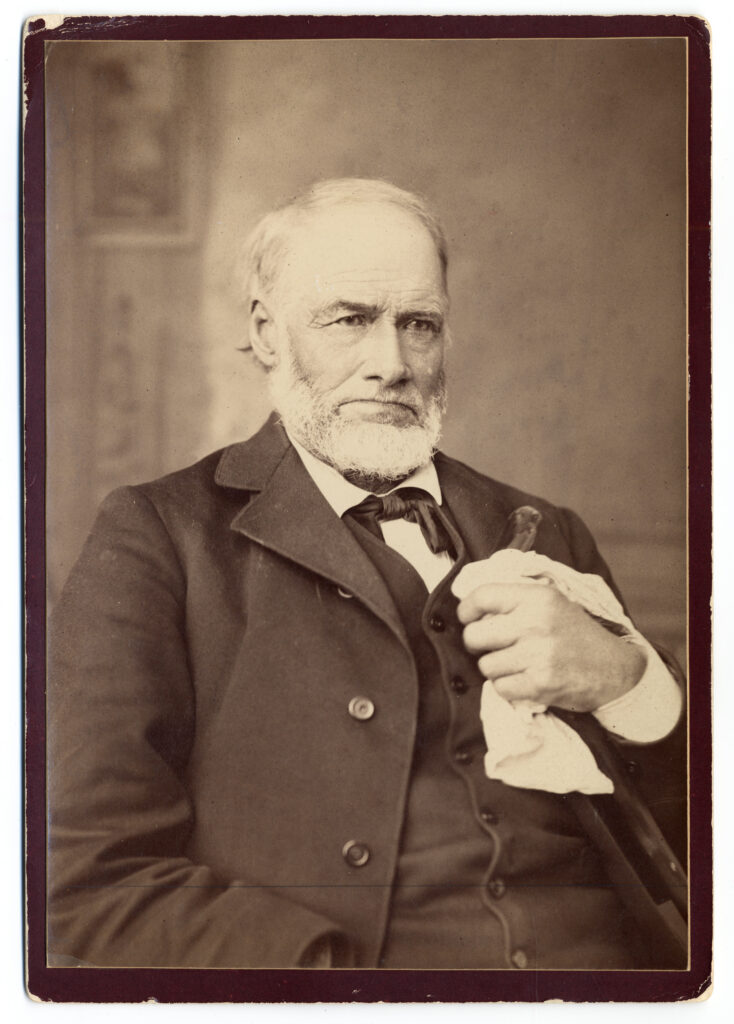
James Wilson Marshall was born in Hopewell Township, New Jersey, on October 8, 1810. Trained as a carpenter and millwright, Marshall brought the practical skill needed to solve difficult engineering problems. Like countless Americans of his era, he eventually moved west, farming in Missouri, spending time in Oregon, and arriving in California in 1845. During the Mexican-American War, he briefly served in the California Battalion before meeting Sutter, who recognized his talent and hired him to oversee construction projects at New Helvetia.4
Their partnership had a clear logic. Sutter provided the financing, land, and vision. Marshall supplied the technical expertise. Together they selected a site approximately 45 miles northeast of Sutter’s Fort, along the South Fork of the American River, where the fast-moving water could power a sawmill and the surrounding forests offered nearly limitless timber. Construction began in 1847, with a diverse workforce that included Native laborers, Mormon veterans of the Mormon Battalion, and skilled craftsmen.4
Progress was slowed by flooding and the river’s unpredictable conditions. To improve the mill’s operation, Marshall ordered the tailrace deepened so water could flow more efficiently beneath the waterwheel. That practical decision, a routine engineering adjustment made without any expectation of consequence, would expose something hidden beneath the riverbed for thousands of years.
The Discovery
Before sunrise on January 24, 1848, Marshall returned to inspect the newly deepened channel. During the night, rushing water had washed away loose gravel and sediment, leaving heavier materials exposed along the bottom. There, glinting beneath the clear stream, lay several small yellow flakes.1
Marshall noticed immediately that they looked different from ordinary stone, and from iron pyrite, the mineral commonly called “fool’s gold.” He gathered several pieces and subjected them to tests familiar to experienced craftsmen: gold is unusually soft and malleable, bending rather than shattering under a hammer. Each test pointed toward the same conclusion. He believed he had found real gold.1
At Coloma, Elizabeth “Jennie” Wimmer tested one of the flakes in the lye of her soap kettle; it emerged unchanged. Marshall later carried samples to Sutter’s Fort, where Sutter consulted an encyclopedia and conducted additional tests. The verdict was unmistakable: they had found gold.4
Excitement gave way almost immediately to concern. Sutter understood what such a discovery could mean for New Helvetia. Years of planning, investment, and back-breaking work had gone into building the settlement. His farms depended on laborers who planted crops, tended livestock, and constructed buildings. If word spread, everything he had built could collapse overnight as workers abandoned their posts for the riverbed. The two men agreed: the discovery had to remain secret until the sawmill was finished and they had time to understand the extent of the deposit.4
A Secret Too Valuable to Keep
Keeping it secret proved nearly impossible. Workers noticed Marshall collecting unusual rocks from the millrace. Curious laborers began searching the gravel themselves and found more. Conversations that started as whispers spread throughout the camp. Native workers familiar with the region recognized that something significant had been found. Travelers passing through carried rumors to nearby settlements.
Among the first people outside Sutter’s circle to grasp what had happened was Samuel Brannan, a San Francisco merchant, newspaper publisher, and entrepreneur with an instinct for opportunity sharper than almost anyone else in California.
Samuel Brannan and the Spark That Lit the West
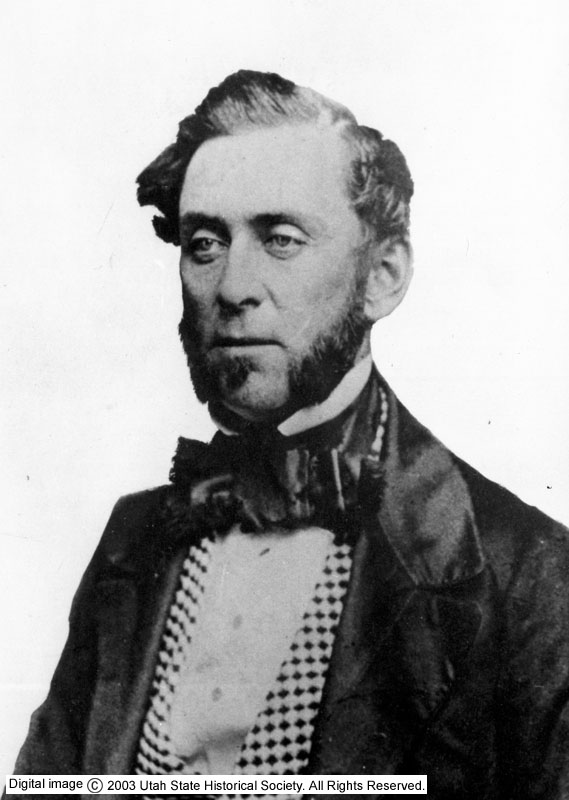
Unlike Marshall and Sutter, Samuel Brannan had no intention of becoming a gold miner. What Brannan understood was that economic booms often create greater fortunes for those supplying goods and services than for those doing the digging. After confirming that Marshall’s discovery was genuine, Brannan moved quickly to stock his stores with the tools and supplies miners would need: picks, shovels, pans, boots, and provisions. His shelves were ready before most Californians had heard a word.
Then, in one of the most famous episodes of the Gold Rush, Brannan took to the streets of San Francisco in the spring of 1848, reportedly carrying a bottle filled with gold dust and proclaiming the discovery to anyone who could hear him.1 The effect was immediate and total. Shopkeepers abandoned their businesses. Sailors deserted ships anchored in the bay, leaving dozens of vessels without crews. Farmers walked away from fields. Soldiers slipped away from their posts. Nearly everyone wanted to reach the American River before someone else claimed the richest ground.
Brannan became California’s first millionaire without mining a single ounce of gold, prospering instead by selling supplies at enormous markup to thousands of hopeful miners. It is one of the Gold Rush’s most enduring economic lessons: in a boom, the greatest fortunes are often made by those who supply the opportunity rather than chase it.6
The Gold Rush Transforms a Nation
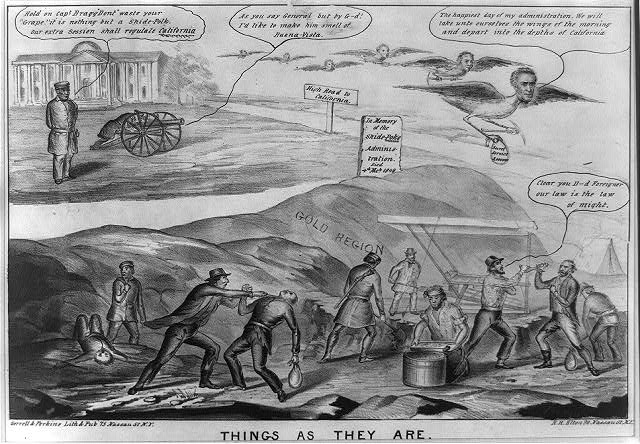
Throughout much of 1848, many Americans east of the Rocky Mountains remained skeptical of the reports coming from California. Stories of gold nuggets lying in open streambeds sounded too extraordinary to be true. That changed on December 5, 1848, when President James K. Polk confirmed the discovery in his annual message to Congress. Military governor Colonel Richard Barnes Mason had personally visited the mining region and verified the reports. The President’s word carried enough authority to dissolve the last remaining doubts.5
Newspapers reprinted Polk’s message alongside vivid firsthand accounts. International publications spread the story across Europe, Latin America, Australia, and Asia. By early 1849, the rush was fully underway. Those who traveled to California that year became known as the Forty-Niners, and the routes they traveled were among the most demanding in the history of overland migration. Some crossed the continent by wagon over the Great Plains, the Rockies, and the Sierra Nevada. Others sailed 15,000 miles around Cape Horn. Still others crossed the Isthmus of Panama by boat, mule, and foot before boarding another ship north.3
By 1852, California’s non-Native population had surged to approximately 250,000, driven by arrivals from across the United States and around the world.2 The Smithsonian Institution’s collections include actual gold nuggets recovered from this period, physical artifacts that connect today’s visitors directly to the fever that transformed a continent.7 Communities that had not existed five years earlier were now cities. San Francisco transformed from a modest port into one of the nation’s busiest commercial centers. And on September 9, 1850, less than three years after Marshall’s discovery, California became the thirty-first state in the Union.2
When Gold Brings Misfortune
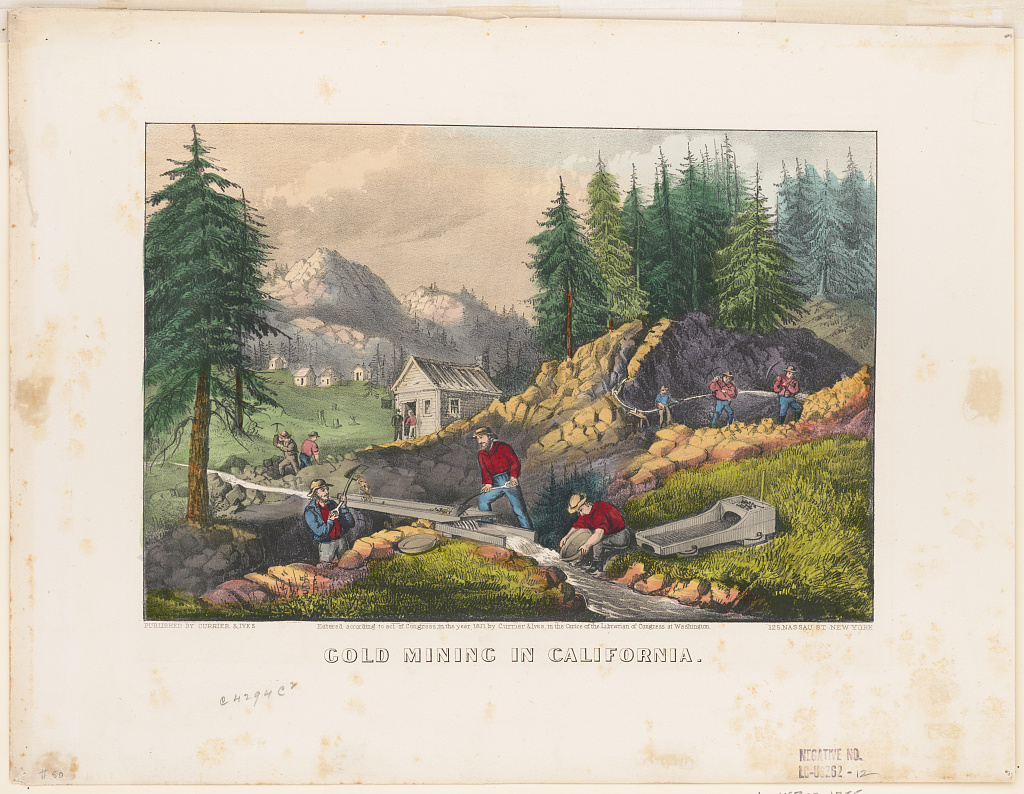
History associates James Marshall and John Sutter with one of the most consequential discoveries in American history. Neither man benefited from it.
Marshall had hoped the discovery might improve his modest circumstances. Instead, it consumed them. Without legal ownership of the surrounding mineral claims, he searched for gold alongside thousands of others and never accumulated meaningful wealth. Workers who had been building his sawmill abandoned the project entirely, leaving it unfinished for months. When the California legislature eventually awarded him a small pension in recognition of his discovery, it was more of an acknowledgment than compensation. He spent much of his later life in relative poverty, dying in 1885 with a reputation that far exceeded his bank account.4
Sutter’s losses were even more sweeping. The settlement he had spent nearly a decade constructing unraveled almost overnight. Workers abandoned farms, workshops, and construction projects for the goldfields. Squatters occupied lands he claimed. Livestock disappeared. Crops went untended. The transition from Mexican to American rule complicated his efforts to defend his land grants in American courts, and years of legal battles consumed whatever financial resources he had left. Sutter died in Washington, D.C., in 1880, still petitioning Congress for compensation — and still waiting for an answer.4
Together, Marshall and Sutter became enduring symbols of one of history’s most striking ironies: the two men whose names became synonymous with the California Gold Rush never captured the lasting wealth it produced.
Legacy and Civic Relevance
James Marshall never intended to launch a global migration. John Sutter never envisioned a mining boom that would overwhelm the community he had spent a decade building. Their partnership was meant to support a sawmill, strengthen a settlement, and create modest new opportunities in northern California. Instead, a chance discovery on an ordinary January morning transformed the American West, accelerated California’s path to statehood, expanded the nation’s economy, and drew people from nearly every continent to the Pacific Coast.
The Gold Rush also reshaped American politics in ways that would echo for decades. California’s rapid admission to the Union intensified the already explosive debate over whether slavery would expand into newly acquired western territories and fed directly into the Compromise of 1850. The larger struggle over slavery’s expansion continued through the Kansas-Nebraska Act and ultimately helped propel the nation toward Civil War — consequences that neither Marshall, Sutter, Brannan, nor the Forty-Niners could have anticipated on that cold January morning.2
For any student of American civics, the story of Marshall and Sutter is a lesson in the unpredictability of consequence. Individual decisions, even routine ones made during ordinary work, can produce effects that no one planned and no one controls. The discovery at Sutter’s Mill is a reminder that history is not made only by the powerful. It is also made by the carpenter walking to the millrace before sunrise, reaching down into the cold water, and picking up something that glints.
Read more about the era this discovery launched in our companion article, California Gold Rush Begins.
Footnotes
- Library of Congress, California as I Saw It: First-Person Narratives of California’s Early Years — “The Discovery of Gold” (primary source for Marshall’s account, the role of Mormon workers, and the sequence of events at Coloma): https://www.loc.gov/collections/california-first-person-narratives/articles-and-essays/early-california-history/discovery-of-gold/
- Encyclopedia Britannica — “California Gold Rush” (population statistics, Forty-Niner numbers, statehood, and demographic transformation): https://www.britannica.com/event/California-Gold-Rush
- National Park Service, California National Historic Trail — “The California Gold Rush” (emigrant routes and numbers, conditions on the trail): https://www.nps.gov/cali/learn/historyculture/california-gold-rush.htm
- California State Parks — Marshall Gold Discovery State Historic Park, Coloma (biographical information on James W. Marshall and John Sutter; New Helvetia; construction of the sawmill; the testing and confirmation of the gold; and the aftermath of the discovery): https://www.parks.ca.gov/?page_id=23741
- National Archives — President James K. Polk, Fourth Annual Message to Congress, December 5, 1848 (Polk’s official confirmation of the gold discovery and its effect on national migration): https://www.archives.gov/milestone-documents/president-james-k-polks-annual-message-to-congress
- H.W. Brands, The Age of Gold: The California Gold Rush and the New American Dream (New York: Anchor Books, 2003) — for Samuel Brannan’s role, the outfitting economy, and the personal histories of Marshall and Sutter.
- Smithsonian Institution National Museum of American History — Gold Nugget artifact record (physical artifact from the California Gold Rush era in the Smithsonian’s collections): https://www.si.edu/object/gold-nugget:nmah_741894