
Labor Day: How American Workers Won a National Holiday
Why the first Monday in September belongs to the machinists, carpenters, and mill workers who organized to claim it — and to the fraught political moment that helped propel it into federal law.
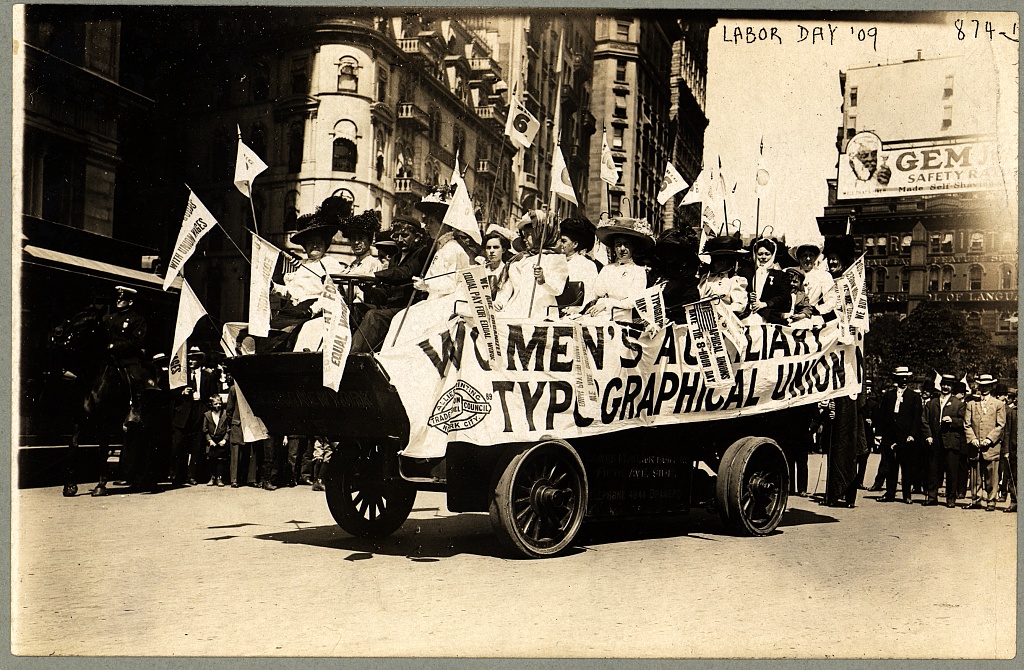
On the morning of September 5, 1882, thousands of workers gathered in New York City for a Tuesday parade that required many of them to forgo a day’s wages to attend.
Organized by the city’s Central Labor Union, the procession began on lower Broadway, passed Union Square, and continued uptown to Wendel’s Elm Park at 92nd Street and Ninth Avenue on Manhattan’s West Side, where a picnic, concerts, and speeches waited. Marchers organized by craft, carrying the tools of their trades and banners identifying their unions. Overhead, banners made the day’s politics unmistakable: “Labor Built This Republic, Labor Shall Rule It.” Estimates of how many marched vary, commonly ranging from about 10,000 to 25,000; the U.S. Department of Labor’s account describes nearly 25,000 union members and their families gathering at the park after the parade.¹
Organizers called it a “monster labor festival.” It became, over the next twelve years, the first New York observance conventionally recognized as Labor Day.
Twelve years and one violent railroad strike later, that New York tradition would become federal law. The story of how it got there says as much about American politics in the 1890s as it does about the workers the holiday was built to honor.
Labor Day and the American Labor Movement: A Timeline
The parade on Broadway was the beginning, not the end, of a story that runs from an 1882 New York tradition to organizing campaigns still underway today:
- September 5, 1882 — New York City’s Central Labor Union holds its first Labor Day parade and picnic; estimates of the number who marched range from about 10,000 to 25,000.¹
- September 5, 1883 — The Central Labor Union repeats the New York parade and picnic.⁴
- 1884 — The Federation of Organized Trades and Labor Unions calls for annual Labor Day observances on the first Monday in September.⁴
- May 4, 1886 — A bomb explodes at a labor rally in Chicago’s Haymarket Square, killing seven police officers and at least four civilians, with an eighth officer later dying of his injuries; the bomber’s identity was never conclusively established, and eight anarchist defendants were convicted of conspiracy in a widely criticized trial.³
- December 1886 — The Federation of Organized Trades and Labor Unions reorganizes as the American Federation of Labor.⁴
- February 21, 1887 — Oregon becomes the first state to make Labor Day an official holiday.¹
- By 1894 — Roughly two dozen states — about thirty by some counts — have adopted Labor Day as an official holiday.¹
- May–July 1894 — Pullman workers strike in May over wage cuts; Eugene V. Debs’s American Railway Union begins a boycott of trains carrying Pullman cars on June 26; federal injunctions and troops intervene in early July.³
- June 28, 1894 — President Grover Cleveland signs legislation making the first Monday in September a legal public holiday for federal employees and the District of Columbia, while the Pullman conflict is still widening — Cleveland ordered federal troops to Chicago the following week.³
- 1895 — Eugene V. Debs is jailed for contempt of court after violating the federal injunction against the boycott.³
- September 8, 1965 — Filipino farmworkers organized through the Agricultural Workers Organizing Committee begin the Delano grape strike; the National Farm Workers Association joins days later.⁹
- 1966 — AWOC and the NFWA merge as the United Farm Workers Organizing Committee, later known as the United Farm Workers.⁹
- April 1, 2022 — Workers at Amazon’s JFK8 warehouse on Staten Island vote to unionize with the Amazon Labor Union.⁶
- June 2024 — Amazon Labor Union members vote to ratify affiliation with the International Brotherhood of Teamsters, becoming ALU-IBT Local 1.⁷
The Origins of Labor Day: A Nation Built on Long Hours
In the late nineteenth century, many American workers endured long days, six-day workweeks, low pay, dangerous workplaces, and few dependable legal protections. Some state laws and workplace rules existed, but enforcement was uneven and protections were limited. Workers organized unions, mutual-aid societies, strikes, and political campaigns to demand shorter hours — especially the eight-hour day — better pay, safer conditions, and the ability to bargain collectively. Workers who organized faced discharge, blacklisting, strikebreaking, police action, private security violence, and, in some conflicts, state or federal troops.²
Unions became one of the principal vehicles through which workers pressed for higher wages, shorter hours, safer conditions, and collective bargaining — alongside cooperatives, mutual-aid societies, political parties, and reform movements that also organized on workers’ behalf.²
The Central Labor Union’s 1882 parade was therefore not simply a holiday celebration. It was a public demonstration of solidarity and power: a way for organized workers to show employers and political leaders that the people who built the nation’s wealth could organize across trades.¹
Who Founded Labor Day? Two Men With Nearly the Same Name
Historians still do not agree on exactly who proposed the holiday, and the record is complicated by the fact that two men with nearly identical names both have a claim to it.
Peter J. McGuire’s Claim
The U.S. Department of Labor’s own official history credits Peter J. McGuire, general secretary of the Brotherhood of Carpenters and Joiners, who is said to have proposed in 1882 that a day be set aside for “those who from rude nature have delved and carved all the grandeur we behold.”¹
Matthew Maguire’s Claim
The Department of Labor also notes evidence supporting Matthew Maguire’s claim — a machinist and secretary of the Central Labor Union — while acknowledging that the holiday’s origin remains disputed. Later research has made a substantial case for Maguire’s role.¹ The Department of Labor’s history leaves the question open.
How Labor Day Spread Across the Country
The 1882 parade was repeated in New York the following year, and in 1884 the Federation of Organized Trades and Labor Unions — which reorganized as the American Federation of Labor in December 1886 — called for other cities to adopt the same date: the first Monday in September. The date stuck, and it has anchored Labor Day ever since.⁴
The idea spread quickly. Labor federations in city after city organized their own parades and picnics. Oregon became the first state to make the day an official holiday, on February 21, 1887, and by 1894, roughly two dozen states — about thirty by some counts — had adopted the holiday.¹
The Pullman Strike and the Fight to Make Labor Day Federal Law
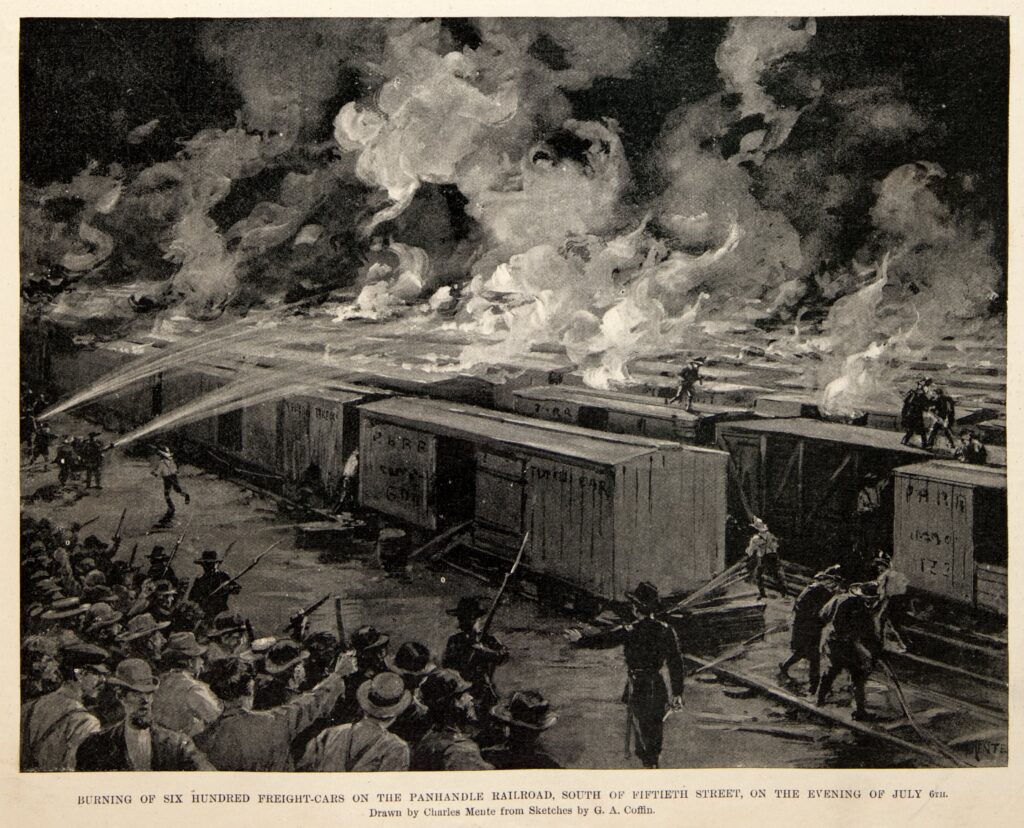
Labor Day did not become federal law through steady momentum alone. On June 28, 1894, President Grover Cleveland signed legislation making the first Monday in September a legal public holiday for federal employees and the District of Columbia. Congress acted while the Pullman conflict was widening: Pullman workers had struck in May after wage reductions, and on June 26 Eugene V. Debs’s American Railway Union began a boycott of trains carrying Pullman cars.³
In early July — after the holiday bill was already signed — the Cleveland administration obtained a federal injunction and sent troops to Chicago over the objections of Illinois governor John Peter Altgeld. The intervention helped break the boycott; Debs was later imprisoned for contempt of court after violating the injunction. Federal intervention in the Pullman conflict was consequential, though not unprecedented; troops had also been deployed during the Great Railroad Strike of 1877.³
Many historians see the holiday law’s rapid passage during the crisis as an effort to ease tensions with organized labor. The evidence does not permit a simple conclusion about motive, however, and the law neither ended the strike nor guaranteed a paid day off for most private-sector workers. Its immediate legal reach was limited to federal employees and the District; workers elsewhere depended on state law and employer policy.³
Historians often connect the September holiday’s rise to labor leaders’ and political officials’ desire to distinguish it from the radical and internationalist associations of May Day, especially after Haymarket.³
What Workers Were Fighting For
The holiday’s founders were not asking for a day off in the abstract. Workers organized around shorter hours — especially the eight-hour day — higher wages, safer workplaces, the right to organize, compensation for workplace injuries, equal pay for equal work, and restrictions on child labor.²
Later Chapters in the Same Fight
Labor Day’s federal recognition did not end the conflicts that had produced it. Later generations of workers continued to organize around safety, hours, wages, racial exclusion, immigration status, and the right to bargain collectively.
The Triangle Shirtwaist Fire
The stakes of workplace-safety demands were made brutally clear less than two decades later. On March 25, 1911, a fire at the Triangle Shirtwaist Factory in New York exposed inadequate exits and fire-safety protections, including locked or blocked doors, and killed 146 garment workers — most of them young immigrant women. The disaster spurred investigations and a major wave of New York workplace-safety and labor reforms.⁸
The Haymarket Affair and a Political Shift
Haymarket intensified public controversy over labor radicalism. On May 4, 1886, a bomb exploded during a labor rally in Chicago’s Haymarket Square, killing seven police officers and at least four civilians, with an eighth officer later dying of his injuries. The bomber’s identity was never conclusively established. Eight anarchist defendants were convicted of conspiracy in a widely criticized trial — none was shown to have thrown the bomb itself; four were hanged, one died by suicide in jail, two had death sentences commuted to life imprisonment, and one was sentenced to fifteen years. Illinois governor John Peter Altgeld pardoned the three survivors in 1893.³
In the years that followed, the American Federation of Labor increasingly cultivated a more moderate, craft-union, and civic-facing public identity, and Labor Day itself became associated with parades, civic respectability, and American national identity, in contrast to May Day’s international and more radical labor associations — though radical and socialist currents remained an important part of American labor politics throughout the period.³
From Parades to Picnics
The union upsurge of the 1930s and early postwar decades revived large Labor Day celebrations. Union density — the share of workers belonging to a union — peaked at about a third of the workforce in the mid-1940s and again in the mid-1950s, while the number of union members kept growing until it peaked at about 21 million in 1979.¹⁰ Over time, for varied local reasons, Labor Day observances increasingly came to include family gatherings and long-weekend travel alongside union parades.⁴
The Farm Worker Movement
Later organizers expanded and transformed labor organizing in industries and communities that had often been marginalized or excluded from the protections available to many industrial workers. On September 8, 1965, Filipino farmworkers organized through the Agricultural Workers Organizing Committee (AWOC) began the Delano grape strike; Larry Itliong, Ben Gines, Philip Vera Cruz, and Pete Velasco were among its important leaders. Days later, the National Farm Workers Association — founded by César Chávez, Dolores Huerta, and others, and composed largely of Mexican American farmworkers — voted to join the strike, and in 1966 the two organizations merged as the United Farm Workers Organizing Committee, later known as the United Farm Workers. The strike and boycott helped win major contracts in 1970, after nearly five years of organizing.⁹
Labor Day’s Legacy in Modern Labor Movements
The organizing tradition Labor Day commemorates did not end in the twentieth century. In April 2022, workers at Amazon’s JFK8 warehouse on Staten Island voted to unionize with the Amazon Labor Union, the first successful union election at a U.S. Amazon facility.⁶ In June 2024, ALU members voted to ratify affiliation with the International Brotherhood of Teamsters, becoming ALU-IBT Local 1.⁷
The Smithsonian’s collections hold this history in physical form: an ironworker’s hard hat, a longshoreman’s work shirt, and postage stamps commemorating labor reformers all sit alongside recordings of labor songs sung on picket lines — a long, changing history of worker organizing, from nineteenth-century craft unions to later industrial, public-sector, farmworker, and contemporary campaigns.⁵
Why Labor Day Matters to Civic Life
However, any particular American spends the first Monday in September — at a parade, a cookout, or simply resting — the holiday exists because workers organized observances, state-level campaigns, and public pressure that helped win official recognition. It was not simply handed down from Washington: it grew from more than a decade of worker-organized parades, state legislation, and public pressure before Congress gave it federal legal recognition during the turbulent Pullman crisis.
The resulting history contains both worker activism and political calculation, celebration and conflict. The holiday emerged from organized workers’ activism, though access to unions and their protections was uneven across lines of race, gender, occupation, and immigration status — a pattern later chapters of labor history, from the Triangle fire to the farm worker movement, would confront directly. What is not in dispute is that the holiday’s origins are inseparable from workers who organized to insist that their labor, and their civic standing, deserved public recognition.
Explore more of our observance history in Earth Day: How One Senator Sparked a Global Movement and Memorial Day: The History of America’s Day of Honor.
Footnotes
- U.S. Department of Labor, “History of Labor Day”: https://www.dol.gov/general/laborday/history
- Smithsonian Institution, “Labor Day” spotlight: https://www.si.edu/spotlight/labor-day
- Joshua B. Freeman, “Labor Day: From Protest to Picnics,” Gilder Lehrman Institute of American History: https://www.gilderlehrman.org/history-resources/essays/labor-day-protest-picnics
- PBS NewsHour Classroom, “Labor Day Lesson Plans and Resources” (August 2025): https://www.pbs.org/newshour/classroom/lesson-plans/2025/08/labor-day-lesson-plans-and-resources
- Smithsonian National Museum of American History, “Making Labor Day”: https://americanhistory.si.edu/explore/stories/making-labor-day
- National Labor Relations Board, Region 29, “Region 29-Brooklyn Announces Results of JFK8 Amazon Ballot Count” (April 1, 2022): https://www.nlrb.gov/news-outreach/region-29-brooklyn/region-29-brooklyn-announces-results-of-jfk8-amazon-ballot-count
- International Brotherhood of Teamsters, “Amazon Labor Union Votes to Ratify Teamsters Affiliation” (June 2024): https://teamster.org/2024/06/amazon-labor-union-votes-to-ratify-teamsters-affiliation/
- Cornell University ILR School, Kheel Center, “The Triangle Factory Fire”: http://trianglefire.ilr.cornell.edu/index.html
- National Park Service, “Workers United: The Delano Grape Strike and Boycott”: https://www.nps.gov/articles/000/workers-united-the-delano-grape-strike-and-boycott.htm
- Congressional Research Service, “A Brief Examination of Union Membership Data” (R47596, 2023): https://www.congress.gov/crs-product/R47596
Image Sources
Library of Congress, Prints and Photographs Division — Women’s Auxiliary Typographical Union float, New York Labor Day parade, dated September 6, 1909: https://www.loc.gov/item/97519074/
Newberry Library, Pullman State Historic Site digital collection, “Burning of Six Hundred Freight-Cars on the Panhandle Railroad, South of Fiftieth Street, on the Evening of July 6th” — https://digcoll.newberry.org/pullman/media/burning-of-six-hundred-freight-cars-on-the-panhandle-railroad-south-of-fiftieth-street-on-