

Luzena Stanley Wilson: Rebuilding a Life in Gold Rush California
How a Missouri farmwife turned a biscuit, a hotel, and a hard-won legal right into a life that survived flood, fire, and abandonment — and kept rebuilding anyway.
When Americans imagine the California Gold Rush, they often picture men standing knee-deep in cold streams, swirling pans of gravel and watching for a flash of yellow. The familiar image is not wrong, but it is incomplete. The Gold Rush was also a story of families, cooks, laundresses, merchants, hotelkeepers, landowners, widows, wives, daughters, and women who crossed the continent into a society being made and remade almost overnight.
One of the most vivid of those voices belonged to Luzena Stanley Wilson, a Missouri woman who joined the overland migration to California in 1849 with her husband, Mason, and their two young sons. Wilson did not discover her fortune in a riverbed. She found opportunity in the urgent practical needs of a boomtown world: food, shelter, laundry, hospitality, and the ordinary domestic labor that became extraordinary in a place where women were few and miners were willing to pay dearly for comfort.
Her reminiscences, dictated decades later to her daughter Correnah Wilson Wright, are part memory, part survival story, and part record of a society in upheaval. They describe the jolting physical hardship of the overland trail, the frightening speed with which wealth could appear and disappear, and the repeated labor of starting over after flood, fire, abandonment, and loss. They also reveal something larger about the Gold Rush itself. For some women, California’s unsettled economy created unusual openings for business and property ownership. For other women, the same upheaval brought insecurity, discrimination, violence, or dispossession. Wilson’s story captures one remarkable path through that rapidly changing world: a record of resilience, enterprise, risk, and repeated reinvention.
Leaving Missouri for California
A Family Decision in a Fevered Year
The year 1849 began with a feverish sense of possibility. News of gold in California had traveled east, and thousands of people made the decision to leave familiar communities for a distant and uncertain future. For Luzena Stanley Wilson, the decision was not framed as a solitary adventure. She was a wife and mother, responsible not only for herself but also for two small children. Yet when Mason Wilson resolved to go west, Luzena chose to go as well.
In later years, she remembered that the journey had seemed deceptively manageable before it began. California sounded far away, but fortune seemed close. That confidence was part of the Gold Rush’s power. It persuaded people to underestimate distance, danger, weather, illness, scarcity, and the emotional burden of leaving home. Wilson’s memoir captures that early optimism, but it also shows how quickly romance gave way to endurance.1
“I Am Going to California, Too”
One of the most memorable moments in Wilson’s account came early in the journey. The Wilsons traveled with a small group of wagons and sought to join a larger company for safety. According to Wilson, the better-equipped party refused because it did not want the inconvenience of women and children. Her response has endured because it captured the quiet defiance of a woman who understood that she was being treated as a burden before the journey had truly begun: “I am only a woman, but I am going to California, too.”1
The line matters not because it turns Wilson into a modern heroine outside her own time, but because it shows how clearly she understood the assumptions around her. Women on the trail were often viewed through the lens of dependency. They were expected to require protection, slow progress, and complicate logistics. Yet Wilson’s recollections repeatedly show that women’s labor was not incidental to migration. Cooking, nursing, managing children, preserving supplies, repairing clothing, and maintaining daily order were essential to survival. The westward journey depended on work that was often undervalued precisely because it was considered ordinary.

The Overland Trail
Monotony, Fear, and Physical Exhaustion
The overland crossing was not one dramatic crisis but a long accumulation of strain. Wilson wrote of the “plodding, unvarying monotony” of the journey, a phrase that conveys the grinding nature of travel by wagon.1 Days blurred together through dust, hunger, fatigue, and anxiety. The same landscape that promised the future also created a punishing routine: rise, pack, walk, cook, repair, guard, sleep, and begin again.
The trail was also marked by visible evidence of collapse. Families overloaded wagons with possessions that soon became impossible to carry. Furniture, food, tools, and keepsakes were abandoned along the route as animals weakened and terrain grew more difficult. Wilson’s family was among those forced to sacrifice valuable goods, including supplies that had once represented security.1 The road west was not simply a path of movement. It was a landscape of relinquishment.
Disease added another layer of fear. Cholera moved through emigrant parties during the 1849 migration, and travelers encountered sickness and death along the way.2 For women traveling with children, the stakes were especially personal. Wilson’s account does not dwell sentimentally on motherhood, but the presence of her sons changes the meaning of every hardship. Hunger, illness, river crossings, and exhaustion were not abstract dangers. They were threats to the people she carried into the future with her.
A Journey Measured in Losses
Wilson also remembered sudden, irreversible moments of disaster. At the Platte River, she watched as oxen and a driver disappeared beneath the water.1 The scene remained vivid in her memory decades later, which suggests how deeply such events marked the people who survived them. On the trail, loss could happen in an instant, and there was rarely time to stop for long. The wagons moved on because they had to.
That relentless forward motion is one reason Wilson’s memoir remains valuable. Her account captures what “going west” meant on the ground: days of monotony punctuated by danger, possessions abandoned along the trail, illness, exhaustion, and the constant necessity of moving forward. The journey required hope, certainly, but also sacrifice, improvisation, and a willingness to continue after plans had already failed.
Sacramento and the Value of Domestic Labor
The Biscuit That Revealed an Economy
The Wilson family reached Sacramento at the end of September 1849. Their arrival placed Luzena in one of the most important economic lessons of her life. As she later recalled, she was preparing food when a hungry miner offered to buy the biscuits she was making. At first, the exchange may have seemed almost absurd. A simple biscuit, ordinary in one setting, had become precious in another. The miner’s willingness to pay in gold showed Wilson that the economy of Gold Rush California did not value labor according to the rules she had known in Missouri.1
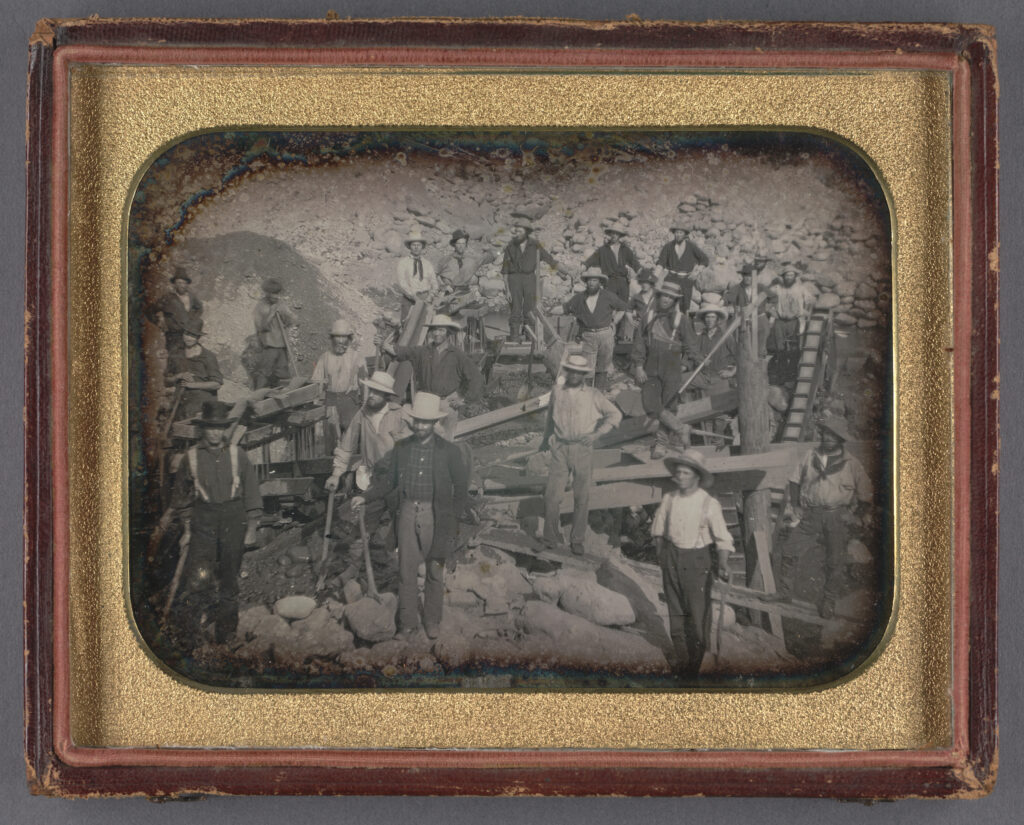
In the mining districts, certain forms of work became scarce and therefore profitable. Cooking, laundry, boarding, and other kinds of domestic service were in high demand because the population was overwhelmingly male and transient. Work traditionally associated with women could suddenly command unusually high prices because miners urgently needed the food, shelter, clothing, and services it provided.
From Campfire Cooking to Hotelkeeping
The Wilsons soon bought into a small hotel in Sacramento, and Luzena began cooking for paying customers. In her recollection, miners crowded around her table and paid in gold dust.1 Her domestic skill became a business foundation. The kitchen, often imagined as a private household space, became an economic engine.
This transformation is one of the most important themes in Wilson’s life. She did not passively accompany the Gold Rush. She participated in it as a worker, entrepreneur, and manager. Her labor turned scarcity into income. Her adaptability allowed her family to quickly enter the new California economy. And her experience helps challenge the notion that Gold Rush women were merely observers of male ambition.
Women in Gold Rush California
A Strikingly Uneven Population
Women were a small minority in early Gold Rush California. In 1850, women made up only a small share of the state’s overall population, and their numbers were even lower in the mining districts.2 Estimates vary depending on whether historians are counting a particular year, a region, or the broader stream of newcomers, but the larger pattern is clear: women were rare in many Gold Rush communities.3
That imbalance shaped social life, labor markets, and personal relationships. Women could be treated with exaggerated courtesy in some settings and with hostility or exploitation in others. They might be publicly celebrated as symbols of refinement and domestic stability while also being judged, constrained, or commodified. Wilson’s recollection that she saw very few women in Sacramento underscores how unusual her presence was in the early months of California’s transformation.1
Scarcity, Labor, and Opportunity
The shortage of women gave certain kinds of women’s work unusual market power. Historical accounts from the period describe women earning high wages for laundry, food preparation, lodging, and entertainment.2 Some women ran boardinghouses, sold meals, performed music, washed clothing, or operated businesses that served miners and travelers. Others participated more directly in mining, property transactions, or legal disputes.3
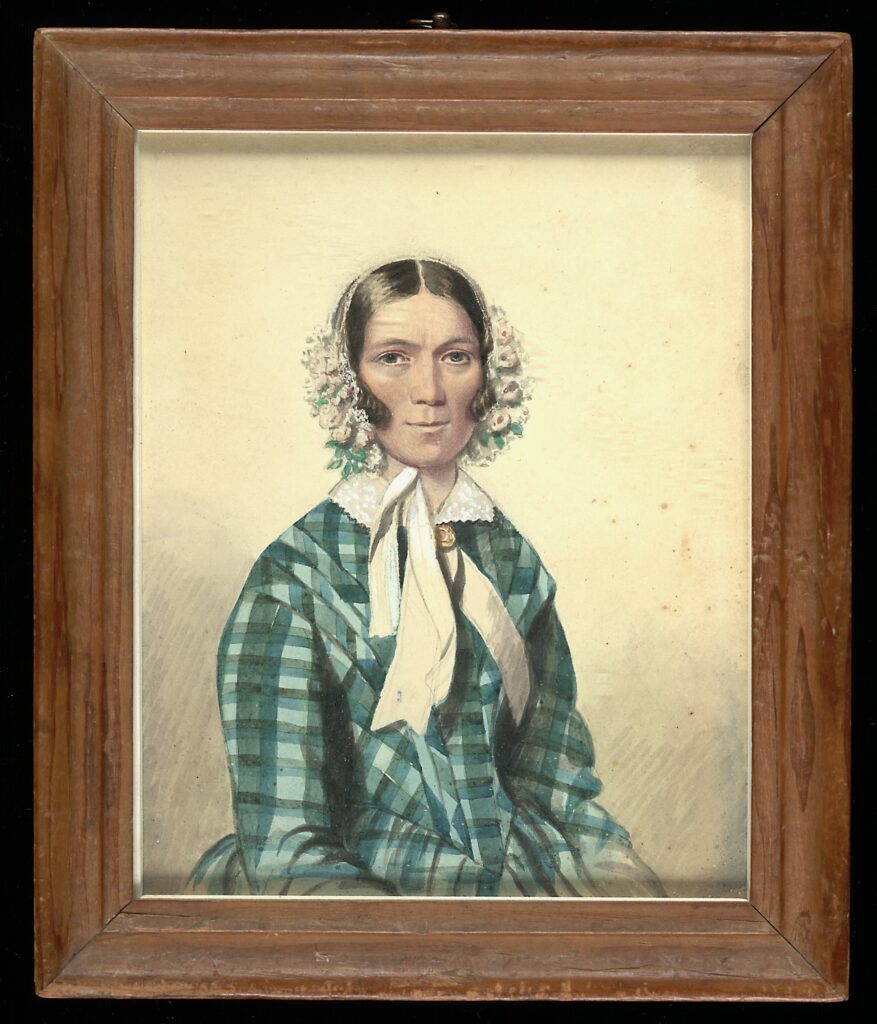
Opportunity was not uniform. Race, nationality, class, marital status, and individual circumstances shaped women’s experiences in Gold Rush California. Mexican, Indigenous, Chinese, French, African American, and Anglo American women entered the region under very different circumstances. Some built businesses, earned high wages, acquired property, or found new forms of independence; others encountered poverty, discrimination, coercion, or violence.
Property Rights and Legal Possibility
One reason California mattered for women like Wilson was law. The California Constitution of 1849 allowed married women to hold separate property, a provision that differed from the legal norms in many other states.2 For a married woman engaged in business, land transactions, or hotelkeeping, that constitutional protection could be significant. It did not create equality, but it did provide a legal foothold that some women used to manage property and economic affairs.
Wilson’s later life makes this point especially important. She was not only a wife helping her husband. Over time, she became a businesswoman and property holder in her own right. Her ability to rebuild after repeated losses depended not only on personal determination, but also on the legal and economic conditions of early California.
Flood, Fire, and Rebuilding
Sacramento Underwater
In January 1850, after weeks of heavy rain, Sacramento flooded. Wilson later recalled hearing the cry that the levee had broken while she was cooking supper. She and her family retreated to the upper level of their hotel and remained there as water overtook the streets.1
Wilson’s own memoir describes the flood as destroying the hotel business the family had just begun building. Later local-history research, drawing on other records, suggests a somewhat different sequence: that the Wilsons had already sold the hotel, invested the proceeds in barley, and then lost that investment when the flood struck.5 This article follows Wilson’s own account of the loss, since her memoir is the primary source for her life in her own words, but readers interested in the fuller documentary record should consult the local-history sources cited below.
In a more settled community, such a loss might have ended a family’s prospects for years. In Gold Rush California, where everything was unstable, rebuilding was both necessary and expected. The Wilsons gathered what they could and moved on.
Nevada City and the El Dorado
Their next stop was the mining camp that became Nevada City. There, Wilson opened another hotel, the El Dorado. Once again, she converted domestic labor into public enterprise. Meals, beds, and hospitality mattered intensely in a community of miners who lived amid rough conditions and constant uncertainty.
For a brief time, the family prospered. Wilson later remembered rebuilding substantial value within months.1 Her account suggests not effortless success, but focused work. The hotel became another example of how women’s labor sustained mining communities. Gold may have drawn men to the mountains, but food, rooms, and care made those communities function.
A Town in Flames
Then came fire. A spark in the growing town spread rapidly through the dry surroundings. Wilson’s description of the Nevada City fire is among the most dramatic passages in her reminiscences. She wrote of flames moving through the town with terrifying force, consuming buildings and leaving thousands without shelter.4
For Wilson, the fire meant another business lost. The pattern is striking: she built, disaster came, and she began again. Her life in California was not a smooth rise from poverty to prosperity. It was a cycle of creation and destruction, shaped by the environmental hazards and fragile infrastructure of boomtown life.
The Gold Rush as Chance and Irony
A Claim Sold Too Soon
Wilson’s memoir also contains moments of sharp irony. At one point, a miner who had already taken a fortune from a claim gave the remaining claim to Wilson before leaving. Because she could not work it herself and Mason opposed mining, she sold it for a modest sum. The buyer later extracted far more gold from the same ground.4
The story captures the strange economy of the Gold Rush. Great wealth could appear casually, almost absurdly, and then vanish through timing, principle, ignorance, or necessity. Wilson seemed to recognize the irony, but her account does not collapse into bitterness. The episode becomes one more example of a world where value was unstable and judgment was often possible only in hindsight.
Fortune Beyond the Mine
That story also reframes Wilson’s own success. She was not unlucky because she failed to become rich from mining. Rather, her life shows that Gold Rush wealth took many forms. Some people found gold underground. Others found it in biscuits, beds, laundry tubs, land, and ledgers. Wilson’s fortune came from reading the needs of a new society and meeting them with skill.
Wilson’s story broadens the familiar picture of the Gold Rush. Mining may have drawn thousands of people to California, but mining communities also depended on an expanding service economy. The miner in the river could not live on gold alone. He needed food, clothing, shelter, and human connection. Cooks, laundresses, hotelkeepers, merchants, farmers, and other workers helped turn temporary camps into functioning communities.
Before California: A Quaker Girl from North Carolina
A Life Shaped by Religious Discipline
Wilson’s California story began long before she reached the trail. Later research traced her early life to a Quaker community in North Carolina, where she was born Luzena Stanley Hunt in 1819.5 The Quaker world in which she was raised emphasized discipline, plain dress, and communal oversight. Records show that, as teenagers, she and her sister were disowned for “deviating from plainness,” likely a violation related to dress or conduct.5
That early episode reveals a young woman who had already experienced the consequences of stepping outside expected boundaries. It would be too simple to draw a straight line from Quaker discipline to Gold Rush resilience, but the contrast is striking. A girl once judged for failing to conform later crossed the continent, ran hotels in volatile mining communities, and supported herself through property dealings.
What Memoirs Leave Out
Wilson’s own reminiscences say relatively little about her life before 1849. That silence is a reminder that memoirs are not complete records. They are shaped by memory, purpose, audience, and what the storyteller chooses to emphasize. Wilson’s account is invaluable because it preserves a woman’s perspective on the Gold Rush, but it still benefits from being read alongside church records, census records, local histories, and other sources.5
That is especially important for women’s history. Many women appear in the archives only indirectly, through marriage records, court documents, property transactions, newspapers, or reminiscences written long after the fact. Wilson’s voice survived because her daughter recorded it and because later publishers and historians preserved it. Many other women’s voices did not.
Vacaville and Life After the Mines
Building Under an Oak Tree
After the Nevada City fire, the Wilson family moved toward the Vaca Valley, the area that later became Vacaville. There, Luzena once again improvised a business from almost nothing. She marked a board with the words “Wilson’s Hotel,” used the materials available to her, and began serving travelers while Mason farmed nearby land.1
The image is almost emblematic of her California life: a woman making a public enterprise out of limited resources in an unsettled place. Again and again, Wilson’s story turns on the same pattern. She did not wait for perfect conditions. She used what was available, identified what people needed, and worked.
As the area developed, the Wilsons became substantial landowners.1 This stage of her life shows the transition from Gold Rush mobility to community formation. Mining camps, trails, and improvised businesses gradually gave way to towns, farms, roads, and property networks. Wilson’s life crossed that boundary between rush and settlement.
Separation, Fire, and San Francisco
Stability did not last. In 1872, Mason Wilson left the family and moved to Texas. Luzena remained in Vacaville for several more years, but two fires in 1877 destroyed her property. She then moved to San Francisco, where she supported herself through real estate.1
This later chapter is essential because it prevents her story from ending neatly in frontier success. Wilson rebuilt more than once, but rebuilding did not erase loss. She lived through abandonment, financial reversals, and repeated destruction by fire and flood. Yet she continued to work, manage property, and sustain herself. She died in 1902 at the age of eighty-three.1

Remembering Luzena Stanley Wilson
A Voice Preserved by Family and Print
Wilson first told her story publicly in the early 1880s through newspaper articles titled “A Woman’s Reminiscences of Early Days.” Decades later, in 1937, Mills College’s Eucalyptus Press published her recollections in book form as ‘49er.5 That publishing history matters. It shows how fragile historical memory can be. Had Wilson not dictated her memories to her daughter, and had those recollections not later been printed, her experiences might have survived only in fragments.
Her account is not the only woman’s Gold Rush narrative, but it is one of the most compelling because it places domestic work, migration, motherhood, business, disaster, and memory in the same frame. It does not ask readers simply to admire her. It asks them to reconsider what counts as historically important.
Beyond the Male Gold Rush Story
Wilson’s life complicates the familiar Gold Rush narrative. She did not fit the image of the lone male prospector, but she was part of the same rush for opportunity. Her labor responded to the same economic forces. Her fortunes rose and fell in the same unstable world. Her property, businesses, and choices were shaped by the same legal and social experiments that made early California distinctive.
Historians have increasingly emphasized that women were not absent from the Gold Rush. They traveled overland, appeared on passenger lists, ran businesses, worked in mining communities, filed claims, owned property, and sometimes used California’s fluid conditions to leave marriages or remake their lives.3 Wilson’s story gives that broader history a human face.
Civic Relevance: Opportunity, Law, and a Changing Society
What Happens When an Economy Changes Overnight?
Wilson’s life invites civic questions that reach beyond the nineteenth century. What happens when a sudden economic boom changes the value of labor? How do migration, property law, scarcity, and entrepreneurship shape a rapidly growing society? And how do temporary settlements become lasting communities?
Gold Rush California offers a dramatic example. A massive influx of newcomers transformed the value of labor and created intense demand for food, lodging, transportation, farming, commerce, and other services. Mining drew people west, but sustaining the new communities required an entire economy around it. Wilson found opportunity in meeting some of those urgent needs.
California’s rapid transformation was experienced very differently by the many populations already living there or arriving during the Gold Rush. Native Californians suffered severe violence and dispossession during this period. Mexican miners faced discrimination and hostility, and Chinese immigrants soon confronted exclusion and discriminatory laws as California’s population and institutions changed.
Wilson’s experience gives us one particularly vivid view of that larger transformation: the movement from migration and mining camps toward businesses, property ownership, towns, and permanent communities.
What Makes a Life Historically Visible?
Wilson’s story also raises questions about memory. History often depends on survival: whose words were written down, whose letters were saved, whose property records remained, whose descendants preserved the story, and whose experiences were considered worth publishing. Wilson’s memoir survived. Countless other women’s stories did not.
Wilson’s story is especially valuable when read carefully and alongside other historical sources. Her recollections illuminate women’s labor in a boomtown economy, the importance of property rights, and the broader transformation of California from a destination for fortune-seekers into an increasingly settled society.
Conclusion: A Life Built More Than Once
Luzena Stanley Wilson’s life was shaped by movement, labor, catastrophe, and reinvention. She crossed the plains with two children, entered California at the height of Gold Rush uncertainty, turned cooking and hotelkeeping into economic survival, lost businesses to flood and fire, built again in mining camps and valleys, and eventually supported herself through real estate in San Francisco.
Her story is not simply about striking it rich. It is about the kinds of work that make communities possible. It is about how quickly fortune can appear and disappear. It is about legal protections that gave women room to maneuver in a society where their legal rights were otherwise sharply limited. And it is about the importance of preserving firsthand accounts that broaden our understanding of the people who built Gold Rush California.
The Gold Rush promised gold, but Wilson’s life reveals something more durable than a lucky claim. Her legacy lies in the record she left of endurance, enterprise, and the repeated work of beginning again.
Read more about the era this discovery launched in our companion article, California Gold Rush Begins.
Footnotes
- Luzena Stanley Wilson, ‘49er: Memories Recalled Years Later for Her Daughter Correnah Wilson Wright (Mills College, CA: Eucalyptus Press, 1937), digitized primary source; text available through Digital History, University of Houston: https://www.digitalhistory.uh.edu/disp_textbook.cfm?smtID=3&psid=1145
- Digital History, University of Houston, “The California Gold Rush: Luzena Stanley Wilson’s Memoirs”: https://www.digitalhistory.uh.edu/disp_textbook.cfm?smtID=3&psid=1145
- Erin Blakemore, “Yes, Women Participated in the Gold Rush,” JSTOR Daily, December 19, 2019, citing Glenda Riley, “Feminizing the History of the Gold Rush,” Western Historical Quarterly 30, no. 4 (1999): https://www.jstor.org/stable/i239754
- Luzena Stanley Wilson, ‘49er, excerpted in Journal of the Sierra College Natural History Museum & Journal, vol. 4, no. 2, Spring 2012: https://ejournals.sierracollege.edu/jsnhb/v4n2/wilson.html
- Sabine Goerke-Shrode, “Gold Rush Lured Family to California,” Historical Articles of Solano County, drawing on Fern Henry, My Checkered Life: Luzena Stanley Wilson in Early California (Carl Mautz Publishing, 2003): https://www.solanoarticles.com/history/index.php/weblog/print/gold_rush_lured_family_to_california/
Further Reading
The following sources informed the broader historical context of this article but are not tied to specific cited claims in the text above:
- Smithsonian American Experience, “The Gold Rush and Westward Expansion”
- PBS American Experience, “The California Gold Rush”
- Joann Levy, They Saw the Elephant: Women in the California Gold Rush (Archon Books, 1990), full text via Internet Archive