

The Monroe Doctrine: How a Presidential Message Shaped the Western Hemisphere
In 1823, President James Monroe issued a declaration that reshaped relations between the United States, Latin America, and Europe for generations.
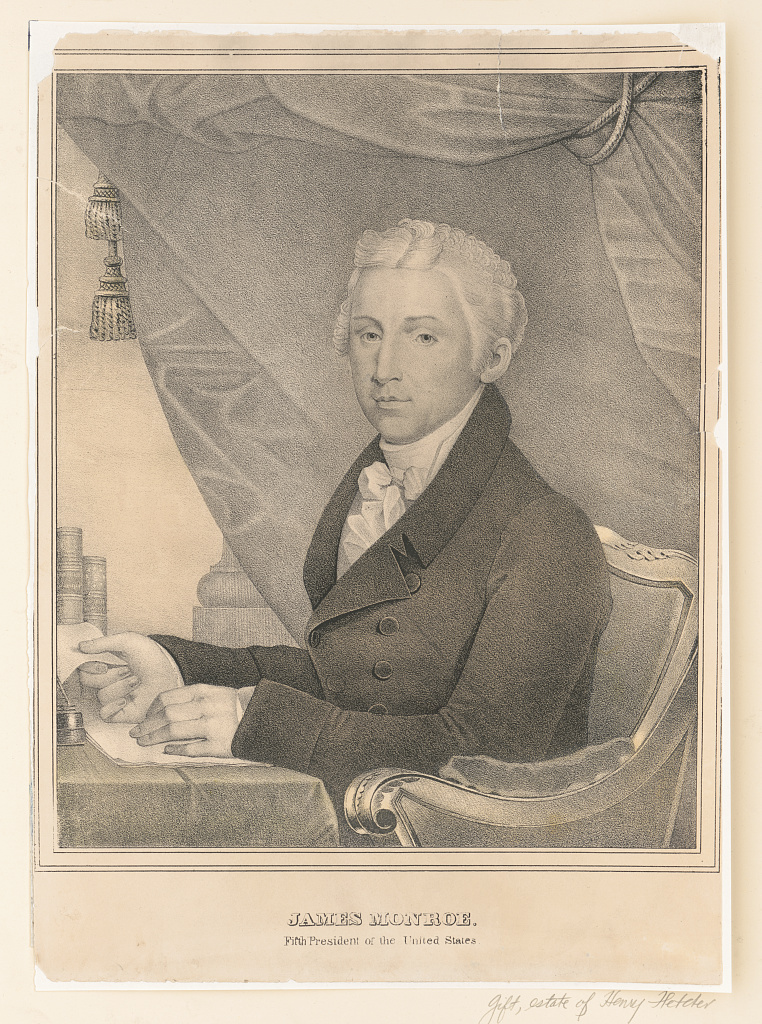
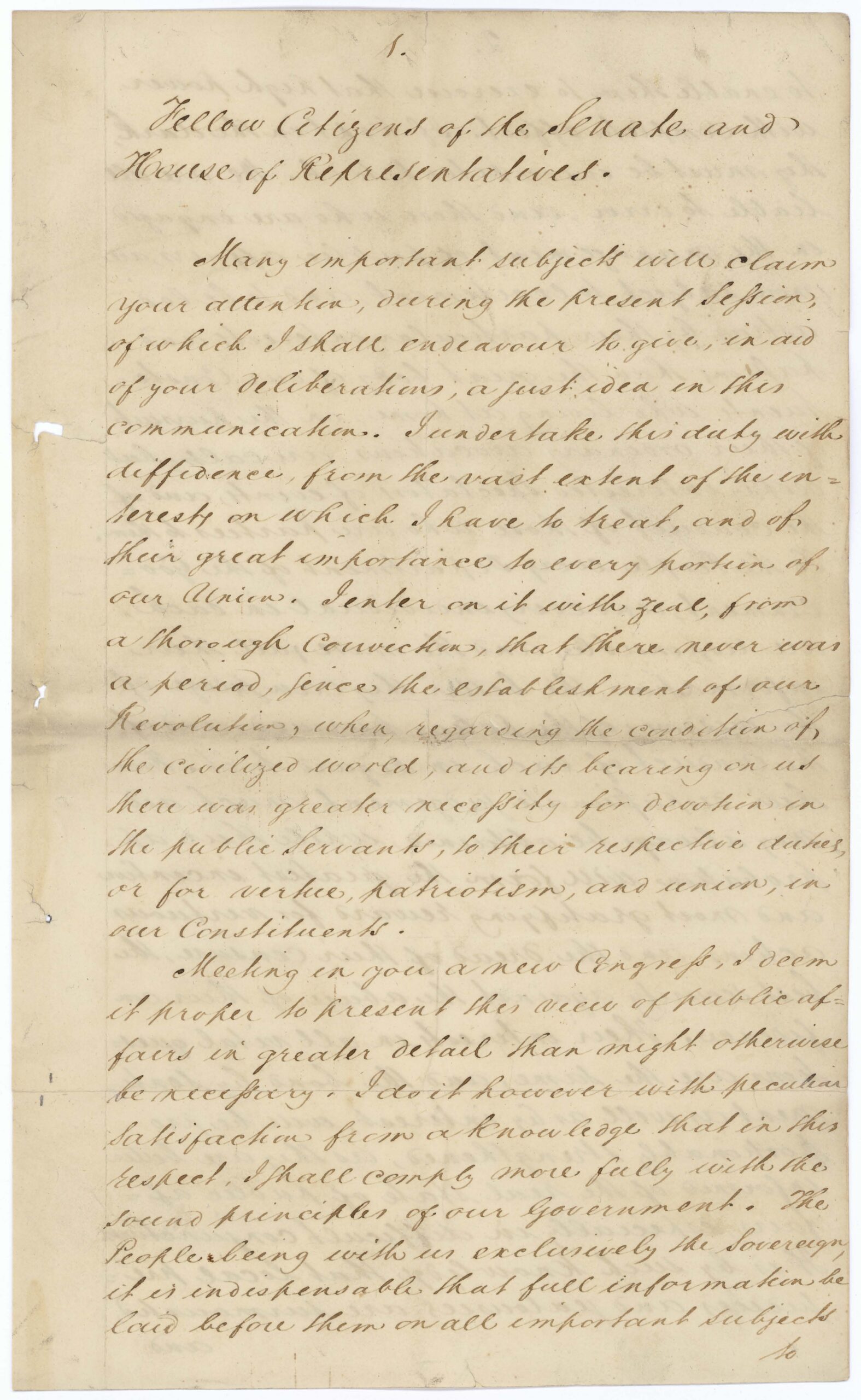
On December 2, 1823, President James Monroe sent his annual message to Congress, fulfilling a constitutional duty that rarely generated lasting headlines. Lawmakers expected updates on finances, military affairs, and other matters of government. Instead, tucked within the lengthy message was a brief but consequential declaration about the future of the Western Hemisphere. Monroe warned that the United States would oppose further European colonization in the Americas and would view attempts by European powers to intervene in the affairs of newly independent nations as unfriendly acts.¹
At the time, the statement attracted relatively little attention abroad. The United States remained a young nation with a modest military and limited influence on the world stage. European empires still controlled vast territories, commanded powerful armies, and dominated international affairs. Few observers could have predicted that Monroe’s words would become one of the most enduring principles in American foreign policy.
Yet the Monroe Doctrine proved remarkably influential. Over the next two centuries, presidents, diplomats, military leaders, and historians would repeatedly invoke its principles when discussing the role of the United States in the Western Hemisphere. The doctrine shaped relations between the United States and Latin America, influenced debates about intervention and sovereignty, and helped define how Americans understood their nation’s place in the world. While its meaning evolved considerably over time, its origins reflected a critical moment when the United States began to look beyond its borders and consider how developments elsewhere in the Americas affected its own security and prosperity.¹
A Revolutionary Era Beyond the United States
By the early 1820s, political change was sweeping across the Western Hemisphere. The American Revolution had demonstrated that colonial rule could be challenged successfully, and other independence movements soon followed. Across Latin America, revolutionary leaders sought to break free from European control. Figures such as Simón Bolívar and José de San Martín led movements that reshaped the political landscape of Central and South America. Former colonies of Spain and Portugal declared independence and began experimenting with new forms of self-government.²
These movements did not emerge suddenly. The upheaval began after Napoleon invaded Spain in 1808 and disrupted the authority of the Spanish monarchy. Throughout Spain’s overseas empire, questions arose about who possessed legitimate political authority. Local leaders formed governing juntas, debated representation, and increasingly challenged imperial control. What began as uncertainty evolved into revolutions that transformed nearly every corner of Spanish America.
For many Americans, these developments felt familiar. The United States had emerged from its own struggle against colonial authority only a few decades earlier. Although the political systems and circumstances differed from country to country, many Americans sympathized with independence movements that echoed themes of self-government and national sovereignty. Newspapers followed events in Latin America closely, and policymakers recognized that the emergence of new republics could create opportunities for diplomacy and trade.
At the same time, uncertainty remained. The defeat of Napoleon had restored stability to many European monarchies, and conservative governments sought to preserve traditional political arrangements. American leaders worried that some European powers might help Spain reclaim its former colonies or otherwise intervene in the affairs of newly independent nations. They also watched Russian territorial claims along the northwest coast of North America with concern. Further European expansion threatened not only the independence of the new nations but also the broader balance of power throughout the Western Hemisphere.²
The developments unfolding across Latin America would ultimately become one of the central forces shaping Monroe’s famous declaration. Understanding the Monroe Doctrine therefore requires understanding the revolutionary era from which it emerged. The stories of Bolívar, San Martín, and other leaders of Latin American independence deserve deeper exploration, but even in 1823 it was clear that the political future of the hemisphere was being rewritten.
Monroe, Adams, and a Diplomatic Debate
The Monroe Doctrine did not emerge overnight. It developed through months of discussion within the administration, particularly between President Monroe and his secretary of state, John Quincy Adams. Adams possessed a deep understanding of international affairs and believed the United States needed a clear policy regarding European involvement in the Americas.²
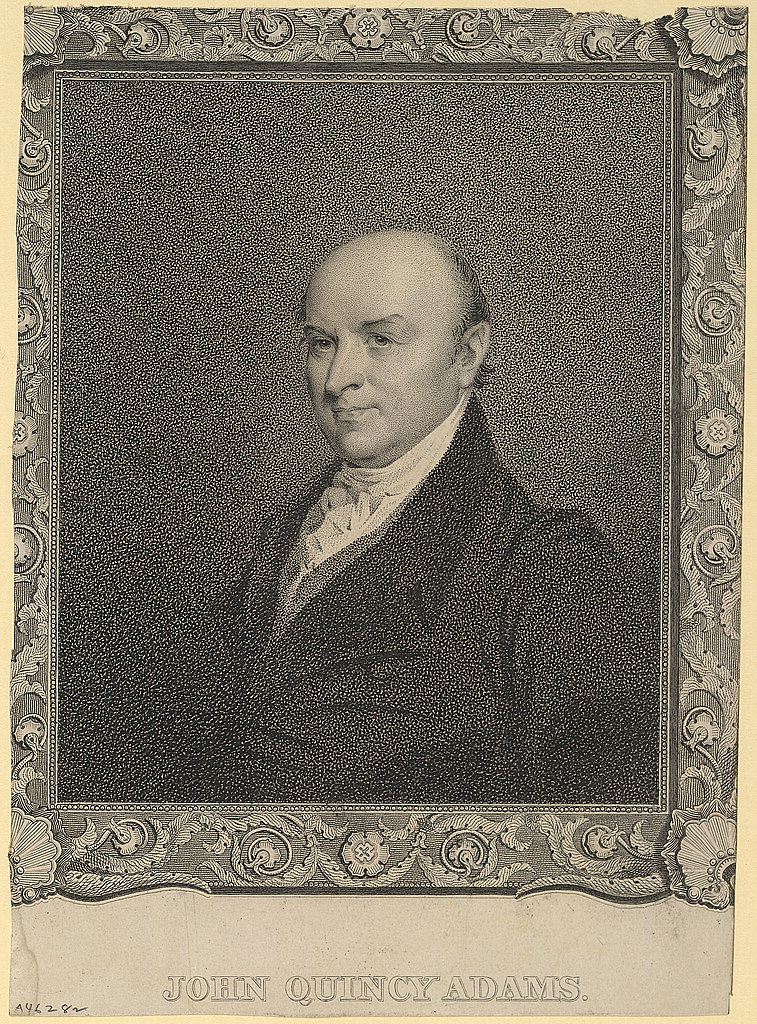
The immediate challenge arose when British Foreign Secretary George Canning proposed a joint declaration. Britain, like the United States, opposed the restoration of Spain’s colonial empire. British merchants benefited from trade with independent Latin American nations, and British leaders saw little advantage in allowing rival European powers to regain influence in the region.
Some American officials favored cooperation with Britain. A joint declaration backed by the world’s most powerful naval force could deter European intervention more effectively than a statement from the United States alone. Adams disagreed.
He feared that acting alongside Britain would diminish American independence and potentially restrict future U.S. policy options. Adams argued that the United States should speak with its own voice and establish its own principles. Perhaps his most famous observation compared such cooperation to appearing as a “cockboat in the wake of the British man-of-war.” In his view, the United States needed to demonstrate diplomatic independence every bit as much as it had fought for political independence a generation earlier.²
His argument prevailed. Rather than issuing a joint statement, Monroe incorporated the administration’s position into his annual message to Congress. The result was a distinctly American declaration regarding the future of the Western Hemisphere.
December 2, 1823: The Message That Changed Foreign Policy
When Monroe’s written message reached Congress on December 2, 1823, few anticipated that it would become a defining document in American diplomatic history. Annual presidential messages were important, but they rarely became foundational foreign policy documents. Monroe’s message covered a wide variety of topics that lawmakers expected from a routine communication.
Yet within that broader message were several paragraphs that fundamentally altered how the United States described its relationship with the rest of the hemisphere. Monroe’s declaration was measured rather than dramatic. He did not threaten war, nor did he announce a major military initiative. Instead, he laid out a series of principles that reflected the administration’s understanding of the changing world around it.¹
Monroe emphasized that the United States would not interfere in European affairs or existing European colonies. This point is often overlooked. The doctrine was not a demand that Europe withdraw entirely from the Western Hemisphere. Rather, it established boundaries intended to prevent future colonization and discourage intervention in newly independent nations.
The president argued that the political systems of Europe and the Americas were fundamentally different. The revolutions that had produced independent nations throughout the hemisphere had created a new political reality. Attempts to reverse those developments, Monroe suggested, would affect American interests and security.²
Perhaps the most remarkable feature of Monroe’s message was its confidence. The United States was announcing principles that exceeded its immediate military capabilities. Yet Monroe and Adams believed that clearly stating those principles would help shape the future. The doctrine represented not simply an assessment of current realities but a vision of the political order they hoped would emerge throughout the hemisphere.
For historians, the message serves as a window into a larger historical moment. Behind Monroe’s words stood questions about independence, sovereignty, diplomacy, trade, empire, and the future of republican government. The doctrine emerged from those debates and, in turn, influenced them for generations.
The Three Core Principles of the Monroe Doctrine
Although later generations often spoke of the Monroe Doctrine as a single policy, it rested on several related ideas.
The first principle was non-colonization. Monroe declared that the American continents should no longer be considered open to future European colonization. Independent nations now existed throughout the hemisphere, and American leaders believed further colonial expansion threatened regional stability.²
The second principle was non-intervention. Monroe warned European governments against interfering in the affairs of newly independent nations. Efforts to restore colonial control or shape political developments would be viewed unfavorably by the United States.¹
The third principle involved mutual separation. Monroe stated that the United States would not interfere in existing European colonies or become entangled in European political affairs. The doctrine therefore envisioned distinct spheres of influence rather than universal American involvement abroad.²
Together, these ideas expressed an emerging belief that the New World and the Old World occupied different political spaces. While Europe remained dominated by monarchies and imperial rivalries, many Americans hoped the Western Hemisphere would increasingly be shaped by independent nations governing themselves. The doctrine was a unilateral statement of American policy rather than a treaty or an automatic military guarantee.
A Bold Declaration from a Limited Power
One of the most fascinating aspects of the Monroe Doctrine is that the United States possessed little ability to enforce it in 1823. The nation lacked the military strength necessary to confront major European powers directly. Britain’s Royal Navy remained the strongest force discouraging renewed colonial ventures in the Americas.³
This reality highlights an important point. The Monroe Doctrine was initially as much a statement of aspiration as a demonstration of power. It represented how American leaders hoped the hemisphere would develop. They envisioned a region increasingly populated by independent nations rather than European colonies.
In practical terms, many historians argue that British naval power offered more immediate protection against recolonization than anything the United States could provide. Yet Monroe and Adams understood that foreign policy involves ideas as well as armies. By publicly defining American interests, they established a framework that future leaders could build upon.
Over time, American power grew dramatically. Economic expansion, territorial growth, industrialization, and military development transformed the United States during the nineteenth century. As national influence expanded, the Monroe Doctrine gradually acquired greater practical significance. What began as a diplomatic warning evolved into a central element of American foreign policy.³
The Monroe Doctrine’s Evolving Influence
Although the Monroe Doctrine became a cornerstone of American foreign policy, its influence did not emerge immediately. For much of the nineteenth century, it functioned more as a statement of principle than a regularly invoked policy. Yet as American power expanded, the doctrine increasingly shaped diplomatic thinking.
One of the doctrine’s earliest major tests came during the 1860s. While the United States was consumed by the Civil War, French Emperor Napoleon III increased French involvement in Mexico and supported the installation of Maximilian of Austria as emperor. Many Americans viewed the development as inconsistent with Monroe’s principles. After the Civil War, the United States exerted diplomatic and military pressure in support of Mexico’s republican government and the withdrawal of French forces, contributing to the collapse of the French-backed regime.¹
By the late nineteenth century, the United States had become a growing industrial and military power. Policymakers increasingly viewed the Monroe Doctrine as a guiding principle for relations throughout the hemisphere. What had originally been a defensive warning against European intervention gradually became a broader statement about American interests.
The most significant reinterpretation occurred during the presidency of Theodore Roosevelt. In 1904, Roosevelt announced what became known as the Roosevelt Corollary. He argued that chronic instability or financial crises in Latin America could invite European intervention and that the United States might therefore need to act before outside powers gained a foothold.¹
This represented a major departure from Monroe’s original statement. Supporters viewed Roosevelt’s approach as a practical extension of the doctrine’s goals. Critics argued that it expanded American authority beyond what Monroe intended. The debate illustrated how foreign policy ideas evolve as circumstances change.
The doctrine continued influencing policy throughout the twentieth century. During the Cold War, American officials frequently expressed concern about external powers gaining influence within the Western Hemisphere. The Cuban Missile Crisis of 1962 reflected many of the same questions about outside involvement in the Americas that had concerned policymakers more than a century earlier.³
Because the Monroe Doctrine evolved across generations, historians often distinguish between Monroe’s original message and later interpretations. The doctrine became not a single policy frozen in time but a framework repeatedly adapted to new challenges.
Why Historians Still Debate the Monroe Doctrine
The Monroe Doctrine has long generated debate among historians and policymakers. Supporters argue that it helped protect newly independent nations from renewed colonial rule and established principles that discouraged European intervention. They view the doctrine as an important expression of self-government and hemispheric independence.⁴
Critics point out that later interpretations sometimes justified American intervention in neighboring nations. They argue that the doctrine’s evolution demonstrates how foreign policy principles can be reshaped by changing national interests. Many Latin American leaders welcomed protection from European domination while simultaneously expressing concern about growing American influence.⁵
Both perspectives reveal an important truth. The Monroe Doctrine was never static. Its meaning changed as new generations confronted new geopolitical realities. Understanding that evolution requires examining both Monroe’s original statement and the many ways later leaders interpreted it.
An Enduring Legacy
More than two centuries after its announcement, the Monroe Doctrine remains one of the most influential statements in American diplomatic history. It established principles that helped define the relationship between the United States, Europe, and the nations of the Western Hemisphere. It also reflected a young republic beginning to think beyond its borders and contemplate its place in a rapidly changing world.¹
The doctrine’s significance lies not only in what it said but also in the conversations it continues to inspire. It raises questions about national sovereignty, international influence, regional security, and the responsibilities of powerful nations. Historians may disagree about specific interpretations, but they agree on one point: few foreign policy statements have exerted a greater influence on the development of the Western Hemisphere than the Monroe Doctrine.
Footnotes
- National Archives, Monroe Doctrine (1823), Presidential Message of James Monroe to Congress, December 2, 1823. Available through the National Archives Milestone Documents collection: Monroe Doctrine (1823).
- Office of the Historian, U.S. Department of State, Monroe Doctrine, 1823, Milestones in the History of U.S. Foreign Relations.
- HISTORY, Monroe Doctrine: Definition, Purpose & Significance.
- National Museum of American Diplomacy, The Monroe Doctrine: The United States and Latin American Independence.
- Encyclopedia Britannica, Monroe Doctrine.
- Library of Congress, Monroe Doctrine: A Resource Guide.