

Robert Morris — The Financier Who Funded American Freedom
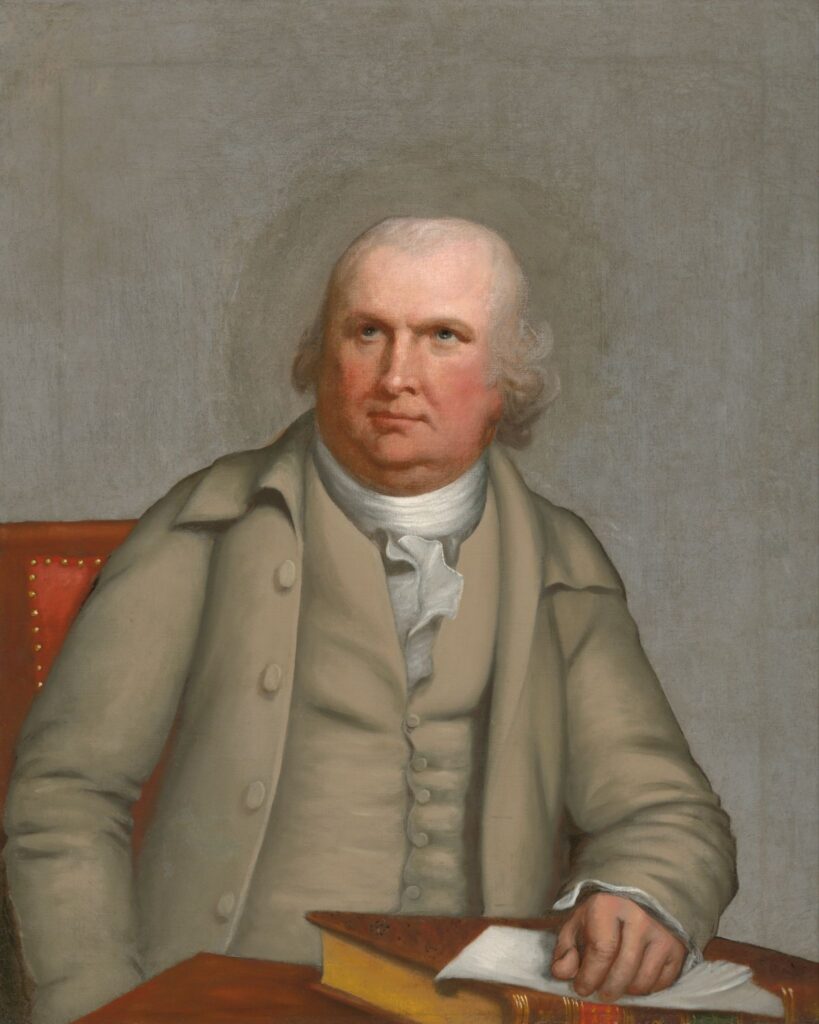
He is one of only two men in American history to sign all three of the nation’s foundational documents: the Declaration of Independence, the Articles of Confederation, and the United States Constitution. He was ranked among the two wealthiest of the fifty-six signers of the Declaration. He personally financed the Yorktown campaign that ended the Revolutionary War, organized the first government-chartered bank in the United States, recommended Alexander Hamilton for the post of Secretary of the Treasury, and hosted George Washington in his own home during two presidential terms. And yet Robert Morris (1734–1806) is today among the least recognized of the Founding Fathers, a man who gave almost everything he had to birth a nation, and spent his final years in a debtors’ prison and a modest Philadelphia house, largely forgotten. His story is one of the most extraordinary and most instructive in the history of the American founding.
From Liverpool to Philadelphia: An Immigrant’s Rise
Robert Morris was born on January 31, 1734, in Liverpool, England, the son of Robert Morris Sr. and Elizabeth Murphet Morris. His mother died when he was two years old, and his maternal grandmother raised him while his father built a career in Maryland as a tobacco agent. At the age of fourteen, Morris sailed to America to join his father, but within two years, his father was dead, killed by a freak accident during a farewell cannon salute fired from one of the company’s ships.¹
Left alone at sixteen in a new country, Morris went to work as a clerk at the Philadelphia merchant firm of Charles Willing & Co. He proved himself exceptional. When Charles Willing’s son Thomas took over, he offered the young Morris a partnership. The firm of Willing, Morris & Company, built on three ships, a West Indies trade route, and boundless ambition, grew into one of the most powerful commercial houses in colonial America.³ At the height of his success, Morris was ranked by historians alongside Charles Carroll of Carrollton as one of the two wealthiest among all fifty-six signers of the Declaration.
He married Mary White on March 2, 1769. The couple had seven children and built a life of considerable refinement. In 1770, Morris purchased an eighty-acre estate on the eastern bank of the Schuylkill River, which he named “The Hills,” complete with a greenhouse where he grew oranges and pineapples, two farmhouses, barns, and extensive gardens in what is now Philadelphia’s Fairmount Park.³
A Reluctant Revolutionary — Who Signed Anyway
Morris’s path to independence was not simple. He loved Britain and doubted whether the American colonies were truly prepared for self-rule or a war against the world’s foremost military power. He worked within the Pennsylvania Council of Safety and the Continental Congress to find a peaceful resolution. When Richard Henry Lee’s resolution for independence came to a vote on July 2, 1776, Morris left the room rather than cast a dissenting vote that might have prevented Pennsylvania’s delegation from supporting independence.⁴
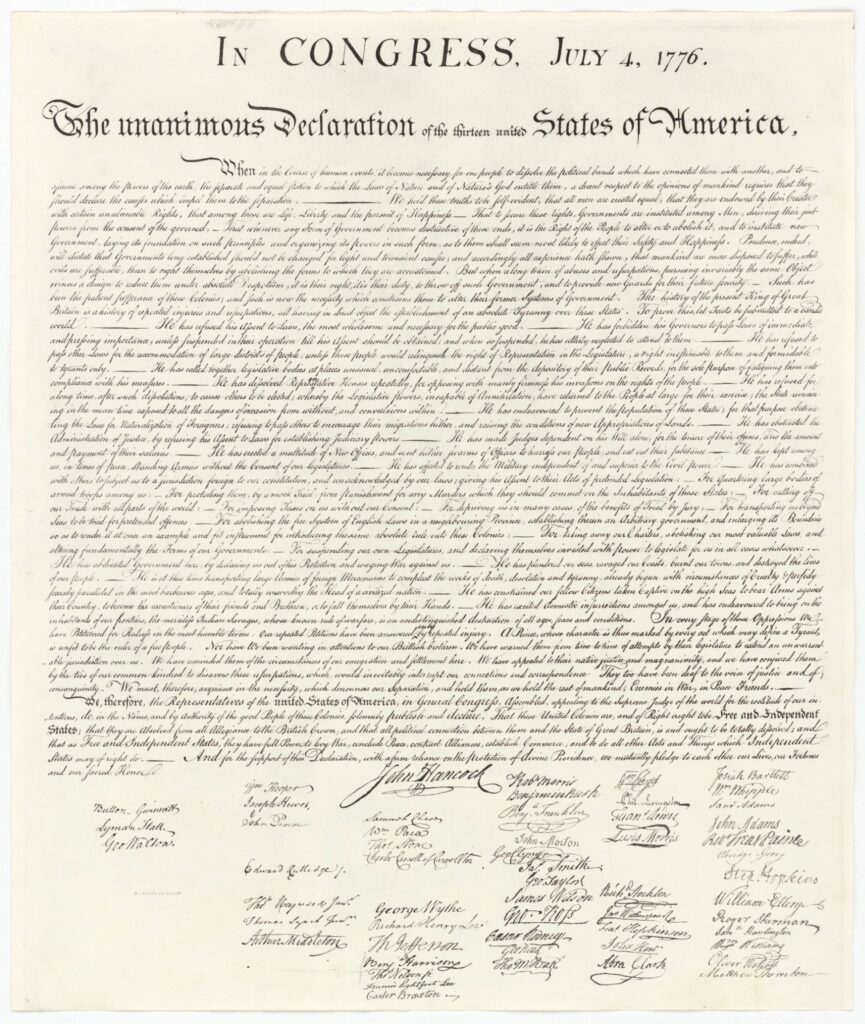
But when the Declaration of Independence was formally signed on August 2, 1776, Robert Morris added his name to it. “I am not one of those politicians that run testy when my own plans are not adopted,” he explained. “I think it is the duty of a good citizen to follow when he cannot lead.”² From that moment forward, he would devote himself to the cause with a totality that would ultimately cost him nearly everything he had.
He had already been serving in Congress on the Secret Committee, using his commercial network as an intelligence operation for the patriot cause. He served on the Committee of Correspondence, a body that would eventually become the U.S. Department of State, and on the Marine Committee, where he sold three of his own best ships to the Continental Navy. Those vessels became the Alfred, the Columbus, and the Reprisal, the last of which carried Benjamin Franklin to France. The sea captains who sailed for Morris, including John Barry and Samuel Nicholas, who became the first Commandant of the Marine Corps, became the naval officers of the Revolution.³
Superintendent of Finance: The Man Who Kept the Army Alive
By 1781, the Continental cause was in financial crisis. Congress had little power to raise funds, paper money had collapsed in an inflation spiral, and the states were failing to contribute. Washington’s army was on the edge of dissolution. Congress responded by creating the office of Superintendent of Finance, the first executive office in American history, and granting extraordinary powers to the one man they believed capable of saving the republic’s finances.⁴
That man was Robert Morris.
From 1781 to 1784, Morris slashed government expenditures, personally purchased army and navy supplies, established rigorous accounting procedures, and, when the states failed to contribute, issued his own personal promissory notes and strained his private credit to keep the army fed and paid.² When money could not be secured through any other means, he used over a million dollars of his own fortune to cover the obligation. Before he left office, he submitted the first national funding proposal, titled “On Public Credit”. This document served as the direct basis for Alexander Hamilton’s transformative financial plan a decade later.³
The crowning achievement of this period was the financing of the Yorktown campaign. To pay for the final, decisive offensive of the Revolutionary War, Morris personally contributed $1.4 million, a combination of his own notes, a loan secured from France, and funds he coordinated with French naval forces to position their fleet in the Chesapeake Bay. That naval positioning made the British evacuation of Yorktown impossible, and Cornwallis surrendered. The war, for all practical purposes, was over.² Washington could not have won it without him.
Morris also founded the Bank of North America that same year — the first government-incorporated bank in the United States — organized with fellow signers James Wilson and George Clymer, and chartered in December 1781. It was the institutional foundation of American financial stability.⁴
From the Constitutional Convention to the Senate
In 1787, Morris hosted George Washington in his Philadelphia home while both men attended the Constitutional Convention. It was Morris who nominated Washington to chair the proceedings.³ Though Morris attended nearly every session, he spoke only twice, unusually quiet for a man of his stature, and did not serve on committees. He signed the Constitution, becoming one of only two signers of the Declaration of Independence, and also signed all three founding documents. (The other was Roger Sherman of Connecticut.)
When Washington became president, he offered Morris the position of Secretary of the Treasury, arguably the most critical economic post in the new government. Morris declined and instead made one of the most consequential personnel recommendations in American history: he suggested his friend Alexander Hamilton for the role. Morris then took a seat in the U.S. Senate, served on 41 senatorial committees, and used his position to advance Hamilton’s financial policies, which put the new republic on a sound economic footing.³
Washington valued Morris deeply throughout his presidency. Mary Morris always sat at Martha Washington’s right hand at official drawing rooms; Robert Morris was always seated at Mrs. Washington’s right at dinners, public or private.³ The two families moved next door to each other during Washington’s Philadelphia years, the Washingtons in the Morris mansion, the Morrises next door, an arrangement that speaks to the profound personal and professional bond between the two men.
The Fall: Speculation, Prison, and Obscurity
After leaving the Senate in 1795, Morris turned his formidable energies to land speculation, acquiring at one point what amounted to the western half of New York State, millions of acres of frontier land, and significant properties in the new capital of Washington, D.C. He invested in steam engine companies, a glass factory, the first iron rolling mill in America, and canal companies, and, characteristically, launched a hot-air balloon from his backyard in Philadelphia.³
But the web of speculation became too complex, the debts too overlapping, and the partners too unreliable. A deal with Dutch investors collapsed when the French Revolution disrupted European capital markets. Napoleon’s foreign minister, Talleyrand, failed to pay for 100,000 acres he had purchased. Morris’s political enemies pursued old grievances. And in 1794, he had begun construction of a palatial Philadelphia townhouse designed by Pierre Charles L’Enfant, the same architect who would design Washington, D.C., which was never finished and came to be known as “Morris’ Folly.”⁴
Morris declared bankruptcy in February 1798. He was arrested at the behest of creditors and confined to the Philadelphia debtors’ prison, Prune Street, where he remained for three and a half years. He was released in 1801 under a new federal bankruptcy law, his fortune gone, his health broken, and his spirit, by most accounts, never fully recovered. His friend Gouverneur Morris provided an annuity that allowed Robert and Mary to live out their remaining years in a small house on the outskirts of Philadelphia.⁴
Robert Morris died of asthma on May 8, 1806, at the age of seventy-two, and was buried in the family vault of his brother-in-law William White, bishop of the American Episcopal Church, at Christ Church in Philadelphia.
Legacy and Civic Relevance
Robert Morris’s legacy is inseparable from the question of what it truly costs to build a republic. He gave his commercial genius, his personal credit, his ships, his fortune, and, ultimately, his freedom to the cause of American independence. He signed all three founding documents. He financed Yorktown. He created the institutional financial infrastructure of the new nation. He recommended the man who would become its greatest Treasury Secretary.
And then he watched it all disappear, and died largely forgotten.
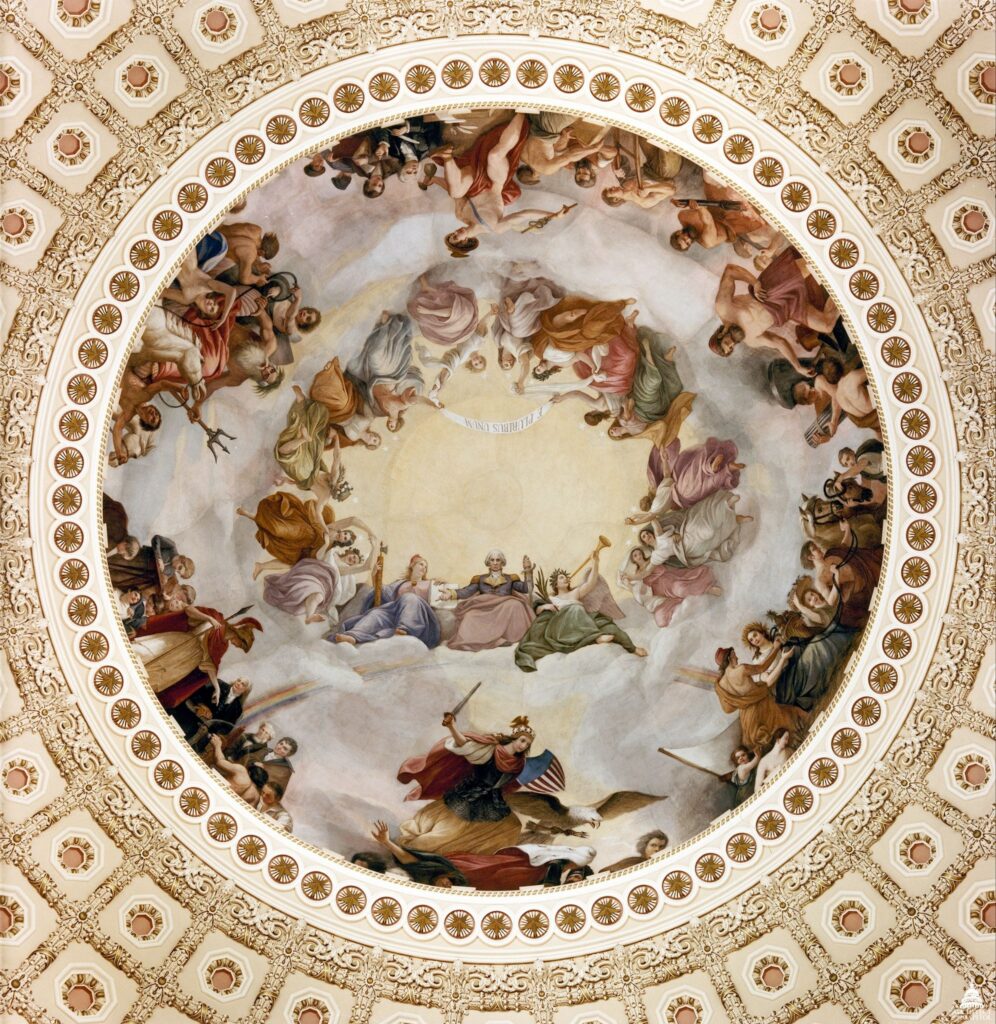
His is not a comfortable story, but it is a true and important one. It reminds us that the founding of the republic was not clean or glorious for everyone who made it possible, that civic service can be ruinously costly, and that not every patriot receives the recognition their sacrifice deserves. The fresco on the interior of the United States Capitol dome, the Apotheosis of Washington, depicts only three Founding Fathers: Washington, Benjamin Franklin, and Robert Morris.¹ He has not been forgotten entirely. But he deserves to be remembered more fully.
Robert Morris stands as proof that the republic was built at great personal cost by people who chose country over security, service over profit, even when that choice undid them.
Explore more stories from the Revolutionary era in our Founding Generation series.
Footnotes
- Robert Morris University, “Who Was Robert Morris?” https://www.rmu.edu/about/history/robert-morris
- American Battlefield Trust, “Robert Morris,” https://www.battlefields.org/learn/biographies/robert-morris
- Descendants of the Signers of the Declaration of Independence, “Robert Morris,” https://www.dsdi1776.com/signer/robert-morris/
- National Archives and Records Administration, “The Founding Fathers: Pennsylvania,”https://www.archives.gov/founding-docs/founding-fathers-pennsylvania