

Thomas McKean — The Founding Father Who Lived Three Lives at Once
Most Founding Fathers held one significant office at a time. Thomas McKean (1734–1817) routinely held several—often two or three simultaneously —in two different states for years on end. He represented Delaware in the Continental Congress while serving as Chief Justice of Pennsylvania. He signed the Declaration of Independence and the Articles of Confederation. He briefly served as President of the Continental Congress, a role that, in the years before the U.S. Constitution, functioned as something close to a head of state. And as Pennsylvania’s Chief Justice for twenty-two years, he laid the legal groundwork for judicial review nearly a decade before John Marshall’s celebrated 1803 ruling in Marbury v. Madison made the doctrine famous nationally.¹
Despite this extraordinary record, McKean remains one of the most overlooked figures of the founding era. His story belongs in any serious account of how the American republic constructed its government, its courts, and its constitutional traditions, and it belongs in our America’s Founders series alongside the men and women whose contributions shaped the nation, celebrated and underrecognized alike.
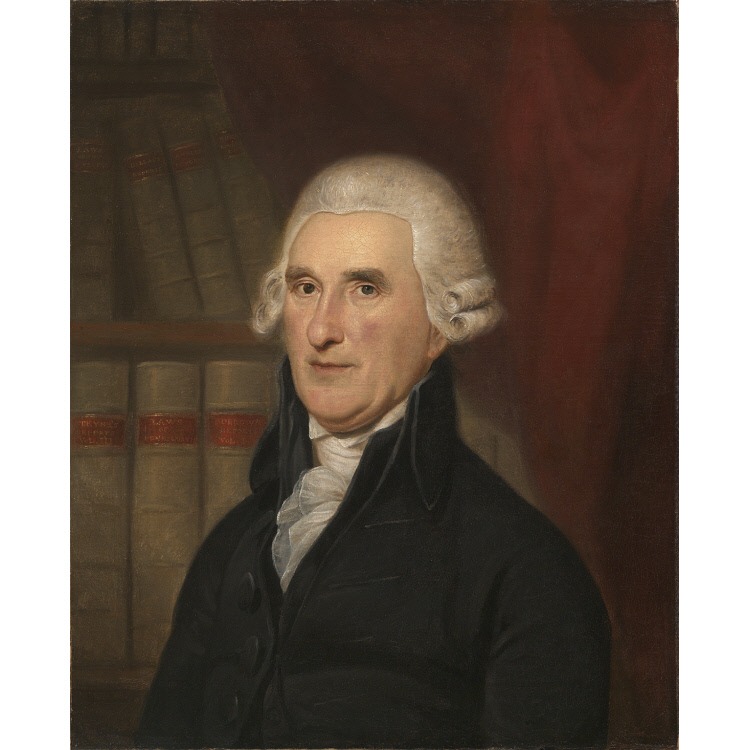
Early Life: From Chester County to the Delaware Bar
A Scotch-Irish Family on the Pennsylvania Frontier
Thomas McKean was born on March 19, 1734, in New London Township, Chester County, Pennsylvania, the son of William McKean, an innkeeper, and Letitia Finney.² His family’s history traced a path common to many colonial Pennsylvania families: his great-great-great-grandfather had fled Scotland for Ireland amid religious and political persecution in the late 1600s, and his grandfather emigrated from Ireland to a 300-acre plantation in Chester County in 1725.³
McKean received his early education at home until age nine, when he and his older brother were sent to study under the Reverend Francis Alison at the New London Academy — an institution that would later count multiple signers of the Declaration of Independence among its alumni.³ It was a notably rigorous education for a colonial farm boy, and it set McKean on a trajectory toward the law.
Rising Fast in Delaware Legal and Political Circles
At a young age, McKean traveled to New Castle, Delaware, to study law under his cousin David Finney. He advanced with remarkable speed: appointed clerk to the prothonotary of the Court of Common Pleas, admitted to practice law in three Delaware counties before he turned twenty-one, and eventually admitted to practice before the Delaware Supreme Court as well.³ By 1758, he had traveled to London to further his legal training at the Middle Temple — one of England’s four Inns of Court — before returning to America to build a career that would soon span two colonies at once.⁴
McKean stood over six feet tall, a striking presence often described as wearing a large cocked hat and carrying a gold-headed cane. Contemporaries described him as quick-tempered, intelligent, and occasionally tactless — a man more comfortable arguing a point of law than making small talk in a drawing room. John Adams, who served alongside him in the Continental Congress, called McKean “one of the three men in the Continental Congress who appeared to me to see more clearly to the end of the business than any others in the body.”³
A Voice for Colonial Rights
The Stamp Act Congress and an Equal Vote for Every State
In 1765, McKean was appointed a delegate to the Stamp Act Congress, the first major intercolonial gathering organized to resist British taxation. There, he made a proposal whose influence would echo across American history: that each colony, regardless of size or population, should receive an equal vote.³ The Continental Congress later adopted this principle, and it survives today in the structure of the United States Senate — one of the most direct living legacies any single Founder can claim.
The Stamp Act Congress produced more than procedural innovation; it produced confrontation. When several delegates refused to sign the congress’s memorial of rights and grievances, McKean rose to challenge the body’s president, Timothy Ruggles, directly. The dispute escalated into a formal challenge to duel, witnessed by the full assembly. Ruggles fled the gathering before dawn the next morning rather than face McKean on the field, and his reputation never recovered. He became a prominent Loyalist and eventually resettled in Nova Scotia.³
Building Delaware’s Resistance Movement
Throughout the late 1760s and early 1770s, McKean held an unusual number of overlapping Delaware offices at once: member and eventually Speaker of the Delaware Assembly, judge of the Court of Common Pleas, customs collector for New Castle, and deputy attorney general.⁴ In 1765, as a judge, he issued a ruling that all court proceedings be recorded on unstamped paper — a direct, practical act of resistance to the hated Stamp Act, carried out from the bench rather than the public square.³
This pattern, using formal legal and judicial positions as instruments of political resistance, would define McKean’s entire revolutionary career.
Declaring Independence: A Midnight Ride and a Disputed Signature
Racing the Clock for Delaware’s Vote
McKean’s most dramatic contribution to American independence came in the final days of June 1776. As the Continental Congress moved toward a vote on independence, Delaware’s three-man delegation was deadlocked: George Read opposed the measure, McKean favored it, and the deciding delegate, Caesar Rodney, had returned home to Delaware to deal with a Loyalist uprising.⁵
McKean sent an urgent dispatch demanding that Rodney ride through the night, if necessary, to break the tie. Rodney did exactly that, completing an eighty-mile overnight ride through a thunderstorm to reach Philadelphia in time. Delaware cast its vote for independence on July 2, 1776, and joined the other colonies in adopting the Declaration of Independence on July 4.³ Without McKean’s urgent summons, Delaware’s vote, and quite possibly the unanimity of the colonies’ decision, might have looked very different.
The Mystery of the Missing Signature
What happened next produced one of the more curious historical puzzles among the fifty-six signers. On July 5, 1776, the day after independence was declared, Colonel McKean marched with his militia regiment to Perth Amboy, New Jersey, to help General Washington defend against an anticipated British attack, leaving Philadelphia before the engrossed parchment copy of the Declaration was prepared for signatures.³
For years, it was believed that McKean did not sign the Declaration until 1781, making him, by most historical accounts, the fifty-sixth and final signer.⁶ McKean’s own later correspondence complicates the story. In a 1796 letter to Alexander Dallas, he insisted he had signed the document on August 2, 1776, alongside most of the other delegates, and that the omission of his name from early printed versions of the Declaration was simply a clerical error that propagated through subsequent reprintings.³
The truth may never be fully settled. What is certain is that McKean’s name does not appear in early printed editions of the Declaration, including the widely circulated 1777 broadside printed by Mary Katharine Goddard, and that historians, including researchers at the National Archives, generally maintain that several signers, McKean likely among them, added their signatures in the months following the original August 2 signing ceremony.³ Whatever the precise date, McKean’s vote for independence on July 4 is not in dispute, and it is that vote, not the signature alone, that defines his place among the Founders.
Building the Architecture of American Law
Chief Justice of Pennsylvania: Twenty-Two Years on the Bench
On July 28, 1777, McKean was appointed Chief Justice of the Pennsylvania Supreme Court, a position he would hold for the next twenty-two years, until 1799.⁴ For a substantial portion of that period, he simultaneously continued representing Delaware in the Continental Congress, creating a constitutional curiosity that some contemporaries questioned: could a man serve as the chief judicial officer of one state while serving as a national legislator representing another?
The answer, as Pennsylvania authorities determined at the time, was yes, because Pennsylvania’s constitutional prohibition on holding multiple offices applied only to offices within the state itself, not to federal or out-of-state positions.⁷ McKean used this unusual dual role to extraordinary effect, shaping Pennsylvania’s courts even as he helped shape the national government in Philadelphia.
A Pioneer of Judicial Review — Before John Marshall
Perhaps McKean’s most consequential and least appreciated legacy is his role in establishing judicial review: the principle that courts have the authority to strike down laws that violate a constitution. Most Americans associate this doctrine with Chief Justice John Marshall’s landmark 1803 U.S. Supreme Court decision in Marbury v. Madison. But McKean’s Pennsylvania Supreme Court was asserting and exercising this very power roughly a decade earlier.¹
Biographer John Coleman, cited in the National Constitution Center’s profile of McKean, put the claim in striking terms: “Only the historiographical difficulty of reviewing court records and the other scattered documents prevents recognition that McKean, rather than John Marshall, did more than anyone else to establish an independent judiciary in the United States.”³ As Chief Justice, McKean held that Pennsylvania’s courts possessed the authority to overturn legislative acts the court deemed unconstitutional, a position that anticipated and helped lay the intellectual groundwork for the federal judiciary’s later, more famous assertion of the same power.¹
McKean was not a perfect reformer by modern standards. He expanded protections for criminal defendants and pushed for penal reform, but historians note he was slow to extend legal rights to women and showed limited urgency on the state’s gradual abolition of slavery.³ His legacy, like that of many Founders, is genuinely mixed, significant in its institutional impact, incomplete in its vision of who that impact should reach.
President of the Continental Congress
On July 10, 1781, McKean was elected President of the Continental Congress, serving until November of that year.³ It was during his presidency that British forces under General Cornwallis surrendered at Yorktown, effectively ending the Revolutionary War’s major combat operations, making McKean, briefly, the presiding officer of the American government at the moment its independence was finally secured on the battlefield.¹ He held this position while continuing to serve as Pennsylvania’s Chief Justice, a dual role Pennsylvania authorities again determined did not violate the state’s restrictions on multiple officeholding, since the congressional presidency was a federal rather than state office.³
Constitution-Making and the Path to the Governorship
Securing Pennsylvania’s Ratification of the U.S. Constitution
Though McKean was not a delegate to the 1787 Constitutional Convention in Philadelphia, he played a decisive role in securing the document’s approval where it mattered most immediately, in Pennsylvania’s ratifying convention. Working alongside fellow legal giant James Wilson, McKean argued forcefully for ratification, telling the assembled delegates that the new Constitution “appears to the best the world has yet seen.”³
The fight was not without controversy. At one point, both McKean and Wilson were burned in effigy by opponents of the new Constitution.³ Pennsylvania nonetheless ratified, becoming the second state to do so, and McKean later helped frame Pennsylvania’s own revised state constitution in 1790 — designed, in significant part, to mirror the structure and principles of the new federal Constitution.
Governor of Pennsylvania: A Controversial Final Act
In 1799, McKean stepped down from the bench to run for Governor of Pennsylvania as a Jeffersonian Republican, defeating the Federalist candidate James Ross.⁴ He won reelection in 1802, and survived a bruising third campaign in 1805 by forming an alliance with Federalist factions — a coalition that produced ongoing political turmoil, including an impeachment attempt in 1807 that ultimately failed to proceed to trial.2
As governor, McKean expanded free public education, removed numerous corrupt or incompetent justices of the peace while resisting efforts to politically purge experienced judges, and, remarkably, at the age of eighty, organized a citizens’ defense effort in Philadelphia during the War of 1812.³ He retired from public office in December 1808.
Family, Legacy, and Final Years
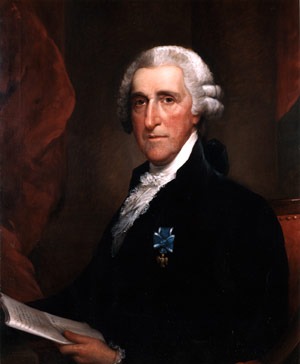
McKean married twice: first to Mary Borden in 1763, with whom he had six children before her death in 1773, and then to Sarah Armitage in 1774, with whom he had five more.² Across both marriages, McKean fathered eleven children, a sprawling family that mirrored the breadth of his public commitments.
He maintained a long association with the University of Pennsylvania, serving as a trustee from 1777 until his death in 1817 and as president of the university’s Board of Trustees from 1788 to 1791, a role he held concurrently, characteristically, with his other offices.4 His son Joseph Borden McKean later served alongside him on the same board for more than two decades, one of the more enduring father-son partnerships in the university’s early history.
Thomas McKean died on June 24, 1817, at the age of eighty-three. At the time of his death, only five other signers of the Declaration of Independence remained alive.³ He was originally interred at Philadelphia’s First Presbyterian Church before his remains were later moved to the family vault at Laurel Hill Cemetery. McKean County, Pennsylvania, created in 1804, bears his name to this day, a lasting, if modest, geographic tribute to a man who never quite received the broader recognition his record warranted.
Why Thomas McKean Still Matters
Thomas McKean’s career resists easy summary precisely because he refused to stay in one lane. He was a legislator and a judge. A revolutionary colonel and a constitutional framer. A representative of one state while serving as the chief judicial officer of another. A man who voted for independence on July 4 and whose signature on the parchment remains, to this day, a subject of legitimate historical debate.
What unites these roles is a consistent thread: McKean understood, earlier and more completely than most of his contemporaries, that the success of the American experiment would depend not only on winning independence but on building durable institutions, courts capable of checking legislative overreach, a Senate structured to protect smaller states, a judiciary independent enough to interpret a constitution rather than simply enforce the will of the majority. His Pennsylvania Supreme Court rulings on judicial review anticipated the doctrine that would later become one of the most consequential principles in all of American constitutional law.
Thomas McKean deserves a more prominent place in the story we tell about the founding generation — not despite the complexity of his record, but because of it. The republic was built by people willing to hold multiple offices, juggle competing loyalties, and do the unglamorous work of constructing institutions that would long outlast them. Few Founders did more of that work, in more places, at the same time, than Thomas McKean.
Footnotes
- Scott Bomboy, “Thomas McKean: A Founding Father with a double life,” National Constitution Center, March 19, 2023, https://constitutioncenter.org/blog/thomas-mckean-looking-at-a-most-interesting-founding-father
- Pennsylvania Historical and Museum Commission, “Governor Thomas McKean,” https://www.phmc.state.pa.us/portal/communities/governors/1790-1876/thomas-mckean.html
- Descendants of the Signers of the Declaration of Independence, “Thomas McKean,” https://www.dsdi1776.com/signer/thomas-mckean/
- University of Pennsylvania Archives & Records Center, “Thomas McKean (1734–1817),” Penn People, https://archives.upenn.edu/exhibits/penn-people/biography/thomas-mckean/
- National Constitution Center, “Thomas McKean,” https://constitutioncenter.org/blog/thomas-mckean-looking-at-a-most-interesting-founding-father
- National Archives, “The Declaration of Independence: A History,” https://www.archives.gov/founding-docs/declaration-of-independence