

Rachel Walker Revere | The Woman Who Held the Revolution Together at Home
Everyone knows the name, Paul Revere. The silversmith. The patriot. The rider. His midnight gallop through the Massachusetts countryside on April 18, 1775, warning that the British were marching, is one of the most enduring stories in American history. But on that same night, in the family’s modest home at 19 North Square in Boston’s North End, another story was unfolding. A woman was sitting with seven children and a mother-in-law, waiting. Wondering. Not knowing whether her husband was dead or alive.
That woman was Rachel Walker Revere, and her story deserves to be told.
A Boston Girl, Educated and Capable
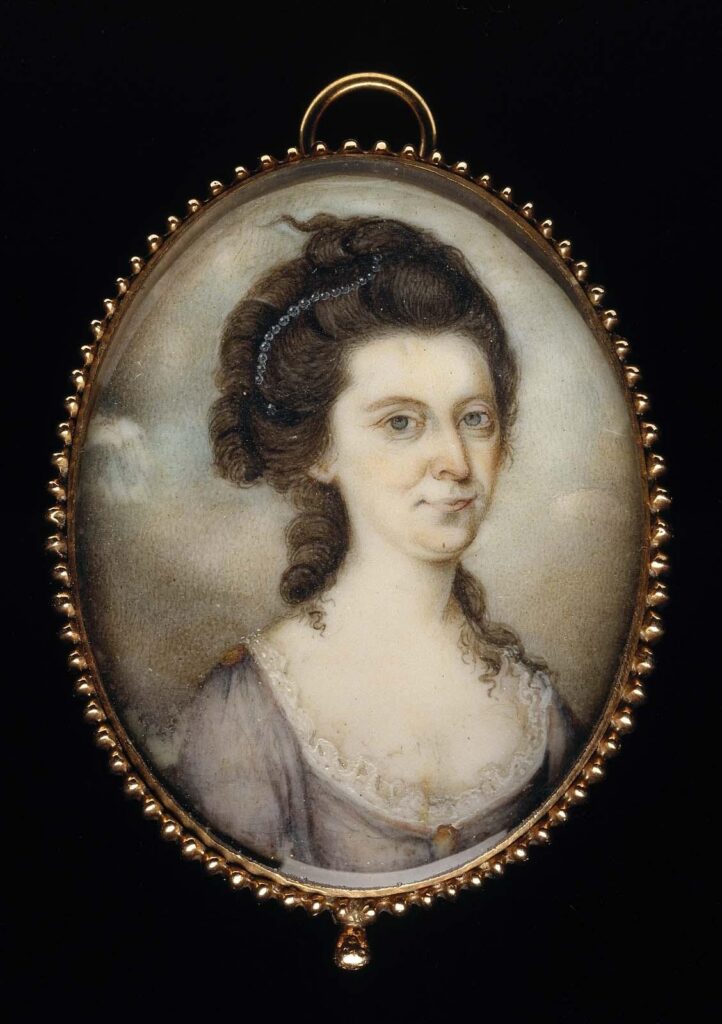
Rachel Walker was born on December 27, 1745, in Boston, the daughter of Richard and Rachel Carlisle Walker.¹ She was an only child, born to parents who were, by the standards of eighteenth-century Boston, unusually old, a circumstance that, rather than diminishing her prospects, seems to have elevated them. Her parents invested in her education the way most colonial families invested only in a son’s, teaching her to read, write, and reason with a depth unusual for a girl of her time and class.³
Living historian Judith Kalaora, who has portrayed Rachel at events hosted by the Paul Revere House, described her as educated “almost as though she were a son” — a characterization that helps explain the intelligence and candor that shine through the handful of letters that survive from Rachel’s own hand.³
She grew up in the North End neighborhood that Paul Revere also called home. Family tradition holds that the two met on a summer evening in 1773, when Paul, recently widowed, with six young children and a grief he was barely managing, crossed paths with Rachel on his walk home from the silver shop. He told her about his infant daughter, who was ill. She offered to help. She kept coming back to care for the baby and the other children.⁴ What started as an act of practical kindness became something more.
Paul Revere, who was not known as a literary man, wrote Rachel a courtship poem in which the first letter of each line spelled out her name. According to Kostya Kennedy, author of The Ride: Paul Revere and the Night That Saved America, Paul’s friends at the tavern likely gave him no end of ribbing for it.³ None of it deterred him.
On October 10, 1773, Paul Revere and Rachel Walker were married. He made her wedding ring himself, engraving it with the words: “Live Contented.”¹ She was twenty-seven. Some of her new stepchildren were not much younger than she was.
A Household Under Pressure
From the moment Rachel stepped into the Revere household, she understood that she was signing up for something larger than marriage. Paul was already deeply embedded in the patriot network — a trusted courier, a member of the Sons of Liberty, a man whose silversmith shop served as an informal hub for revolutionary planning. The Boston Tea Party took place in December 1773, weeks after their wedding, with Paul among those who boarded the ships.⁵
The months that followed brought economic hardship. The British closure of the port of Boston strangled the city’s commerce, and Paul’s income from his silver shop — which had fluctuated dramatically even in normal times — all but collapsed as political work consumed his time.¹ Rachel managed the household through it all: keeping food on the table, caring for the children, maintaining the family’s affairs with a competence that went largely unremarked precisely because it was so essential and so quiet.
In December 1774, she gave birth to her first child with Paul, a son named Joshua.¹ She was managing a blended family of significant size in a city on the edge of open war, while her husband disappeared for days at a time on intelligence rides into the countryside.
The Night of April 18, 1775
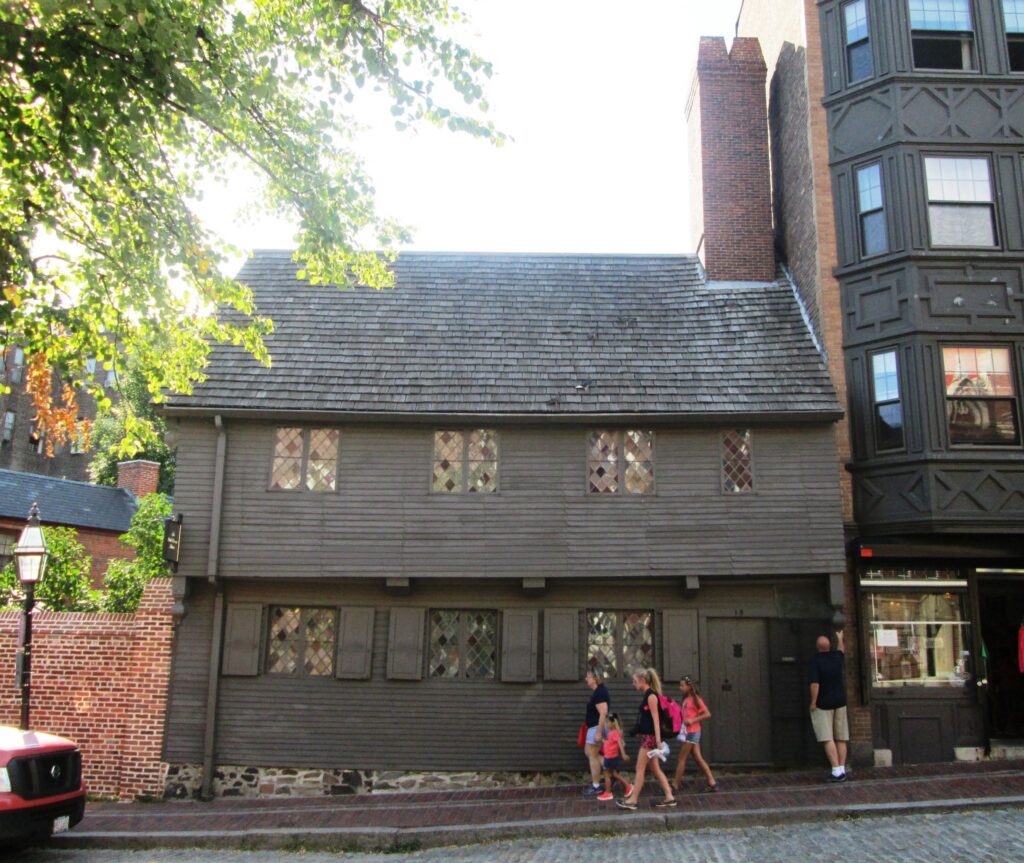
On the evening of April 18, 1775, Paul Revere was preparing to leave again. He would have seen Rachel before he went. He would have kissed her, put on his boots, and walked out the door into the dark.² She knew something was different this time. The British troops were moving. The tension in Boston had been building for months. Whatever he told her, and the precise details of their farewell are lost to history, Rachel was left at 19 North Square with seven children and her mother-in-law, in a city under military occupation, while her husband rode toward Lexington.³
Paul never came back to that house, not for a very long time.
He made it to Lexington. He was briefly captured by a British patrol, which took his horse and released him on foot. By the time the Battles of Lexington and Concord erupted on April 19, Paul was deep in the countryside. Boston was sealed. Days passed before Rachel heard a word.³
“He doesn’t come back for over 48 hours,” Kalaora recounted. “She knows something happened because the military is moving all over the place in Boston — and she’s not sure whether he’s dead or alive.”³
When Paul finally did manage to contact her, it was not to reassure her. He sent word with urgent instructions: gather up what money she could, pack the family’s belongings, and prepare to leave Boston immediately. Then he was gone again for more than a fortnight.³
The Escape She Engineered
What happened next fell entirely to Rachel. With her teenage stepson as her only help, she organized the move of an entire household — children ranging from toddler to teenager, furniture, silver, clothing, the practical contents of a family’s life — out of British-controlled Boston.⁵ She secured passage, negotiated the details of the escape, and got the family to Watertown, where the Massachusetts Provincial Congress had relocated.
The British Army had shut down free passage between Boston and the surrounding towns. Correspondence in and out of the city was subject to interception. In one of her surviving letters, Rachel demonstrated the clear-eyed political conviction of a Daughter of Liberty — scolding Paul for having sought a travel pass from a British officer, writing that she would “rather confer 50 obligations on them than to receive one from them.”¹ She was not a passive figure waiting for rescue. She was a woman who had her own views on how a patriot ought to conduct herself.
She also tried to send Paul money to help him while he was away. That parcel was intercepted by a double agent.³
The family spent nearly a year in John Cook’s crowded Watertown house, sharing space with other displaced Bostonians. Rachel cared for six children, was pregnant with her second child with Paul, and managed the family’s daily life while her husband worked for the Continental cause.¹ When the British finally evacuated Boston on March 17, 1776, the Reveres returned home.⁴
A Life After the Revolution
The years that followed were shaped by the rhythms of a large family navigating the new republic. Rachel bore eight children of her own; five survived to adulthood.¹ She oversaw their early education, boys and girls alike, in a household that, thanks to Paul’s postwar success as the owner of a foundry and copper-rolling mill, eventually enjoyed greater material comfort than the lean revolutionary years had offered.
In 1800, the Reveres sold the North Square house, spending winters in Boston proper and summers in Canton, Massachusetts, near the mill.¹ In a poem Paul wrote around 1810, he described Rachel as his “better half” who took “pains to please” and was “content” with the life they had built together, a portrait that captures warmth, if not quite the full measure of the woman.²
Gilbert Stuart, one of the foremost portrait painters of the early republic, painted both Rachel and Paul in the final years of their lives, giving history a glimpse of their faces in old age. The portraits were completed just weeks before Rachel died on June 26, 1813, at sixty-eight years old.¹
She was buried at the Granary Burying Ground in Boston — the same resting place as Samuel Adams, John Hancock, and the victims of the Boston Massacre. It is the company of patriots, and she belongs there.
Across from the Paul Revere House in Boston’s North End, Rachel Revere Park was dedicated in 1946 and restored in 2017, a small but meaningful acknowledgment of the woman who lived, loved, and kept a revolution going just across the street.⁴
Legacy and Civic Relevance
Paul Revere’s midnight ride lasted a few hours. Rachel Walker Revere’s contribution to the Revolution spanned years, from the siege of Boston, the escape from the city, the long months of separation, the intercepted money, the children, the uncertainty, and the letters. She did it without a horse, a lantern, or a poem by Henry Wadsworth Longfellow.
She did it at home.
The founding of this republic was made possible not only by the men who rode and fought and signed and declared, but by the women who kept everything else from falling apart while they did. Rachel Walker Revere is one of those women. Her wedding ring said, “Live contented.” She earned that contentment the hard way — with intelligence, grit, and an unshakable commitment to the life and the cause she had chosen.
Rachel Walker Revere reminds us that the home front was a front, too, and that the women who held it deserve a place in the story we tell about how this republic came to be.
Explore more stories from the Revolutionary era in our Founding Generation series.
Footnotes
- National Park Service, “Rachel Walker Revere,” https://www.nps.gov/people/rachel-revere.htm
- American Battlefield Trust, “Rachel Revere,” https://www.battlefields.org/learn/biographies/rachel-revere
- Meredith Goldstein, “What Was Rachel Revere Up to the Night of Paul’s Midnight Ride?” Boston.com, April 18, 2025, https://www.boston.com/love-letters/neighborhoods/2025/04/18/what-was-rachel-revere-up-to-the-night-of-pauls-midnight-ride/
- Boston Women’s Heritage Trail, “Rachel and Paul Revere House; Rachel Revere Park,” https://www.bwht.org/explore/the-paul-revere-house/
- Paul Revere Memorial Association / Paul Revere House, https://www.paulreverehouse.org/