

Richard Henry Lee: The Revolutionary Who Moved America Toward Independence
While names like George Washington, Thomas Jefferson, and Benjamin Franklin are often most closely associated with the American Revolution, another Virginian played a critical, and sometimes overlooked, role in the nation’s founding: Richard Henry Lee.¹
An eloquent speaker, influential political organizer, and passionate advocate for colonial unity, Lee helped move the colonies from protest to revolution. Most importantly, he introduced the resolution in the Continental Congress declaring that the colonies “are, and of right ought to be, free and independent States,” the formal step that led directly to the Declaration of Independence.¹
Though history often remembers Jefferson as the author of the Declaration, it was Richard Henry Lee who first formally brought independence before Congress.²
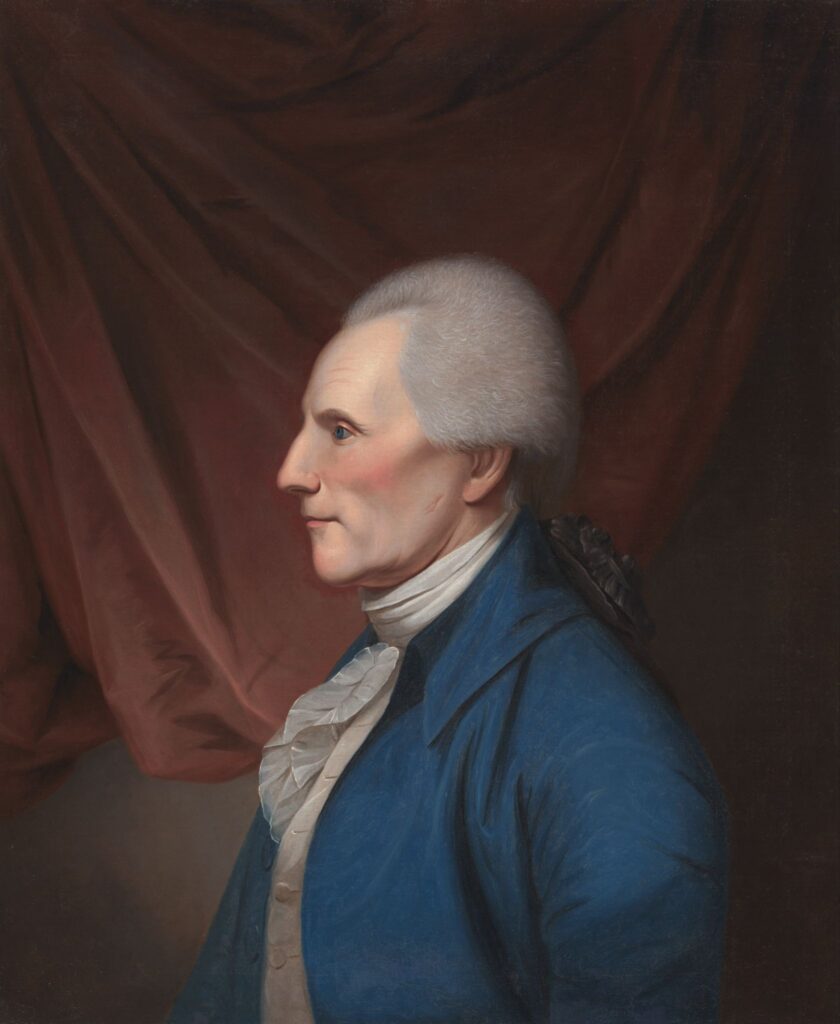
Born Into Virginia’s Political Elite
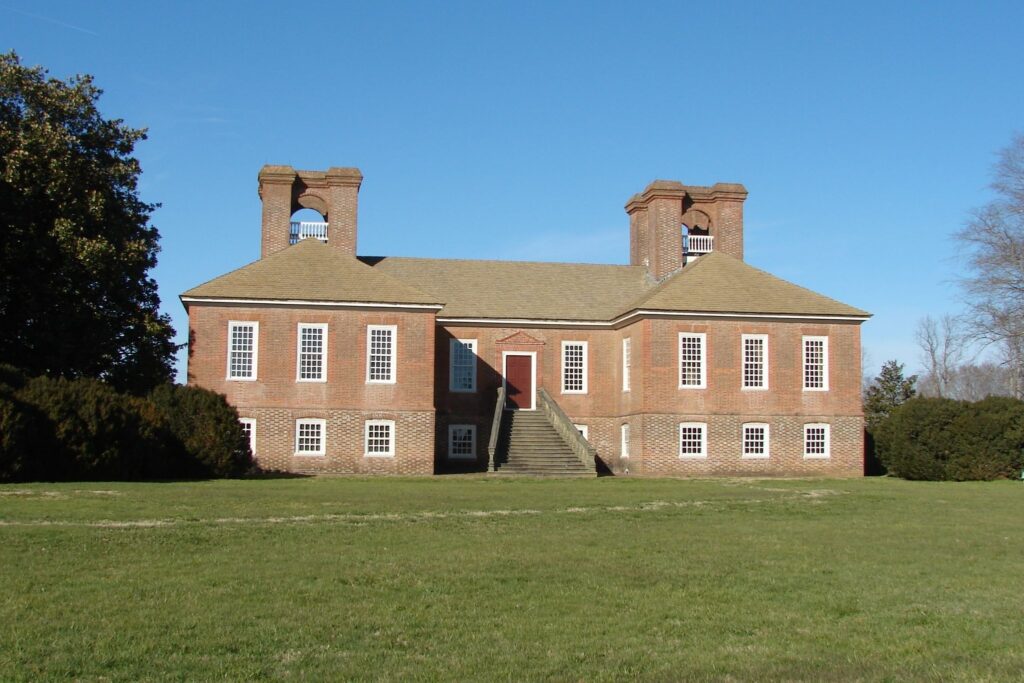
Richard Henry Lee was born on January 20, 1732, at Stratford Hall in Westmoreland County, Virginia, into one of the colony’s most influential families.¹ The Lees were part of Virginia’s powerful planter elite, deeply connected to colonial politics and public service.
Like many wealthy Virginians of his era, Lee received part of his education in England before returning home to Virginia in the early 1750s.⁴ He soon entered public life, serving as a justice of the peace before winning election to the Virginia House of Burgesses in 1758.⁴
From the beginning, Lee distinguished himself as a gifted and forceful speaker. Contemporaries admired his eloquence so much that some compared him to the Roman orator Cicero.¹ His speeches and writings helped make him one of the most influential revolutionary voices in Virginia.
But Lee’s political views also made him controversial.
From British Subject to Revolutionary Leader
In the years leading up to the Revolution, Lee became increasingly critical of British taxation and parliamentary control over the colonies.¹ He strongly opposed measures such as the Stamp Act and Townshend Acts, arguing that colonists could not be taxed without representation.⁴
Lee helped organize resistance movements in Virginia and became an early supporter of intercolonial cooperation.² Alongside fellow patriots, he advocated for committees of correspondence — networks that allowed colonies to share information and coordinate responses to British policies.⁴
These committees played a major role in uniting the colonies politically before the Revolution.
Unlike some colonial leaders who still hoped reconciliation with Britain remained possible, Lee increasingly believed independence was necessary.² By the mid-1770s, he had emerged as one of the strongest voices for complete separation from the British Crown.
The Lee Resolution
Richard Henry Lee’s most significant moment came on June 7, 1776, during the Second Continental Congress in Philadelphia.
Acting on instructions from the Virginia Convention, Lee introduced a motion declaring:
“That these United Colonies are, and of right ought to be, free and independent States…”¹
Known today as the Lee Resolution, the proposal fundamentally changed the course of American history.²
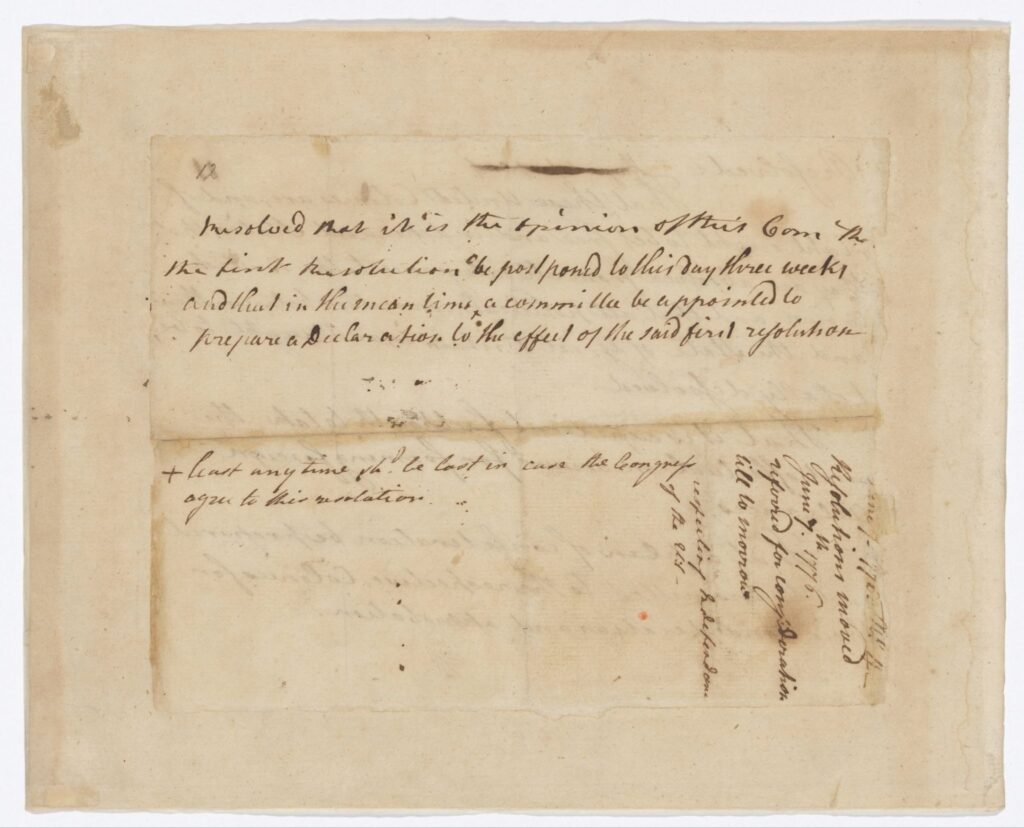
The resolution did more than express frustration with British rule. It formally asserted that the colonies were independent political entities no longer tied to Great Britain.⁴
Congress delayed an immediate vote while delegates debated the issue and sought support from hesitant colonies.² During that delay, a committee led by Thomas Jefferson began drafting what became the Declaration of Independence.
On July 2, 1776, Congress approved Lee’s resolution.¹ Two days later, delegates adopted the Declaration itself.
In many ways, the Declaration explained and justified the decision that Lee’s resolution had already made official.²
A Founder Beyond Independence
Lee’s service to the new nation did not end with independence.
He served in the Continental Congress for many years. He later became president of the Congress under the Articles of Confederation, one of the highest offices in the nation before the presidency existed.¹
After the ratification of the Constitution, Lee was elected as one of Virginia’s first United States senators.⁴ Although he supported American independence, he remained cautious about centralized federal power. He became associated with the Anti-Federalists, who worried the Constitution gave too much authority to the national government.²
Lee believed republican government depended on civic virtue, local participation, and protections for individual liberty.² His concerns about centralized authority helped influence later debates surrounding the Bill of Rights.
Declining health eventually forced him to retire from public life. He died in Virginia on June 19, 1794.⁴
Why Richard Henry Lee Still Matters
Richard Henry Lee is sometimes overshadowed by other Founding Fathers, but his impact on American history was profound.
He helped unite the colonies politically before independence, championed resistance to British authority, and introduced the resolution that transformed a colonial protest movement into an independent nation.¹
Lee also reminds Americans that the Revolution was shaped not only by battlefield victories, but by debate, persuasion, and political courage. Before the Declaration of Independence could be written, someone had to stand before Congress and formally call for independence.
Richard Henry Lee did exactly that.
Explore more stories from the Revolutionary era in our Founding Generation series.