

William Williams — Connecticut’s Steadfast Servant of Liberty
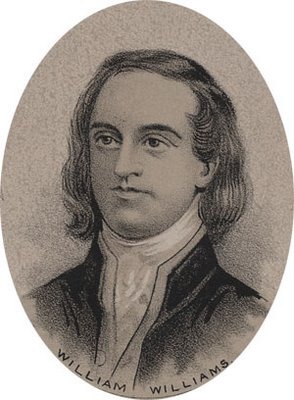
Not every Founder arrived in time to cast the decisive vote. William Williams (1731–1811) of Lebanon, Connecticut, reached Philadelphia too late to participate in the formal debate over independence — the vote had already been taken. But he did sign the Declaration of Independence, and he did so as the culmination of a lifetime of service so quiet, so steady, and so thoroughly rooted in his community that it stands as one of the founding era’s most instructive examples of civic commitment. Williams held public office in Connecticut for the better part of five decades: as town clerk, selectman, legislator, judge, and council member. He organized resistance to British taxation, penned bold political satire against King George III, and contributed generously from his own fortune to the patriot cause. His story reminds us that republics are sustained not only by famous statesmen but by citizens who show up, year after year, in the service of their neighbors and their convictions.
Early Life: Faith, War, and a Changed Course
William Williams was born on April 8, 1731, in Lebanon, Connecticut, the son of the Reverend Solomon Williams, pastor of the First Congregational Church, and Mary Porter Williams. He came from a family with deep roots in New England faith and learning — his father and grandfather before him had both attended Harvard College and entered the ministry, and it was assumed that William would follow the same path.¹
He enrolled at Harvard, graduating in 1751, and spent the following year studying theology under his father’s guidance in preparation for ordination. But the outbreak of the French and Indian War intervened. In 1755, Williams joined a colonial militia expedition to Lake George, fighting alongside British regulars against French and Native American forces. The experience left a lasting impression — and not a favorable one. He returned home with what contemporaries described as a deep contempt for the haughtiness of British officers, who openly regarded the American colonists as inferior men.² That disillusionment would harden, over the following two decades, into principled patriot conviction.
Setting aside his plans for the ministry, Williams opened a general store in Lebanon and quickly found his footing both as a merchant and a public servant. At just twenty-two, he was elected town clerk — a position he would hold for an extraordinary forty-four years, from 1753 to 1796.³ It was the beginning of a career in civic life that would never really end.
Decades of Service: From Merchant to Legislator
Williams entered Connecticut’s colonial legislature in 1757 and served in the House of Representatives almost continuously for nearly four decades, including terms as Speaker of the House.⁴ He simultaneously served as a town selectman for twenty-five years, sat on committees of safety and correspondence, and managed his merchant business — all while remaining a faithful deacon and lay leader in the Lebanon Congregational Church. The sheer breadth and duration of his public service were remarkable even by the standards of an era that expected its leading citizens to devote themselves to civic life.
As tensions with Britain escalated in the 1760s, Williams was among the earliest and most outspoken voices of resistance in Connecticut. He joined the Sons of Liberty, threw his support behind the non-importation agreements of 1769 designed to protest the Townshend Acts, and was visibly disappointed when Connecticut’s merchant class began to quietly abandon those pledges once most of the Acts were repealed.¹ For Williams, the principle mattered more than the convenience, and he never fully trusted those who treated patriot commitments as negotiable.
His marriage in 1771 to Mary Trumbull — daughter of Connecticut’s Royal Governor Jonathan Trumbull, the only royal governor in all the colonies to side with the patriot cause — both deepened his family connections to the independence movement and reinforced his own convictions.¹ The Trumbulls and the Williamses became interwoven threads in Connecticut’s Revolutionary leadership.
A Bold Letter to a King
In July 1774, just one month after Parliament passed the Coercive Acts to punish Boston, Williams took up his pen. He composed one of the more remarkable pieces of political writing to emerge from the early resistance movement. Writing under a pseudonym in the Connecticut Gazette as a voice from “America,” he addressed an open letter directly to King George III — by turns respectful in its framing and scalding in its substance.
The letter praised King George II for having governed the colonies with justice and moderation, then turned on his successor with barely contained fury, imagining the King’s reply to colonial grievances: “Ye Rebels and Traitors…if ye don’t yield implicit obedience to all my commands, just and unjust, ye shall be drag’d in chains across the wide ocean…Your lives, liberties, and property are all at the absolute disposal of my parliament.”¹
The satire was pointed and unmistakable. Williams was not a man given to fiery oratory, but he understood the power of the written word and used it with precision. The letter appeared at a moment when many Connecticut citizens were still uncertain whether resistance would lead to reconciliation or rupture — and it made clear, in plain terms, exactly what was at stake.
Signing the Declaration
When Connecticut’s delegation to the Second Continental Congress needed a replacement for Oliver Wolcott, who had fallen seriously ill, the colony turned to Williams. He was appointed on July 11, 1776 — the same day Connecticut received official word that Congress had voted for independence nine days earlier.² He arrived in Philadelphia on July 28, well after the historic vote, and took his seat as the new nation was already beginning to reckon with war.
On August 2, 1776, William Williams signed the Declaration of Independence as a representative of Connecticut. He did not participate in the great debate that preceded the vote, but his signature was no formality — it was the logical endpoint of two decades of principled resistance, of joining the Sons of Liberty, of supporting boycotts, of writing political satire, of going door-to-door in Connecticut to raise funds for troops at Ticonderoga, of working alongside Governor Trumbull to draft the documents of a nascent revolutionary government.³
He was subsequently appointed to the committee tasked with framing the Articles of Confederation and, in 1777, to the Board of War — unglamorous but essential work in support of a revolution that still had years to run.⁴
A Patriot to the Last
Williams returned to Connecticut before the end of 1776 and remained there, serving his state and community with the same steady persistence that had characterized his entire career. He sat on the Governor’s Council, presided as a judge of the Windham County Court for nearly three decades, and served on the Connecticut Supreme Court of Errors. In 1788, he attended the Hartford convention at which Connecticut ratified the United States Constitution — voting in favor, though he personally objected to the omission of any religious test for officeholders, reflecting his deep Congregationalist faith.¹
His dedication to the cause was not merely administrative. In 1781, when Benedict Arnold — Connecticut’s most infamous traitor — led a British raid that burned the port of New London, Williams rode twenty-three miles in three hours to volunteer his services in defense of the town. He arrived to find it already in flames. That same winter, he opened his own home to French officers whose regiment was quartered in Lebanon.¹
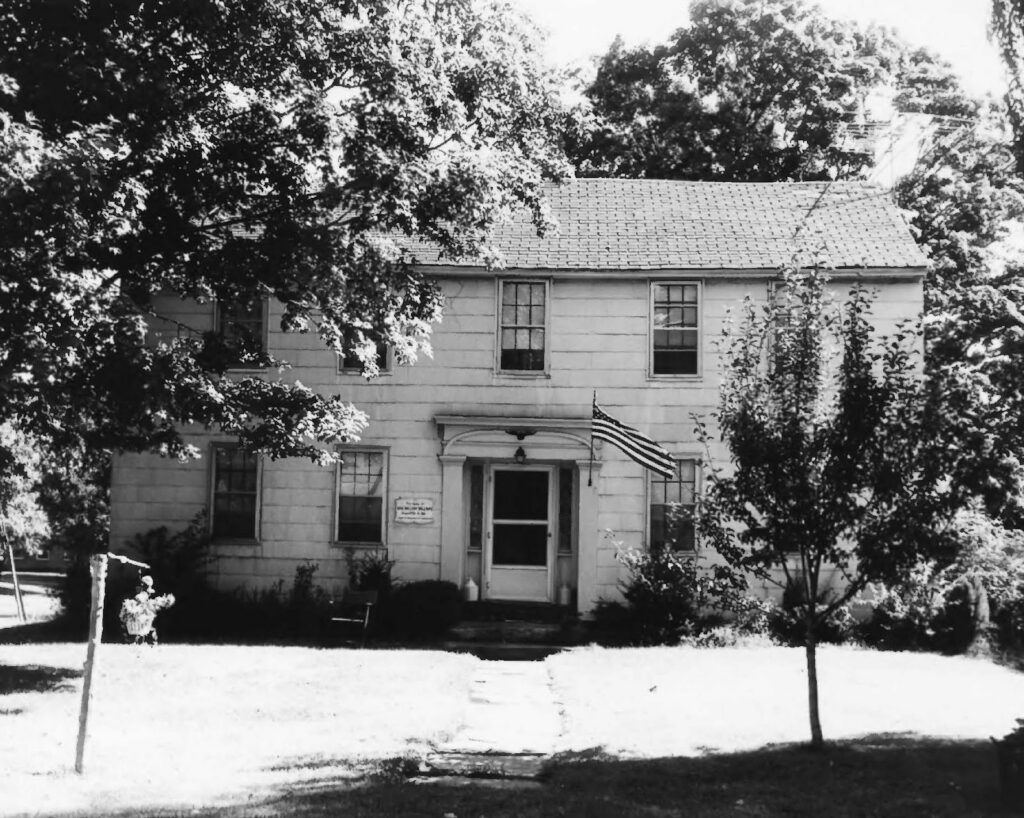
Williams outlived most of his contemporaries from the founding era. He suffered the loss of his eldest son, Solomon, in 1810, a blow from which he never fully recovered. He died on August 2, 1811 — the thirty-fifth anniversary of the day he had signed the Declaration — at the age of eighty, and was buried in the Trumbull Cemetery in Lebanon. His home in Lebanon still stands today as a designated National Historic Landmark.³
Legacy and Civic Relevance
William Williams will never rank among the most celebrated names of the founding era. He was not a Washington or a Jefferson, a Franklin or an Adams. He was something perhaps equally essential: a citizen of extraordinary durability and devotion, who served his town, his colony, and his new nation for half a century without ambition for national fame, sustained by faith, principle, and a clear-eyed understanding of what self-government demands from those who believe in it.
His life asks a question that every generation must answer for itself: not whether we are capable of dramatic acts of courage in a single historic moment, but whether we are willing to show up, year after year, in the less celebrated work of building and sustaining a republic. In Washington, D.C., near the Washington Monument, one of fifty-six granite blocks engraved with the names of the Declaration’s signers bears the name of William Williams of Lebanon, Connecticut — a fitting memorial to a founder whose greatest monument was a lifetime of civic service.
As the nation commemorates America 250, Williams stands as a reminder that the founding was not only a moment but a practice — one that required, and still requires, citizens willing to do the work.
Explore more stories from the Revolutionary era in our Founding Generation series.
Footnotes
- National Constitution Center, “William Williams,” https://constitutioncenter.org/signers/william-williams
- U.S. History.org, “William Williams,” Independence Hall Association, https://www.ushistory.org/declaration/signers/williams.html
- Descendants of the Signers of the Declaration of Independence (DSDI), “William Williams,” https://www.dsdi1776.com/signer/william-williams/
- Biographical Directory of the U.S. Congress, “Williams, William,” https://bioguide.congress.gov/search/bio/W000546