

James Madison: How a Soft-Spoken Virginian Helped Shape a Nation
When delegates gathered in Philadelphia during the summer of 1787, they faced a daunting challenge. The American Revolution had been won, but the young nation was struggling. The government created under the Articles of Confederation lacked the authority to solve many of the country’s growing problems, and there was no guarantee the United States would remain united.
Among the men who arrived at the Constitutional Convention, one came better prepared than almost anyone else.
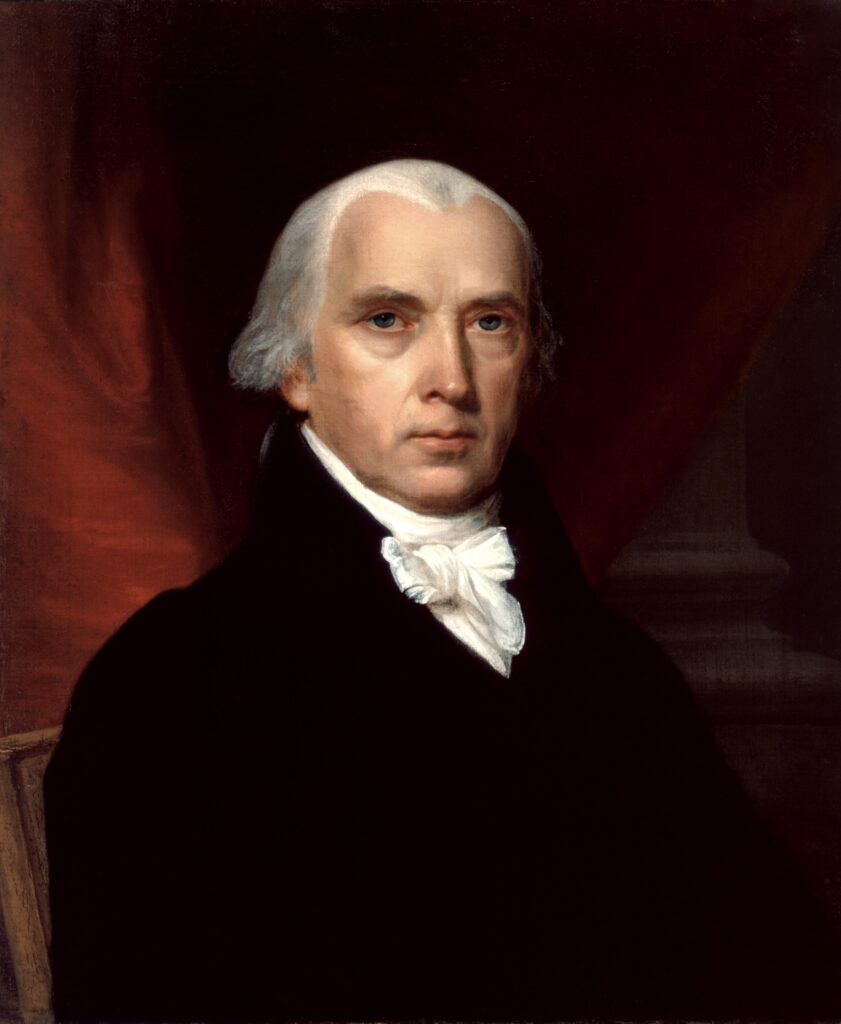
James Madison was not the tallest delegate in the room. He was not a military hero like George Washington or a celebrated diplomat like Benjamin Franklin. What Madison brought instead was something equally important: a deep understanding of history, government, and human nature. He spent months studying past republics, identifying why governments succeed or fail, and developing ideas for a stronger nation.
The result was a lasting impact on American democracy. Madison helped design the Constitution’s framework, defended it during the ratification debates, and later became the driving force behind the Bill of Rights. Because of these contributions, he is often called the “Father of the Constitution.” Yet his most enduring legacy may be his determination to ensure that a stronger government would also respect the people’s freedoms.
More than two centuries later, Americans still live under the system Madison helped create—and continue to exercise rights he worked to protect.
A Young Mind Drawn to Big Questions
Born on March 16, 1751, in Virginia, James Madison grew up at Montpelier, his family’s plantation in Orange County. From an early age, he displayed a curiosity about history, government, and philosophy. After attending the College of New Jersey—today’s Princeton University—Madison developed a strong interest in the ideas that would later shape the American Revolution.¹
As tensions between Great Britain and the colonies increased, Madison entered public life. He served in Virginia’s revolutionary government and became an advocate for religious liberty, representative government, and citizens’ rights.² These experiences would help prepare him for the challenges that lay ahead as the new nation struggled to govern itself.
A Nation in Need of a New Plan
Winning independence was only the beginning. The United States soon discovered that governing thirteen states under the Articles of Confederation was difficult. Congress lacked the power to raise revenue effectively, regulate interstate commerce, or respond decisively to national problems.³
Many Americans feared that the country could fracture if these weaknesses were not addressed.
Madison shared those concerns. Rather than accepting the status quo, he began studying governments throughout history, seeking lessons to help the United States avoid the failures that had doomed other republics. His research convinced him that the nation needed a stronger constitutional framework—one capable of governing effectively while preserving liberty.
The Convention That Changed American Government
When delegates assembled in Philadelphia in 1787, Madison arrived with a plan.
His proposal, known as the Virginia Plan, called for a stronger national government with separate branches and a system of representation based on population. While the final Constitution emerged through debate and compromise, many of Madison’s ideas were incorporated into the document eventually adopted.¹
His influence can still be seen in several key constitutional principles:
- Separation of powers among the three branches of government
- Checks and balances designed to prevent any one branch from becoming too powerful
- A bicameral Congress consisting of the House of Representatives and the Senate
- A stronger national government capable of addressing national concerns
- Representation grounded in republican principles
Madison’s extensive preparation and leadership during the convention earned him the title “Father of the Constitution.”⁴
For a deeper look at the challenges delegates faced during the Constitutional Convention, explore From Crisis to Constitution: 1787 on Civics for Life.
Winning the Argument for the Constitution
Drafting the Constitution was only half the battle. It still needed approval from the states.
Many Americans worried that the proposed government would become too powerful and threaten individual liberty. To answer those concerns, Madison joined Alexander Hamilton and John Jay in writing a series of essays known as The Federalist Papers.¹
Madison authored 29 of the 85 essays, including several that remain among the most influential discussions of American government ever written. In Federalist No. 10 and Federalist No. 51, he explored the dangers of faction, the importance of checks and balances, and the ways a constitutional system could protect freedom while maintaining order.
These essays helped persuade many Americans that the Constitution deserved their support.
From Skeptic to Champion of the Bill of Rights
One of the most fascinating chapters in Madison’s story involves the Bill of Rights.
Initially, Madison questioned whether a separate list of protected rights was necessary. He believed the Constitution itself limited government power and offered substantial protections for liberty. However, many Americans remained unconvinced. During the ratification debates, Anti-Federalists argued that explicit guarantees of individual rights were essential.⁵
Madison listened carefully to these concerns.
Rather than dismissing critics, he recognized that protecting individual liberties in writing could strengthen public trust in the new government and help secure the Constitution’s future.
It was a decision that would become one of his greatest contributions to American democracy.
A Promise to Protect Individual Rights
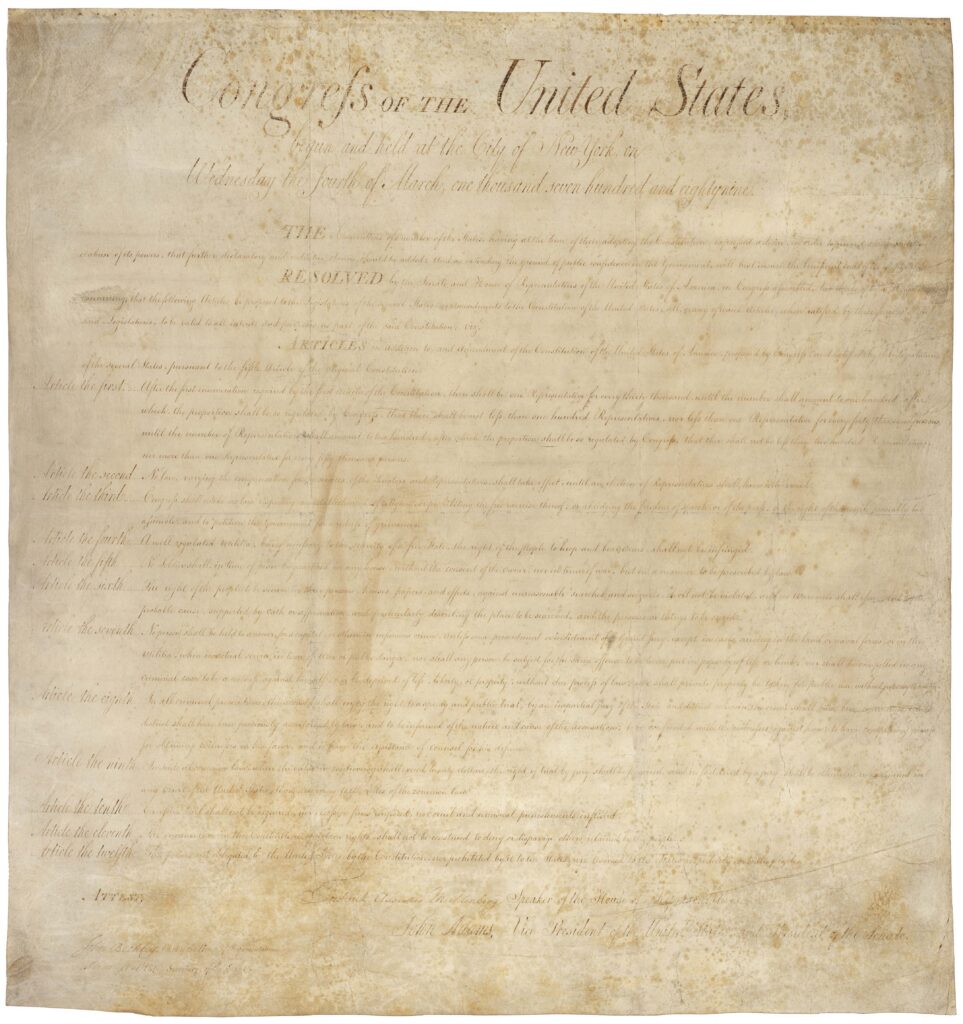
Serving in the first U.S. House of Representatives, Madison introduced a series of constitutional amendments in 1789 designed to safeguard individual freedoms and limit government power.⁵
Drawing from state constitutions, declarations of rights, and recommendations made during the ratification process, he proposed nineteen amendments. Congress refined the proposals, and the twelve amendments were sent to the states. Ten were ratified in 1791 and became known as the Bill of Rights.⁶
These amendments protect many freedoms Americans continue to exercise today, including:
- Freedom of religion
- Freedom of speech
- Freedom of the press
- Freedom of assembly
- The right to petition the government
- Protections against unreasonable searches and seizures
- Due process of law
- The right to a fair trial
Without Madison’s leadership, the Bill of Rights may never have taken its current form. His willingness to bridge competing viewpoints helped transform concerns about government power into enduring constitutional protections.
To learn more, visit Civics for Life’s resources on The Bill of Rights: The First Ten Amendments and The Bill of Rights and Amendments.
Leading a Young Nation
Madison’s service did not end with the Constitution and Bill of Rights.
Under President Thomas Jefferson, he served as Secretary of State from 1801 to 1809 and helped oversee major developments, including the Louisiana Purchase, which doubled the size of the United States.¹
In 1808, Madison was elected the nation’s fourth president. His presidency was defined largely by the War of 1812, a conflict that tested the young nation’s independence and resolve. Although the war brought significant challenges, it ultimately reinforced American sovereignty and contributed to a growing sense of national identity.²
The Legacy of a Constitutional Thinker
James Madison never commanded armies like George Washington or dazzled audiences with dramatic speeches like Patrick Henry. His influence came through ideas, careful study, and a belief that free government required both effective institutions and protections for individual liberty.
His accomplishments helped shape the nation in lasting ways:
- Designing much of the constitutional framework that still governs the United States
- Helping secure ratification of the Constitution through The Federalist Papers
- Drafting and championing the Bill of Rights
- Promoting religious liberty and representative government
- Establishing principles of checks and balances that continue to guide the American government
More than two centuries later, Madison’s work remains woven into everyday American life. Every time citizens exercise freedom of speech, worship according to their beliefs, petition their government, or participate in elections, they are benefiting from a constitutional system he helped create.
The quiet Virginian who spent years studying the successes and failures of governments may never have sought the spotlight. Yet few Americans have left a greater mark on the nation’s founding—or on the freedoms citizens enjoy today.
Footnotes
- The Life of James Madison, Montpelier.
- James Madison, Encyclopaedia Britannica.
- James Madison, Office of the Historian, U.S. Department of State.
- James Madison Summary, Encyclopaedia Britannica.
- James Madison: The Father of the Constitution, Encyclopaedia Britannica.
- Bill of Rights, Encyclopaedia Britannica.